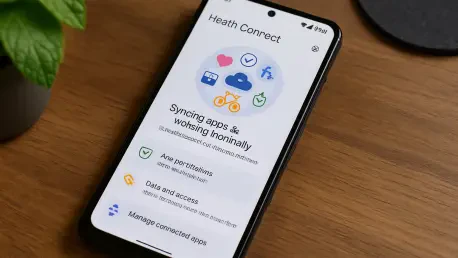
Digital wellness enthusiasts have long struggled with the frustrating reality of having their biometric data siloed within dozens of disconnected fitness applications and hardware ecosystems, leading to inconsistent metrics and redundant battery drain. While Apple has managed to maintain a cohesive

The healthcare landscape has undergone a tectonic shift where a patient's diagnostic profile is no longer a footnote but the primary map used to navigate every clinical decision from prevention to palliative care. Traditionally, medical tests served as binary confirmations—proving or disproving a

Recent data analyzed by researchers at King’s College London indicates that approximately 14% of the adult population in the United Kingdom has transitioned from traditional medical consultations to utilizing artificial intelligence chatbots for primary health concerns. This shift is not merely a

The delivery of healthcare across expansive rural landscapes often encounters significant logistical hurdles that traditional paper-based or stationary digital systems simply cannot overcome in a modern medical environment. North Cumbria Integrated Care NHS Foundation Trust addressed these

The traditional burden of logging every single gram of protein or carbohydrate into a clunky digital spreadsheet has been replaced by sophisticated artificial intelligence systems that interpret natural language and visual data with nearly perfect accuracy. As the year 2026 progresses, the dietary

The landscape of personal wellness is undergoing a monumental shift as the traditional era of passive step-counting concludes with the retirement of the long-standing Fitbit application. This transition represents a strategic pivot toward a unified Google Health platform that prioritizes deep