
The healthcare landscape has undergone a tectonic shift where a patient’s diagnostic profile is no longer a footnote but the primary map used to navigate every clinical decision from prevention to palliative care. Traditionally, medical tests served as binary confirmations—proving or disproving a physician’s intuition—but the current era of high-fidelity data has transformed these tools into a continuous stream of intelligence. With nearly eighty percent of all clinical decisions now anchored in laboratory results, the diagnostic industry has moved beyond the basement of the hospital to become the fundamental architecture of modern medicine. This transformation reflects a deeper realization that high-quality data, rather than just clinical observation, is the most effective way to address the rising burden of chronic disease and the complexities of aging populations. Instead of being relegated to the background of a hospital’s operations, testing has become the central engine driving clinical efficacy and operational precision. As we navigate the complexities of modern medicine, it is clear that the ability to decode human biology in real-time is the most valuable asset any healthcare system can possess. This shift represents a fundamental redesign of the patient journey, moving away from a model where we wait for illness to manifest and toward one where we actively monitor biological signals to maintain equilibrium.
The Catalyst of Artificial Intelligence
Synthesizing DatTurning Raw Numbers into Health Maps
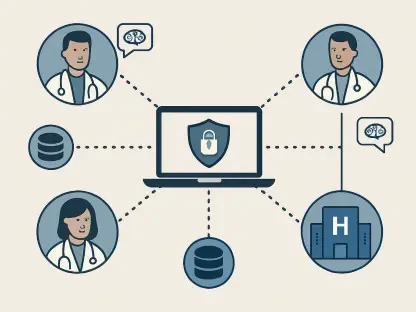
Artificial Intelligence serves as the vital connective tissue that bridges the gap between fragmented laboratory results and actionable medical strategies. Historically, medical data existed in isolated silos, where a patient’s blood work, genetic profile, and imaging results were rarely integrated into a single, cohesive narrative. Advanced machine learning algorithms now ingest these disparate data streams simultaneously, identifying correlations that were previously invisible to the human eye. By processing millions of data points across massive populations, these systems can contextualize a single patient’s results against a backdrop of global trends. This capability transforms a static lab report into a dynamic roadmap, allowing physicians to see not just where a patient is today, but where their health is likely headed. The intelligence layer provided by AI ensures that no piece of biological information is wasted, as every biomarker is analyzed for its predictive value and its contribution to the overall clinical picture. Through the use of neural networks, we can now interpret complex proteomic and metabolic signatures that once required days of manual review, delivering them to the point of care in seconds to ensure that no time is lost in the pursuit of an accurate diagnosis and treatment plan.
Actionable Insights: Moving Beyond Raw Information
The emergence of longitudinal intelligence is perhaps the most significant outcome of this technological integration, offering a high-definition view of a patient’s health over time. Rather than relying on a single snapshot taken during an annual physical, clinicians now utilize AI to track subtle fluctuations in biomarkers that occur over months or years. This longitudinal approach allows for the detection of micro-trends—small shifts in kidney function, glucose metabolism, or cardiac enzymes that might remain within the normal range but indicate a downward trajectory. By highlighting these patterns early, AI-driven diagnostics provide the clinical context necessary for doctors to intervene long before a condition becomes symptomatic. This shift from reactive treatment to proactive management is fundamentally changing the economics of healthcare, as preventing a chronic condition is far less costly and complex than treating a full-blown medical crisis. Furthermore, AI-enhanced insights reduce the cognitive load on physicians by prioritizing the most relevant data points, ensuring that the clinical focus remains on the patient’s most pressing biological risks. This intelligent synthesis of data allows the medical community to treat the individual as a unique biological entity rather than a set of generalized statistics.
Moving Diagnostics Upstream
Proactive Screening: Catching Disease at the Absolute Genesis
Moving diagnostics upstream is a strategy that focuses on identifying disease at its absolute inception, fundamentally altering the survival rates for some of the most aggressive conditions currently facing humanity. Multi-cancer early detection assays and liquid biopsies have revolutionized oncology by allowing for the detection of dozens of cancer types from a single, non-invasive blood draw. These tests identify circulating tumor DNA or other biological signals that indicate the presence of a malignancy long before it would be visible on an MRI or CT scan. By catching cancer at its earliest stages, the healthcare system can deploy targeted therapies that are significantly more effective and less toxic than the broad-spectrum treatments required for late-stage disease. This proactive screening model is rapidly becoming the standard of care, transforming the oncology department from a center of reactive intervention into a hub of high-tech surveillance and precision prevention. The ability to identify these signals early means that surgery can often be avoided or made much less invasive, preserving the patient’s quality of life and reducing the overall strain on hospital resources. As these screening technologies become more affordable and widespread, the focus is shifting toward routine monitoring as a basic right of every patient in the healthcare system.
Metabolic Health: Optimizing Longevity through Data
Beyond oncology, the proactive diagnostic movement is fueling a broader interest in longevity and the optimization of metabolic health among the general population. Consumers are no longer satisfied with merely being not sick; they are increasingly seeking to optimize their biological performance through the constant monitoring of various biomarkers. AI plays a crucial role here by helping individuals understand how their nutrition, sleep, and activity levels influence their metabolic and cardiovascular profiles in real-time. The integration of diagnostic data with lifestyle choices has created a new category of precision prevention, where patients can manage their risks for autoimmune disorders or metabolic syndrome with surgical accuracy. As the use of GLP-1 medications for weight management and diabetes continues to expand, diagnostic intelligence is required to monitor efficacy and ensure that these powerful therapies are producing the intended biological outcomes without compromising safety. The success of these pharmaceutical interventions depends on the ability to track a patient’s metabolic response over the long term, distinguishing between genuine physiological progress and temporary changes. This data-driven approach ensures that therapy is tailored to the individual’s unique metabolic profile, maximizing the benefits of modern medicine while minimizing potential risks.
Expanding the Scope of Diagnostic Data
Genetics: A Permanent Asset for Personalized Medicine
Genetic information has transitioned from a niche investigative tool to a permanent and foundational health asset that remains relevant throughout a patient’s entire life. With the continued decrease in the cost of whole genome sequencing, a patient’s DNA profile now serves as a constant backdrop for every clinical decision made by their care team. This genomic data is particularly vital in the field of pharmacogenomics, where it is used to predict how an individual will metabolize specific medications, thereby reducing the risk of adverse drug reactions and increasing the likelihood of successful treatment on the first attempt. Unlike traditional lab tests that offer a temporary status update, genomic intelligence provides a structural understanding of a person’s biological predispositions. This allows for the identification of rare disease risks and hereditary conditions that can be managed through early surveillance and lifestyle modification, ensuring that healthcare is truly personalized to the individual’s unique code. By integrating this permanent genetic layer into the broader diagnostic intelligence system, clinicians can move toward a model of anticipatory medicine, where treatments are designed based on the patient’s inherent biological strengths and vulnerabilities.
Continuous Signals: Monitoring Health beyond the Clinic
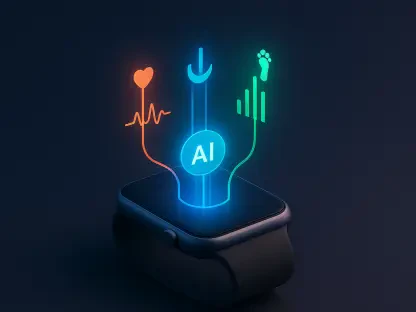
The expansion of diagnostic data is further accelerated by the ubiquity of wearable technology, which provides a continuous stream of physiological signals from outside the traditional clinical setting. Smartwatches, continuous glucose monitors, and other biometric sensors offer a real-time look at a patient’s heart rate variability, blood oxygen levels, and metabolic fluctuations. However, the sheer volume of this data can be overwhelming and often contains significant noise that can distract from genuine clinical concerns. AI-driven filters are essential in this context, as they distinguish between normal physiological spikes and meaningful trends that require medical attention. When these continuous home-based signals are integrated with high-fidelity laboratory results, they create a comprehensive feedback loop that maintains a connection between the patient and the provider between office visits. This hybrid model ensures that medical oversight is constant and data-driven, rather than being limited to the results of a physical exam conducted once a year. By capturing health signals in the patient’s natural environment, the diagnostic intelligence layer provides a more accurate reflection of their daily health status, allowing for more precise adjustments to medications and lifestyle recommendations.
Building the Infrastructure for Access
Logistics: Decentralizing the Diagnostic Process
For diagnostics to function effectively as an intelligence layer, the process of data collection must be made as seamless and accessible as possible for the average patient. The industry is seeing a massive shift toward decentralized testing models that bring diagnostic capabilities directly to the patient’s doorstep. At-home sample collection kits and mobile phlebotomy services are effectively removing the geographic and logistical barriers that often prevent individuals from adhering to their screening schedules. This democratization of testing is especially critical for rural populations and high-risk patients who may find it difficult to travel to a centralized laboratory or hospital for routine blood work. By streamlining the last mile of diagnostic access, the healthcare system can ensure that the data stream remains uninterrupted, allowing for the consistent monitoring of chronic conditions and the early detection of potential health complications. This model also alleviates the congestion in traditional clinics, allowing healthcare providers to focus their in-person resources on patients who require acute care while maintaining a high level of oversight for those being monitored remotely.
Direct-to-Patient Models: The Bridge to Modern Therapy
The success of a decentralized diagnostic model relies heavily on the operational infrastructure behind the scenes, including sophisticated logistics, fulfillment, and cold-chain management. Managing the distribution of thousands of specialized testing kits and ensuring their rapid return to a processing facility is a monumental task that forms the backbone of the diagnostic industry. The value of an advanced biomarker test is moot if the logistics of sample collection and transport fail, which is why diagnostic companies are investing heavily in automated fulfillment centers and real-time tracking systems. This logistical evolution is also enabling pharmaceutical companies to transition toward direct-to-patient models, where therapies are initiated and monitored through diagnostic signals rather than broad marketing efforts. A biomarker test now acts as a gatekeeper and a bridge, identifying the patients who will benefit most from a specific drug and providing a continuous mechanism for tracking the treatment’s impact. This shift ensures that patients are supported throughout their entire treatment journey, with the diagnostic intelligence layer providing the evidence needed to adjust dosages or switch therapies as the patient’s biological response evolves over time.
The Future of Clinical Intelligence
Multimodal Signals: Building the Holistic Patient Narrative
The final evolution of this intelligence layer lies in the creation of a multimodal diagnostic framework that synthesizes biological, behavioral, and environmental data into a single health narrative. A patient’s wellbeing is not defined by a solitary lab value but by the complex interplay between their genetics, their daily habits, and the environment in which they live. By combining clinical lab results with data from wearable devices, nutritional tracking, and even social determinants of health, AI systems can generate a holistic view of the individual. This integrated approach allows clinicians to move beyond treating symptoms and instead address the root causes of disease within the context of the patient’s entire life. As the demand for highly personalized care grows, the ability to weave these different signals into a unified and actionable plan will be the distinguishing factor for successful healthcare organizations. This framework also allows for more robust population health management, as public health officials can use aggregated diagnostic signals to identify emerging health trends and deploy resources more effectively.
Clinical Intelligence: Redefining the Role of Laboratories
Diagnostic laboratories are now positioned to transition from simple service providers to high-level clinical intelligence partners that sit at the very center of the healthcare ecosystem. These institutions possessed the most valuable data in modern medicine, and by applying advanced analytics, they provided specialized insights that benefited patients, providers, and payers alike. To capitalize on this shift, stakeholders prioritized the integration of AI tools that could interpret complex datasets and ensured that diagnostic information was presented in a clear, actionable format for non-specialists. During this period of rapid transformation, the industry successfully redefined the laboratory as the primary engine of clinical decision-making, moving away from a reactive model toward one defined by prediction and precision. The next logical steps involve scaling these intelligence layers globally to ensure that every patient, regardless of location, benefits from a healthcare system that understands their biology as deeply as it understands their symptoms. Organizations that invested in robust data infrastructure and decentralized access models found themselves leading the market, as they offered a level of clinical certainty that was previously impossible. This evolution ultimately proved that the most effective way to manage the health of a population was to treat the data as the medicine itself.