
The global health landscape is currently witnessing a transformative shift in neurodegenerative diagnostics as researchers move away from invasive and logistically demanding hospital-based screenings. Approximately 99% of individuals experiencing the earliest stages of cognitive decline remain outside the reach of specialized clinical services, often due to the prohibitive cost or geographic isolation of specialized memory clinics. This massive diagnostic gap has long hindered the ability of medical professionals to intervene at a stage when lifestyle modifications or emerging therapies are most effective. By pivoting toward decentralized models, healthcare systems can finally address the silent progression of Alzheimer’s disease within the patient’s own living room. The development of a finger-prick blood test coupled with online cognitive evaluations represents a breakthrough that democratizes access to neurological health monitoring. This integrated approach ensures that initial barriers to diagnosis are dismantled, paving the way for proactive care.
Advanced Biomarker Analysis and Digital Integration
Precision Indicators in Capillary Blood
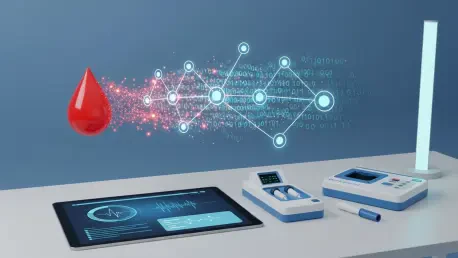
The scientific foundation of this at-home screening protocol rests on the identification of specific protein markers that circulate in the bloodstream long before physical symptoms become apparent to family members. Researchers at the University of Exeter have successfully demonstrated that a simple finger-prick sample, which participants can collect themselves, provides enough data to analyze two critical biomarkers: phosphorylated tau at amino acid 217, known as p-tau217, and Glial Fibrillary Acidic Protein, or GFAP. While p-tau217 is widely recognized as a highly specific indicator of the underlying pathology unique to Alzheimer’s, GFAP serves as a broader signal for neurological inflammation and vascular-related cognitive risks. The ability to extract this level of detail from a minute capillary blood sample allows for a sophisticated biological profile that was previously only obtainable through expensive PET scans. This transition to minimally invasive sampling is essential for wide-scale adoption among aging populations.
Understanding the distinct roles of these biomarkers provides a more nuanced view of a patient’s brain health than traditional cognitive screening alone could ever offer. The study revealed that p-tau217 and GFAP often flag different subgroups of at-risk individuals, meaning that a multi-marker approach captures a wider net of potential cases. For instance, elevated GFAP levels might point toward vascular issues that contribute to cognitive decline, whereas p-tau217 specifically tracks the progression of amyloid and tau buildup. By evaluating these proteins in tandem, the screening tool provides a comprehensive risk assessment that accounts for the complexity of the aging brain. This biochemical data acts as an objective baseline, removing the subjectivity often found in early-stage clinical observations. Furthermore, the stability of these markers in dried blood spots makes the logistics of shipping samples much simpler, ensuring that the biological integrity of the data is maintained from the moment of collection until analysis.
Digital Assessments and Memory Tracking
While blood biomarkers provide the biological evidence of risk, the integration of digital cognitive assessments adds a functional layer to the diagnostic process. Participants in the study engaged with online brain performance tests designed to measure episodic memory, which is typically one of the first functions to erode in the early stages of dementia. These digital tools are calibrated to detect subtle shifts in cognitive performance that might be overlooked during a brief, in-person consultation with a general practitioner. By pairing the physiological data from p-tau217 levels with specific memory scores, the researchers established a preclinical detection threshold. This means the system can identify individuals who are at high risk even if they still appear to function normally in their daily lives. The synergy between a physical blood test and a functional performance test creates a robust screening mechanism that is far more sensitive than the traditional benchmarks.
The use of digital platforms also allows for longitudinal tracking, where cognitive health can be monitored over several months or years without requiring frequent travel to a medical facility. This continuous stream of data provides a much clearer picture of a person’s cognitive trajectory compared to a single snapshot test performed in a high-stress clinical environment. Many patients experience white coat syndrome, where anxiety during a doctor’s visit can skew the results of cognitive exams. By testing at home in a familiar and comfortable setting, the data collected is often more reflective of the person’s actual daily functioning. Moreover, the digital nature of these assessments means they can be easily updated or refined as new research identifies even more sensitive indicators of decline. This flexibility ensures that the screening tool remains at the cutting edge of neuropsychology, offering a scalable solution that can be deployed across diverse populations easily.
Global Accessibility and Healthcare Efficiency
Expanding Reach to Underserved Populations
One of the most significant advantages of a decentralized screening model is its ability to bridge the gap in healthcare equity for those living in rural or underserved areas. In many regions, the nearest memory clinic or specialized neurologist may be hundreds of miles away, making regular screening an impossibility for elderly individuals with limited mobility or financial resources. By moving the primary screening phase into the home, the healthcare system effectively removes these geographic barriers. This approach ensures that a farmer in a remote rural community has the same access to early Alzheimer’s detection as a resident in a major metropolitan area. The cost-effectiveness of a finger-prick test and a web-based app further lowers the barrier to entry, allowing public health initiatives to reach populations that have historically been neglected. This inclusivity is a practical necessity for managing the burgeoning global crisis of age-related cognitive decline as the population continues to age.
Beyond geographic considerations, the at-home model also addresses cultural and psychological barriers that often prevent people from seeking a diagnosis. There is still a significant stigma attached to dementia, and many individuals avoid clinical settings because they fear the implications of a formal diagnosis. Providing a private, self-administered initial screen allows individuals to take the first step in a low-pressure environment. If the results indicate a high risk, the individual can be guided through the next steps with clear information and support, rather than being thrust into a complex medical bureaucracy. This patient-centered approach fosters a sense of agency and empowerment, encouraging more people to participate in screening programs before their condition becomes advanced. The data generated from these diverse populations also provides researchers with a more representative understanding of how Alzheimer’s progresses across different ethnicities and various socioeconomic backgrounds.
Streamlining the Clinical Referral Pathway
The implementation of home-based screening significantly enhances the efficiency of existing healthcare infrastructure by acting as a high-precision triage system. Currently, specialized clinics are often overwhelmed by a high volume of referrals, many of whom may not actually require the level of intensive diagnostic workup provided by a neurologist. By filtering the patient pool through a validated at-home test, healthcare systems can ensure that only those with the highest biological and cognitive risk markers are prioritized for in-depth clinical investigation. This targeted approach reduces wait times for patients who are in urgent need of specialized care and allows clinicians to focus their limited time and resources on individuals who will benefit most from early intervention. The integration of these home results into electronic health records simplifies the referral process, providing the specialist with a wealth of preliminary data. This optimization is essential for maintaining the long-term sustainability of medical health services.
Furthermore, this streamlined pathway facilitates the recruitment of participants for clinical trials of new Alzheimer’s therapies. Identifying individuals at the preclinical stage is notoriously difficult, yet it is this very group that is most needed for testing treatments designed to slow or halt the progression of the disease. A decentralized screening network creates a massive pool of potential trial candidates who are already characterized by their biomarker profiles. This could dramatically accelerate the pace of pharmaceutical research and the development of new interventions. As healthcare moves toward more personalized medicine, the ability to rapidly identify and categorize risk through remote tools will be the cornerstone of effective disease management. The collaboration between at-home diagnostic tech and clinical practice creates a seamless continuum of care, where the journey from initial concern to targeted treatment is shorter. This evolution marks a significant milestone in the effort to transform Alzheimer’s into a manageable condition.
The emergence of decentralized screening protocols represented a fundamental shift in how society approached the challenge of neurodegenerative diseases. By moving the initial diagnostic phase from the laboratory to the living room, researchers successfully dismantled the structural barriers that previously left the vast majority of at-risk individuals without a clear path to care. This move toward early detection provided a critical window for the implementation of lifestyle interventions and emerging medical therapies that significantly altered the disease’s trajectory. Moving forward, healthcare providers should prioritize the integration of these at-home tools into routine wellness checks for aging adults to ensure no one is left behind. Developing standardized protocols for interpreting home-collected data became the next logical step for regulatory bodies seeking to validate these technologies for broader clinical use. Ultimately, the adoption of accessible, biomarker-driven screening laid the groundwork for a more proactive and equitable future in global neurological health.