
James Maitland is a distinguished expert in medical device reporting and healthcare supply chain management, specializing in the integration of advanced technology to stabilize clinical environments. With years of experience navigating regulatory hurdles and inventory crises, James has become a critical voice for hospitals facing the complexities of surgical resource management. In this discussion, we explore the ripple effects of the recent Medline recall, the logistical shifts required to survive a multi-year shortage of neurosurgical tools, and the vital importance of conservation strategies in maintaining the integrity of the sterile field during high-stakes intracranial procedures.
Medline Industries recently recalled its branded neurosurgical sponges due to higher-than-expected endotoxin levels. How does a recall of this magnitude disrupt standard surgical workflows, and what immediate steps must a facility take to quarantine affected SKUs while maintaining patient safety?
When a Class 2 recall hits a high-volume item like neurosurgical sponges, the immediate atmosphere in the surgical suite is one of controlled urgency and palpable tension. Facilities must instantly mobilize their supply chain teams to identify and pull every affected SKU from the shelves, which is a massive undertaking when these items are distributed across multiple departments. Because Medline recalled all SKUs of its branded neurosponges, the disruption is total; surgeons are forced to pause and re-evaluate their upcoming schedules based on what little inventory remains. To maintain safety, hospitals must establish a strict quarantine zone for the tainted products to ensure not a single sponge with elevated endotoxin levels reaches the sterile field, where it could cause severe inflammatory reactions in a patient’s central nervous system. This process requires meticulous documentation and a physical sweep of every single operating room cart to ensure the “destroy” order issued by the manufacturer is carried out to the letter.
Current projections suggest that the shortage of neurosurgical patties, sponges, and strips could persist through the end of 2026. What long-term operational shifts are necessary to manage such a prolonged deficit, and how can administrators effectively diversify their supply chains to avoid over-reliance on a single manufacturer?
Facing a deficit that stretches into 2026 requires a fundamental shift from a “just-in-time” inventory mindset to one of strategic resilience and deep diversification. Administrators can no longer afford the luxury of a primary-source contract for specialized items; they must actively vet and onboard secondary and tertiary suppliers, even if the per-unit cost is slightly higher. This involves a heavy lift for the procurement department to ensure that alternative strips and patties meet the rigorous absorption standards required for neurosurgery. We are seeing hospitals implement more sophisticated tracking software to monitor real-time burn rates of these supplies, allowing them to predict shortages weeks before they occur. It is a grueling, marathon-like effort that forces a closer collaboration between the clinical staff who use the tools and the administrative staff who buy them, ensuring that the supply chain is as robust as the surgical techniques it supports.
Medical professionals are being encouraged to conserve supplies by reserving these specific tools for intracranial operations. In what scenarios are alternative absorbent materials considered unsuitable, and how should surgical teams decide which cases warrant the use of these limited resources?
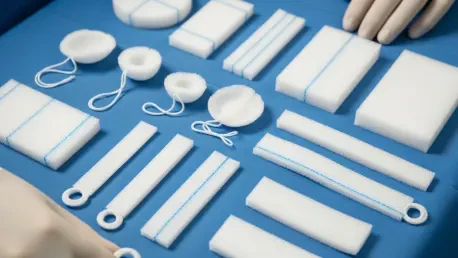
Deciding which patient gets the “gold standard” sponge and who receives an alternative is a heavy clinical burden that requires a clear, ethics-based protocol. In intracranial operations, where the brain tissue is incredibly delicate and fluid management is a matter of millimeters, alternative materials are often unsuitable because they may shed fibers or lack the precise capillary action needed to keep the site clear. Surgical teams must prioritize these limited resources for cases involving deep-seated tumors or vascular repairs where the margin for error is non-existent. For less critical extracranial procedures or general wound care, teams are being asked to use standard gauze or other more abundant absorbent materials that do not carry the same specialized lint-free properties. It is a constant negotiation in the OR, where the lead surgeon must weigh the complexity of the anatomy against the dwindling stack of patties on the instrument tray.
Beyond the logistical challenges, what are the clinical risks associated with using alternative products or limiting the use of specialized strips and patties during delicate neurosurgical procedures? Please detail the potential impact on fluid management and tissue protection during a live operation.
The clinical stakes of using subpar alternatives in neurosurgery are incredibly high, as these specialized patties are designed to protect the brain’s parenchyma from the harsh suction and metal instruments used during a procedure. If a team is forced to use a standard sponge that lacks the non-adherent backing of a true neuro-pattie, there is a visceral fear of the material sticking to the cortex and causing a hemorrhage when it is removed. Poor fluid management can lead to a “pooling” effect that obscures the surgeon’s view of vital nerves or blood vessels, turning a routine tumor resection into a high-risk emergency. There is also the sensory concern of “tissue tugging,” where the wrong material creates friction against the brain, potentially leading to postoperative neurological deficits for the patient. Every time a surgeon reaches for a substitute, they are navigating a delicate balance between necessity and the increased risk of mechanical trauma to the most sensitive organ in the body.
Since these devices are often opened only as needed to prevent waste, how does this change the preparation routine for scrub nurses and surgical technicians? What specific training or communication protocols should be implemented to ensure that a team doesn’t inadvertently compromise the sterile field or waste a scarce resource?
The “open-as-needed” mandate completely rewrites the rhythmic choreography that scrub nurses and technicians have practiced for years. Instead of the traditional pre-op setup where multiple packs are opened and counted before the first incision, the team now operates with a “wait-and-see” discipline that requires intense focus and rapid communication. We are implementing “pattie protocols” where the surgeon must give a verbal cue before a technician breaks the seal on a new package, ensuring that not a single strip is wasted on a procedure that didn’t ultimately require it. This change requires training focused on maintaining the sterile field during these mid-operation openings, as the fast-paced nature of surgery makes it easy to accidentally contaminate the environment. It creates a new level of mental fatigue for the staff, who must now juggle the technical demands of the surgery with the administrative weight of resource conservation.
What is your forecast for the neurosurgical supply chain over the next two years?
My forecast for the next two years is one of cautious adaptation, as the industry will likely struggle with a fractured supply chain until at least the end of 2026. We will see a permanent move away from single-manufacturer reliance, and I expect the FDA to take an even more active role in monitoring the production lines of these critical absorbents to prevent another Class 2 recall from paralyzing the market. While Medline explores its market re-entry, other manufacturers will likely ramp up production, but the transition will be slow and marred by backorders. Ultimately, the next 24 months will be a period of “clinical austerity,” where surgeons and hospital leaders must become more transparent with one another about inventory levels to ensure that every intracranial operation has the tools it needs to be successful. It will be a challenging era, but it will also drive a necessary evolution in how we value and manage the most basic, yet essential, tools in the operating room.