
The modern operating room is evolving into a high-tech ecosystem where the integration of digital intelligence and mechanical precision is no longer optional for leading medical institutions. This evolution is perfectly encapsulated by the recent clinical success of the Ottava Robotic Surgical System, which has just completed its rigorous FORTE trial with impressive results. During this multicenter study, which focused on thirty patients undergoing complex Roux-en-Y gastric bypass procedures, the system met every primary safety and performance endpoint. Patients observed during the thirty-day post-operative period showed an average weight loss of thirty pounds, a metric that underscores the system’s effectiveness in demanding gastrointestinal environments. By demonstrating such high levels of reliability in a clinical setting, the platform has moved beyond theoretical potential and into the realm of proven surgical utility. This progress signals a pivotal moment for surgeons seeking tools that match their skill with greater consistency.
Clinical Validation: The Path to Regulatory Approval
Following the success of the FORTE trial, a formal submission has been made to the Food and Drug Administration for a De Novo classification. This regulatory pathway is crucial because it seeks to authorize the system for a wide array of soft tissue procedures, extending its reach far beyond the initial scope of bariatric surgery. If granted, hospitals would be able to utilize this technology for hiatal hernia repairs, sleeve-based surgeries, and small bowel resections, making it a multi-purpose workhorse in the general surgery department. The ability to pivot between different types of procedures using a single robotic platform is a primary driver for clinical adoption in 2026. This flexibility ensures that the investment made by a healthcare facility can be amortized across a higher volume of cases. Furthermore, the clinical evidence presented at the American Society for Metabolic and Bariatric Surgery highlights the readiness of this technology for mass commercialization.
The move toward broader classification reflects a strategic understanding that the future of robotic surgery lies in versatility rather than niche specialization. By targeting common yet complex soft tissue operations, the platform addresses a massive market need that has been underserved by older, more rigid systems. The data from the recent trials suggests that the learning curve for these procedures can be effectively managed through the system’s intuitive interface and automated assistance features. This accessibility is vital for expanding the pool of robotic-certified surgeons, which in turn improves patient access to minimally invasive options. As the regulatory process moves forward, the focus remains on ensuring that the precision demonstrated in the gastric bypass trials translates seamlessly to other abdominal and thoracic applications. This transition is expected to redefine standard care protocols, moving the industry closer to a model where robotic assistance is the default for general surgery.
Architectural Efficiency: Designing for the Modern Hospital
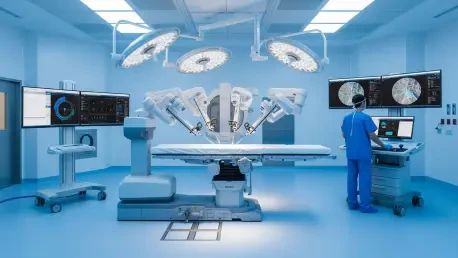
One of the most significant technical differentiators of the new platform is its unique architectural design, which integrates four robotic arms directly into a standard surgical table. Unlike previous generations of surgical robots that required massive, dedicated towers and specialized operating rooms, this unified configuration minimizes the physical footprint required for advanced robotics. This design choice is particularly relevant for smaller healthcare facilities or older hospitals that lack the space for extensive infrastructure overhauls. By embedding the technology into the table itself, the system allows for easier patient access and more natural movement for the surgical team within the sterile field. This physical optimization does not come at the cost of power or precision; instead, it utilizes high-density components to maintain the strength needed for complex maneuvers. The result is a system that fits into existing workflows rather than forcing the hospital to rebuild its facilities around the machine.
Beyond the physical hardware, the integration of advanced imaging and high-speed connectivity within the table structure provides a foundation for next-generation teleoperation and remote-enabled surgery. In 2026, the ability to transmit high-definition surgical data in real-time is becoming a standard expectation for surgical platforms aiming to support remote mentoring and collaborative procedures. This digital-first approach ensures that the surgical team has access to augmented reality overlays and real-time diagnostic feedback without needing peripheral monitors that clutter the workspace. By consolidating these functions, the platform reduces the cognitive load on the surgeon, allowing them to focus entirely on the operative site. This level of integration represents a shift away from “add-on” robotic tools toward a holistic surgical environment. As hospitals look to maximize the utility of their operating suites, a system that combines table, arms, and digital processing into a single footprint offers a compelling economic and clinical argument for adoption.
Strategic Market Positioning: Challenging the Status Quo
The strategic introduction of the Ottava system effectively challenged the long-standing dominance of established market leaders who previously controlled over sixty percent of the robotic sector. By leveraging a diverse portfolio that included specialized platforms for bronchoscopy and orthopedic spinal surgeries, the developers positioned themselves as a comprehensive partner for entire hospital systems. The focus remained on removing traditional barriers to entry, such as excessive cost and space requirements, which had historically limited the reach of robotic-assisted surgery. Decisions made throughout 2026 prioritized the creation of an adaptable ecosystem that supported surgeons across multiple disciplines. Industry analysts observed that the emphasis on integrated design and clinical versatility provided a necessary alternative to the bulky multi-tower systems of the past. Future considerations for healthcare providers now involve prioritizing platforms that offer the best long-term scalability and digital integration to ensure they remain at the cutting edge of patient care.
Actionable steps for hospital administrators now include conducting thorough spatial audits of existing operating rooms to determine how integrated table systems can improve throughput without requiring renovation. It was evident that the shift toward consolidated robotics allowed for a more flexible use of surgical staff, as the reduced equipment footprint simplified setup and cleanup times. Furthermore, investing in comprehensive training programs that utilize the digital overlays and simulation capabilities of these new platforms ensured that surgical teams remained proficient as the technology evolved. Looking forward, the industry moved toward a data-driven model where every procedure contributed to a larger knowledge base, improving outcomes across the global surgical community. Stakeholders recognized that the value of a robotic system was no longer just in its mechanical arms, but in its ability to integrate seamlessly into a wider digital health network. This proactive approach to technology adoption paved the way for more equitable access to advanced surgical care.