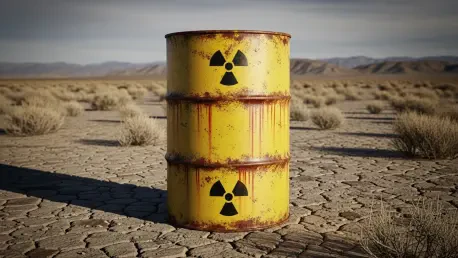

The transformation of hazardous legacy nuclear materials into high-precision medical tools represents one of the most sophisticated engineering challenges currently being addressed at the Oak Ridge National Laboratory facility. At the heart of this initiative lies Building 3019, which is recognized as the oldest operating nuclear site globally and currently stands as the Department of Energy’s highest environmental priority. For decades, this facility has served as a storage vault for uranium-233, a radioactive isotope that presents significant security and safety risks if left unmanaged. The ongoing disposition project, led by experts like Sarah Schaefer of Isotek Systems LLC, aims to mitigate these risks by processing the material for safe disposal. However, this endeavor is far more than a simple waste management operation; it is a meticulous recovery mission. By refining these materials, scientists are salvaging rare isotopes that are found nowhere else on the planet, turning a historical burden into a cornerstone of modern oncology and clinical treatment.
Recovering Rare Isotopes: The Technical Path to Treatment
The technical execution of the uranium-233 disposition project requires a rigorous balance between environmental safety and the preservation of irreplaceable scientific assets. As the president and project manager of Isotek Systems LLC, Sarah Schaefer oversees the complex chemical processing required to stabilize the uranium while simultaneously extracting thorium-229. This specific isotope is a natural decay product of the stored uranium and serves as the only viable source for producing actinium-225. Without this proactive intervention, the thorium would be lost during the final stabilization and disposal process, effectively flushing a priceless medical resource into a permanent waste repository. The operational hurdles are immense, involving the handling of highly radioactive substances within shielded environments to ensure worker safety. This effort effectively transitions the site from a liability-focused storage facility into a production hub for high-value medical isotopes, demonstrating a paradigm shift in how the industry views legacy waste at the Oak Ridge campus.
The successful integration of waste management and medical isotope production established a new benchmark for how legacy nuclear sites contributed to societal well-being. By prioritizing the recovery of thorium-229, the Department of Energy and its partners ensured that a rare resource was not discarded, but rather utilized to catalyze advancements in oncology. This dual-purpose strategy addressed the urgent need for environmental remediation while providing the raw materials for targeted cancer therapies that reached patients across the globe. The collaboration between Isotek Systems and TerraPower Isotopes proved that complex technical challenges could be solved through shared goals and innovative engineering. As the project moved forward, it offered a clear roadmap for future initiatives where hazardous materials were viewed as potential assets. The lessons learned from the Oak Ridge disposition project underscored the importance of foresight, ensuring that safety and science were pursued in a single, unified mission for the public good.