
Medical professionals currently face the daunting reality that breakthrough clinical evidence often requires nearly two decades to transition from a peer-reviewed journal to the standard protocol used in a patient examination room. This substantial delay creates a troubling paradox where the most advanced healing techniques remain trapped in academic archives while patients receive outdated care. The sheer volume of modern medical literature is now so vast that a single physician would need to read hundreds of articles every week just to keep pace with innovation. Consequently, the industry has reached a tipping point where human memory alone can no longer manage the complexities of modern diagnostics and treatment plans.
The 17-Year Lag: Why Life-Saving Research Often Stays Shelved
The persistent disconnect between clinical discovery and bedside application is not due to a lack of effort but rather a systemic overload of information. While scientists accelerate the pace of breakthroughs, frontline clinicians find themselves buried under administrative responsibilities and an unmanageable influx of new data. This gap means that even when a superior treatment is discovered and validated, the traditional methods of disseminating that knowledge—conferences, journals, and word-of-mouth—are too slow to meet the immediate needs of a diverse patient population.
The knowledge gap represents a structural failure in the way medical wisdom is inherited and applied. Static data, no matter how groundbreaking, cannot save lives if it remains siloed within digital libraries or print publications. As medical complexity continues to outpace the cognitive limits of the human brain, the healthcare sector is increasingly turning toward sophisticated digital intermediaries. These tools are designed to transform dormant research into active, actionable insights that can be utilized during the short window of a typical patient consultation.
The Evolution of the AI Scribe: From Passive Listener to Clinical Assistant
A significant transformation is underway regarding how artificial intelligence is deployed within the clinical environment. Initially, AI tools were largely viewed as sophisticated “scribes” intended to alleviate the administrative burden of documenting patient visits. These early iterations acted as passive listeners, focusing primarily on transcription to prevent physician burnout. However, the role of these technologies is expanding beyond mere clerical support into the realm of intelligent clinical assistance, providing a bridge between the exam room and the research lab.
By embedding medical research directly into clinical workflows, technology companies are redefining the utility of artificial intelligence. Tools like those developed by Abridge are evolving from back-office assistants into active cognitive aids. This shift targets the dual pressures of the “paperwork pandemic” and the relentless necessity to stay current with medical literature. Instead of just recording what happened, the next generation of AI suggests what could happen next, based on the latest available science.
Powering the AI Mind with Prestigious Medical Pedigree
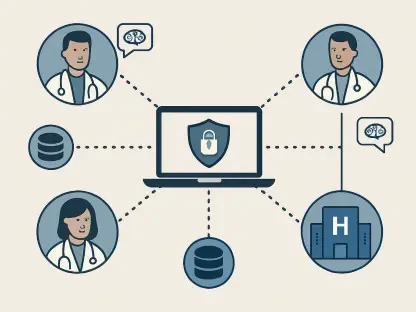
For artificial intelligence to gain the trust of the medical community, it must be anchored in the most rigorous and authoritative data available. Strategic partnerships are currently being forged to ensure that AI decision-making frameworks are fueled by high-trust, peer-reviewed sources. By integrating content from the New England Journal of Medicine and the JAMA Network, developers are ensuring that the AI logic is derived from the world’s most respected clinical trials and editorial analyses.
This integration creates a unified knowledge base that combines the depth of medical journals with existing clinical databases like UpToDate. When a physician queries an AI tool about a specific drug interaction or a new treatment protocol, the system can synthesize information from a vast array of high-quality sources in seconds. This move from back-office documentation to front-end clinical utility ensures that evidence-based insights are available at the exact moment a treatment decision is made, rather than being researched hours or days later.
Combatting “Hallucinations” Through Transparent Annotation
One of the primary obstacles to the widespread adoption of generative AI in medicine is the concern over “hallucinations”—instances where a model creates false but convincing information. To overcome this hurdle, developers are implementing strict protocols for verifiable sourcing and transparency. Every piece of advice or clinical data generated by the AI is now meticulously cited, allowing a doctor to trace the information back to the specific study or journal article where it originated.
The prevailing philosophy remains a human-in-the-loop model, where the clinician retains final authority over all medical decisions. Expert consensus suggests that these tools should be viewed as cognitive aids that help doctors navigate the scientific story of a disease while they focus on the patient story sitting in front of them. Industry data from Doximity indicates that roughly 35% of physicians are already utilizing AI to research medical findings, signaling a growing comfort with using these tools to supplement professional expertise rather than replace it.
A Framework for Integrating AI Research into Daily Practice
Implementing these advanced tools required a seamless workflow that did not increase the cognitive load on the physician. A successful integration followed a tripartite strategy that began even before the patient entered the room. During the pre-appointment phase, a clinician used the AI to review relevant literature or specific protocols based on the patient’s history. This preparation ensured that the doctor was fully briefed on the latest standards of care before the consultation commenced.
During the visit, the AI provided real-time contextual support by processing the conversation and surfacing relevant clinical facts or potential drug interactions. This allowed the doctor to remain engaged with the patient without needing to turn away to consult a separate screen. Finally, in the post-visit phase, the AI used the gathered data to answer follow-up questions and verified that the proposed treatment plan aligned perfectly with current best practices. This systematic approach ensured that the highest levels of medical research were consistently applied throughout the entire care cycle.