

The FDA’s Total Product Lifecycle approach mandates that cybersecurity considerations begin at the initial design phase and continue until the device is decommissioned. This paradigm shift reflects the reality of 2026, where medical technology is no longer comprised of standalone hardware but

Success in treating recurrent prostate cancer hinges on the ability to detect disease at extremely low PSA values where traditional imaging often fails. For years, clinicians struggled with blind spots during biochemical recurrence, where rising PSA levels indicated the presence of cancer, yet

The ongoing evolution of the medical sector has recently reached a pivotal crossroads where the heavy burden of administrative tasks is finally being met by high-performance artificial intelligence. Suki’s recent procurement of a $90 million Series E funding round signifies a transformative moment

Ingenio Medical Group intends to function as the connective tissue between disparate healthcare settings, such as virtual clinics, local specialists, and diagnostic laboratories. This initiative emerges at a time when the American healthcare system remains deeply fragmented, often leaving patients

This collaboration focuses on translating high-value cellular insights into sensitive clinical assays that remain consistent across diverse geographic regions and laboratory settings. By establishing this strategic alliance, CellCarta and Waters Corporation create a robust pathway for biotechnology

Mathematical filters like LASSO regularization ensure that AI models focus only on the most predictive markers of cancer while discarding irrelevant data points. This methodological precision is essential when addressing sacral tumors, which represent a significant hurdle in modern orthopedic

Powell Valley Healthcare CEO Todd Sandberg has identified the acquisition of a da Vinci Surgical System as a critical step for maintaining parity with neighboring medical facilities. This initiative represents a significant evolution in the regional healthcare landscape of the Big Horn Basin, where

As a seasoned healthcare policy analyst who has spent the last decade tracking the intricate dance between federal regulators and private insurers, I have watched the Medicare Advantage landscape transform through various cycles of expansion and contraction. Today, we find ourselves at a pivotal
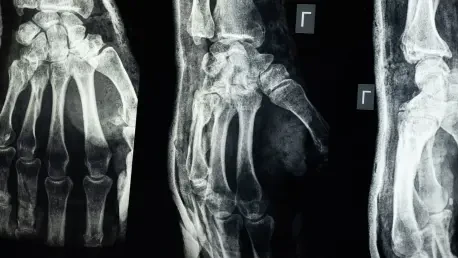
The fragility of AI performance is highlighted by the dramatic drop in sensitivity when a model is applied to data from a source not included in its training set. Primary bone tumors represent one of the most daunting diagnostic hurdles in modern musculoskeletal radiology due to their extreme

Comprehensive asset inventorying serves as the first critical step for healthcare providers looking to mitigate the risks associated with the quantum security gap. This initiative is becoming increasingly urgent as the disparity between standard enterprise technology and specialized medical systems


