
Wastewater epidemiology and community-scale sensing reveal intimate biological data about entire neighborhoods, necessitating a shift from individual consent to community data sovereignty. As of 2026, the integration of miniaturized biosensors into the healthcare systems of low- and middle-income countries represents a significant leap toward universal health coverage. These devices, ranging from wearable sepsis monitors to point-of-care diagnostics, offer real-time biological insights in areas where traditional medical infrastructure is often lacking. However, the deployment of such technology creates a profound privacy gap. While these sensors generate highly personal data, the existing privacy-enhancing technologies are largely designed for high-income regions with abundant computing power. This mismatch threatens the sustainability of digital health interventions in the Global South. Current research indicates that privacy must be reimagined as a context-dependent implementation rather than a rigid universal standard. In resource-constrained environments, the technical capacity of hardware and the stability of the local clinical environment are often insufficient to support standard encryption protocols. To be effective, privacy-by-design principles must respect the local limits of battery life, connectivity, and hardware availability. Without this shift in perspective, the very tools intended to bridge the health equity gap may instead introduce new forms of digital exclusion.
Real-World Performance: The Practical Reality of Digital Health
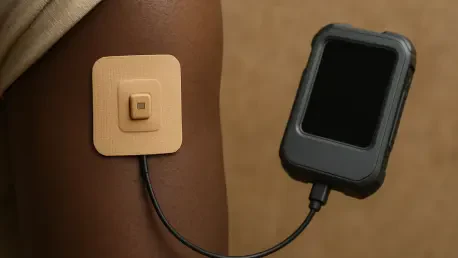
Field evidence from digital health projects in Rwanda and Sierra Leone highlights a stark disconnect between theoretical privacy and operational reality in 2026. While biosensors can achieve high data usability, they frequently encounter practical hurdles such as sensor-adhesion failures and intermittent Bluetooth connectivity. In these settings, a device that costs a significant portion of a local budget can be rendered useless by the added energy demands of complex security features. If an encryption method drains a battery too quickly or requires a high-end smartphone that health workers do not possess, the technology fails its primary medical mission. The focus must remain on the device’s ability to provide clinical value without being crippled by the weight of its own security protocols. Operational success depends on recognizing that the environment in which a sensor functions is just as important as the hardware itself. Designers are now forced to consider whether a security feature that works in a controlled hospital setting in a high-income country will survive the heat, humidity, and power fluctuations of a rural clinic. This realization is driving a move toward more rugged, energy-efficient privacy solutions that do not compromise the device’s longevity.
Furthermore, the data collected in these regions often face quality issues that are compounded by the technical requirements of privacy-enhancing technologies. For instance, a recent study on continuous physiological monitoring showed that a high percentage of data had to be excluded due to quality disruptions driven by connectivity gaps. When encryption layers are added to an already unstable data stream, the risk of total data loss increases significantly. The consensus among field researchers is that privacy measures must be proportional to the actual risks and the available infrastructure. Over-engineering security in an environment with frequent workflow disruptions can lead to clinical practitioners bypassing these systems entirely just to perform their basic duties. Therefore, the challenge lies in creating a security architecture that is robust enough to protect sensitive biological information while being invisible and lightweight enough to allow for seamless clinical operation. This necessitates a move toward “lean security,” where the most critical data points are prioritized for protection, reducing the overall computational burden on the device and ensuring that the sensor remains a functional tool for healthcare delivery rather than a technical liability.
Technical Mismatches: The Burden of Compute-Rich Protocols
The technical mismatches are particularly evident in the use of Secure Multiparty Computation and Homomorphic Encryption. These tools allow data processing while maintaining encryption, which is a gold standard for privacy, but they require immense computational overhead that milliwatt-scale microcontrollers simply cannot handle in the current 2026 landscape. Homomorphic encryption, for example, can be several orders of magnitude slower than unencrypted computation and often requires intensive processes like ciphertext refreshes. On a low-power device with intermittent connectivity, such requirements are often impossible to meet, leading to device crashes or stalled transmissions. This has led to a realization that while these tools work for cloud-connected genomic platforms in wealthier nations, they are currently impractical for edge-device biosensors in resource-limited settings unless intensive operations are offloaded to capable local servers. The search for more efficient alternatives has become a priority for engineers working in this space, as the demand for secure yet functional sensors continues to grow in the Global South.
Similarly, while Federated Learning is often suggested as a way to keep data on-device, it introduces its own set of heterogeneity problems that are difficult to manage in resource-constrained settings. Federated Learning keeps raw data on the sensor and shares only model updates, which theoretically preserves privacy. However, the communication costs and the on-device computation required to train these models can lead to faster battery depletion and longer processing times. The practicality of this approach depends heavily on the model architecture and the availability of nearby edge servers to share the load. In many LMIC contexts, where the network is unreliable, the process of syncing model updates can become a significant bottleneck. This suggests that for biosensors to be truly functional, the industry must develop hybrid models that balance the need for privacy with the reality of local power profiles. Engineers are now exploring quantized-gradient methods and other lightweight machine learning techniques that can operate within the strict memory and energy limits of affordable hardware, ensuring that privacy does not come at the cost of the device’s primary diagnostic function.
Statistical Disparities: Addressing the Differential Privacy Paradox
A critical concern in the deployment of privacy tools is the “equity paradox” found in Differential Privacy. This method protects anonymity by adding statistical noise to data, but the cost of this protection is often a decrease in accuracy. In the small or underrepresented clinical cohorts typical of many LMIC regions, this noise can disproportionately distort the results, making the data nearly useless for medical diagnosis. If a diagnostic tool becomes less accurate for a specific village because of privacy-preserving noise, the technology fails the very population it was designed to help. The impact of this statistical bias means that standard privacy benchmarks cannot be applied blindly to every population. When the trade-off between privacy and utility becomes too steep, it can lead to skewed health models that favor majority groups while neglecting rural or minority populations. This creates a new form of digital divide where privacy protections actually harm the quality of care for vulnerable groups. Developers must find a way to calibrate privacy budgets so that the noise added to the data does not drown out the critical biological signals needed for accurate health assessments.
To mitigate these risks, the industry is looking toward equity-aware budgeting for privacy protocols. This involves testing systems specifically on population-relevant data to ensure that privacy noise does not introduce or exacerbate health disparities. Monitoring must continue after deployment to detect if performance is slipping for specific demographic groups, a process that is essential for maintaining public trust. If a community perceives that a health sensor is less accurate for them than for others, participation in health programs will inevitably decline. Therefore, the calibration of these systems must be a dynamic process that involves local clinical data and ongoing validation. This approach moves away from a “one-size-fits-all” privacy model and toward a more nuanced, population-specific strategy. By prioritizing the accuracy of the diagnostic output alongside the privacy of the individual, researchers can ensure that biosensors remain a trusted and effective part of the local healthcare ecosystem. This requires a deep understanding of the local epidemiology and a commitment to ensuring that the benefits of digital health are distributed fairly across all segments of society.
Community Sovereignty: New Frameworks for Collective Data
The focus of privacy technology is also shifting from the individual to the community level as we progress through 2026. In scenarios like wastewater epidemiology, sensors can reveal genetic or health information about entire neighborhoods, making traditional individual consent models insufficient for the task at hand. This necessitates a move toward community data sovereignty, where local leaders and residents have a meaningful say in how their collective data is accessed and used. Such participatory structures ensure that technical decentralization leads to genuine local control rather than just data extraction by external entities. This shift recognizes that biological data can have collective implications, such as the potential for stigmatization of a particular neighborhood or ethnic group based on the results of environmental sensing. By involving the community in the governance of their data, health organizations can build stronger relationships and ensure that the insights gained from biosensors are used for the benefit of the people they monitor. This participatory approach is becoming a cornerstone of ethical digital health deployment in regions where individual rights may be less defined than collective interests.
To support this shift, a framework of “Computational Proportionality” has been proposed by leading bioengineers. This involves selecting privacy tools based on the available power, connectivity, and the specific needs of the community. For example, using lightweight noise injection or synthetic data for model training can provide a high level of protection without the massive overhead of traditional encryption. Hybrid solutions, like Trusted Execution Environments, offer a middle ground by providing hardware-supported protection that is less resource-heavy than pure software-based encryption. Ultimately, the success of next-generation biosensors depends on a design philosophy that prioritizes hardware limits, demographic realities, and local governance over abstract technical perfection. These frameworks are designed to be flexible, allowing for adjustments as local infrastructure improves or as new threats emerge. By focusing on the specific context of the deployment, the bioengineering community can create systems that are both secure and sustainable, paving the way for a more equitable future in global health technology.
Strategic Progress: The Implementation of Context-Aware Privacy
The bioengineering community successfully transitioned toward a more pragmatic approach to privacy as the mid-2020s progressed. Researchers and developers moved away from universal encryption standards that were once thought to be mandatory for all digital health devices. Instead, they adopted a “context-first” design philosophy that prioritized the functional capacity of sensors in the field. This shift was characterized by the development of lightweight security protocols that allowed wearable monitors to operate for extended periods without needing a recharge. Significant strides were made in offloading intensive computational tasks to local edge servers, which reduced the strain on individual biosensors and improved the overall reliability of the data. These advancements ensured that patients in rural areas received the same quality of diagnostic monitoring as those in urban centers, without the constant threat of device failure due to software overhead. The focus on hardware-software hybridization, particularly the use of Trusted Execution Environments, provided a balanced solution that maintained high security standards while remaining accessible for low-power microcontrollers.
Actionable progress was further achieved through the implementation of community-led data governance models that replaced outdated individual consent forms. Local health boards and community leaders were empowered to oversee the use of aggregated biological data, which significantly increased public trust and participation in sensing programs. This strategy helped prevent the misuse of data and ensured that the insights generated by biosensors directly informed local health interventions. Moving forward, the industry must continue to refine the calibration of differential privacy to prevent statistical bias from affecting underrepresented populations. It remains essential for developers to conduct rigorous, on-site testing to verify that privacy measures do not compromise the clinical accuracy of the devices. By maintaining this commitment to computational proportionality and community sovereignty, the global health community secured a future where biosensors are not just high-tech novelties, but essential, sustainable tools for achieving health equity. The integration of these sensors into national health systems proved that with the right design priorities, technology can overcome even the most significant resource constraints.