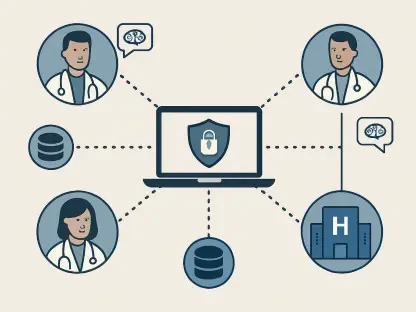

The federal government manages health benefits for over eight million individuals, but a new proposal has ignited a fierce debate over the boundary between administrative efficiency and personal privacy. This initiative, spearheaded by the Office of Personnel Management, seeks to gather granular and personally identifiable medical information from participants in the Federal Employees Health Benefits and Postal Service Health Benefits programs. While the agency frames this as a modernization effort to improve fiscal oversight, the prospect of centralizing such sensitive records has met with stiff resistance from a coalition of lawmakers. These critics argue that the move creates unprecedented risks for civil servants who depend on the confidentiality of their medical history. As the administrative landscape shifts toward more data-driven policy in 2026, the tension between safeguarding individual rights and achieving government transparency has reached a critical boiling point in the nation’s capital.
Privacy Concerns and Historical Security Vulnerabilities
The Risks of Centralized Personal Health Information
Ten House Democrats have formally signaled their disapproval, sending a letter to both the Office of Personnel Management and the Office of Management and Budget to demand an immediate cessation of the program. They express deep concern that the collection of such specific health data could allow for the targeted surveillance of federal employees based on their use of particular medical services. Specifically, there is an apprehension that the administration could identify and isolate individuals seeking reproductive healthcare, gender-affirming treatments, or HIV prevention services. By holding this information at a central federal level, lawmakers fear that political shifts or changes in leadership could lead to the weaponization of private health choices against public servants. This demographic includes millions of workers whose professional standing and personal lives could be compromised if their sensitive medical information were to be leaked or misused.
Beyond the immediate fears of political targeting, the proposal has raised significant questions regarding compliance with the Health Insurance Portability and Accountability Act and broader ethical standards. Legal experts and insurance carriers have noted that the granularity of the requested data may exceed what is strictly necessary for program management, potentially infringing upon established privacy protections. The current debate highlights a fundamental skepticism about whether a government agency should act as a repository for the intimate medical details of its workforce. Critics argue that once such a database is established, the precedent for government overreach is set, making it difficult to roll back the levels of surveillance once they are normalized. The insistence on transparency in medical claims is seen by many as a veil for deeper control, prompting a demand for more rigorous oversight and a reevaluation of the legal frameworks that currently govern how federal agencies handle data.
Lessons From Past Cybersecurity Failures
Central to the opposition’s argument is the agency’s historical difficulty in maintaining robust cybersecurity defenses, most notably the catastrophic data breach that occurred over a decade ago. That incident resulted in the compromise of sensitive records for 22 million individuals, exposing personal details and background investigation files to unauthorized actors. Lawmakers point to this failure as a primary reason why the agency should not be trusted with even more sensitive, granular health information today. They contend that the infrastructure required to protect such a massive cache of medical data is notoriously difficult to maintain against evolving digital threats. If a previous breach of personal identifiers caused such widespread damage, a breach involving detailed medical histories and pharmaceutical records could have even more devastating consequences for the affected employees. This history of vulnerability serves as a stark reminder that convenience should never be prioritized over safety.
As digital threats become more sophisticated in 2026, the potential for state-sponsored actors or criminal organizations to target centralized government databases remains a persistent concern for national security experts. The proposed collection of pharmacy claims and utilization patterns creates a high-value target that, if successfully breached, could lead to blackmail or large-scale identity theft. Members of Congress are pushing for a comprehensive briefing to understand how the agency plans to implement modern encryption and access controls that were missing in previous eras. They emphasize that without a proven track record of impeccable security, the risk of aggregate data exposure far outweighs any potential benefits of cost analysis. The dialogue is now centered on whether the agency has truly modernized its technical capabilities or if it is simply repeating the mistakes of the past by accumulating vast amounts of data without the proper safeguards.
Administrative Justification and Future Program Oversight
Improving Fiscal Oversight and Cost Containment
From the perspective of the Office of Personnel Management, the acquisition of detailed claims data is a fundamental component of modernizing the federal health benefit systems. The agency asserts that without access to granular medical and pharmacy utilization patterns, it cannot accurately identify the primary drivers of rising healthcare costs or detect patterns of fraudulent billing. By analyzing these data sets, the agency hopes to uncover inefficiencies in how benefits are delivered and identify areas where insurance carriers may be overcharging the government. This level of insight is framed as a necessary tool for fiscal responsibility, ensuring that taxpayer funds are utilized effectively and that the health programs remain sustainable for millions of covered individuals. The agency maintains that the goal is not surveillance, but rather the creation of a transparent marketplace where costs can be managed through data-driven decisions and evidence-based policy adjustments.
In addition to fraud detection, the agency intends to use the collected information to strengthen its position during contract negotiations with insurance providers and pharmaceutical manufacturers. By understanding the intricacies of drug utilization and manufacturer rebate structures, the government can demand more competitive pricing and better terms for federal employees. The current lack of direct access to this data puts the agency at a disadvantage, forcing it to rely on aggregated reports from the carriers themselves. Officials argue that gaining independence from carrier-provided data will lead to higher quality care and lower premiums for participants in the long run. This strategy is viewed as a way to level the playing field, allowing the government to act as a sophisticated purchaser of healthcare services rather than a passive payer. The focus remains on leveraging information to improve the affordability of federal plans in an increasingly complex medical landscape.
Developing Alternative Solutions and Future Frameworks
Moving forward, the resolution of this conflict likely requires a middle ground that balances the need for administrative data with the absolute necessity of individual privacy. One potential solution involves the implementation of advanced data anonymization techniques that would allow the agency to analyze trends and costs without ever accessing personally identifiable information. By stripping away identifiers and using aggregate statistical models, the government could still achieve its fiscal objectives without creating the surveillance risks that lawmakers currently fear. This approach would necessitate a technical overhaul of how claims are processed and reported, ensuring that the utility of the data is preserved while the identity of the patient is protected. Developing these privacy-preserving technologies could serve as a model for other large-scale government programs, demonstrating that efficiency and civil liberties are not mutually exclusive.
The ongoing dispute underscored the necessity for more transparent communication between the executive branch and the legislators who oversee federal employee protections. Legislators successfully halted the immediate implementation of the rule to ensure that a full review of the proposed safeguards was conducted before any data began to flow into centralized servers. In the coming months, the focus should shift toward establishing a clear governance framework that explicitly limits how the collected information can be used and who is permitted to access it. Future policies should prioritize the establishment of an independent oversight body to monitor the agency’s data practices and ensure that no individual is ever targeted for their personal medical choices. The lessons learned from this debate provided a foundation for more balanced health data policies that respected both fiscal accountability and the fundamental right to medical privacy.