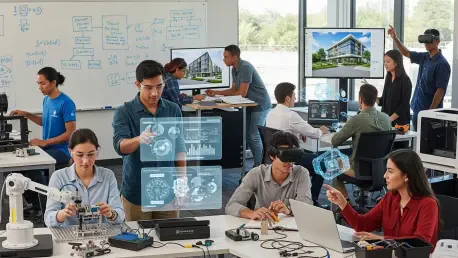

The corridors of modern academia are no longer merely silent halls for the consumption of established facts but have transformed into vibrant hubs where the next generation of professionals actively constructs the future through rigorous investigation. At the heart of this transformation is the 16th annual Create@State Student Research and Creativity Symposium at Arkansas State University, an event that serves as a premier showcase for the academic and artistic achievements of a diverse student body. By bringing together over 200 undergraduate and graduate participants from eight different colleges, the symposium functions as a critical bridge between classroom theory and professional application. This comprehensive platform emphasizes the institution’s commitment to fostering a culture of discovery, innovation, and cross-disciplinary collaboration. It moves beyond traditional testing to allow students to demonstrate how their specialized knowledge can be applied to solve the complex problems of 2026. This gathering illustrates that when students are challenged to lead, they respond with insights that are both academically sound and commercially viable, effectively setting the stage for their future roles as industry leaders.
Transforming Students Into Knowledge Creators
The primary objective of these scholarly initiatives is to fundamentally shift the academic paradigm, encouraging participants to view themselves as active knowledge creators rather than passive consumers of information. Under the guidance of dedicated faculty mentors, students are pushed to explore original questions and contribute unique insights to their respective fields, a process that is essential for developing a sense of intellectual ownership. Dr. Kari Harris, the director of the Office of Student Research and Scholarship, identifies this shift as a crucial celebration of scholarship that allows students to step into professional roles well before graduation. By conducting original experiments and formulating new theories, researchers gain a deeper understanding of the scientific method and the nuances of artistic expression. This transition from student to contributor is a vital step in the professional development process, as it builds the mental stamina required to navigate the uncertainties of high-level research. Such experiences ensure that the global knowledge base is constantly refreshed by new perspectives and innovative methodologies born in campus laboratories.
Beyond the accumulation of technical data, these initiatives prioritize the development of essential professional soft skills, such as advanced communication and public speaking. Presenting complex findings to a panel of judges and a diverse public audience forces students to refine their message and build the confidence necessary for high-stakes professional environments. This aspect of the symposium aims to help students connect their current academic pursuits with their long-term career goals by teaching them how to articulate value clearly. Participants must learn to translate their highly technical work into a narrative that resonates with stakeholders who may not share their specific expertise. The consensus among faculty and organizers is that these public presentations are vital for personal growth, allowing students to see their work as part of a larger professional conversation. This ability to communicate the significance of one’s research is often the deciding factor in securing funding, landing competitive positions, or influencing public policy. Consequently, the symposium acts as a rehearsal for the professional interactions that will define their careers in the coming years.
Addressing Modern Challenges Through Creative And Scientific Inquiry
Innovation within the university setting frequently takes the form of practical tools designed to solve specific problems, ranging from engineering projects to social analyses. In the creative works category, students have developed projects like “Piano Aid,” which utilizes electrical engineering principles to assist in musical education, and sustainable civil engineering solutions that align with modern environmental standards. These projects demonstrate a remarkable ability to apply technical skills to artistic or structural challenges, proving that creativity is a core component of effective problem-solving. Furthermore, observational research provides data-driven insights into social and professional environments, such as investigations into the future of production agriculture. By analyzing the intentions of current students regarding sustainable food production, researchers are addressing the global need for food security in a changing climate. Other notable studies have focused on modern workplace challenges, such as high rates of burnout among athletic trainers or the efficacy of hippotherapy in treating hypertonicity in children, showing that student inquiry is deeply rooted in community needs.
Scientific inquiry at the symposium pushes the boundaries of medicine and biology through rigorous experimental work that targets long-term health outcomes. Significant findings have emerged from studies on the anti-inflammatory properties of isoflavones derived from pigeon pea cultures, a research path that holds potential for the development of new treatments for chronic inflammatory diseases. Another innovative project involves the genetic engineering of lettuce to produce oral medicines, highlighting a trend toward the development of edible vaccines and more accessible pharmaceutical treatments. Such work is not limited to human medicine; researchers are also exploring the genomics of oral biofilms to improve dental health and bacterial management. These experimental projects underscore the potential for student-led discoveries to influence the pharmaceutical industry and clinical healthcare. By tackling these complex biological questions, students prove that high-level scientific breakthroughs can begin in university laboratories, provided there is sufficient support for experimental curiosity. This level of inquiry prepares them for the high-demand sectors of biotechnology and genomic research.
Elevating Clinical Standards And Interdisciplinary Excellence
The medical and nursing sectors benefit significantly from student-led quality assessments that focus on the implementation of evidence-based practice in healthcare settings. Graduate students are currently leading the way in evaluating new clinical interventions, such as the use of gastric ultrasound technology for patients on modern medications like GLP-1 agonists. Other critical research has focused on the use of intraoperative lidocaine to manage post-surgical pain, aiming to reduce the reliance on traditional opioids and improve patient recovery times. These projects provide a direct link between the university research environment and the hospital bedside, demonstrating how academic rigor can lead to immediate improvements in clinical standards and patient safety. By investigating the efficacy of these specific interventions, nursing and medical students are contributing to a safer and more efficient healthcare system. This work is essential for the continuous evolution of medical protocols, ensuring that the latest scientific findings are integrated into daily practice. The focus on quality assessment ensures that the next generation of healthcare providers is equipped to lead with data and compassion.
The highest honors at the symposium often go to projects that successfully blend diverse disciplines, proving that the most effective solutions frequently lie at the intersection of different fields. For example, the spatial ecology of parasites in freshwater snails requires a combination of environmental science, biology, and data mapping to understand local ecosystem health. Similarly, the integration of virtual reality technology into preoperative care to reduce patient anxiety showcases how cutting-edge tech can be adapted for clinical use. Even traditional artistic performances, such as a trumpet trio performing Brazilian music, are treated as rigorous forms of creative inquiry that require historical research and technical mastery. These achievements represent the ultimate synthesis of academic discipline and practical relevance, shaping a new generation of leaders who are ready to impact their industries through interdisciplinary thinking. This holistic approach to research encourages students to look beyond their own departments for inspiration and collaboration. The result is a richer, more complex body of work that reflects the interconnected nature of the modern world, where the boundaries between technology, science, and the arts are increasingly blurred.
The 16th annual Create@State symposium successfully demonstrated that the practical application of theoretical knowledge was the most effective way to prepare students for the professional world. Participants showcased a diverse array of projects that spanned from the genetic engineering of plants to the use of virtual reality in clinical settings, proving that student research was a vital driver of real-world innovation. Faculty mentors and university leaders established a platform where cross-disciplinary collaboration flourished, allowing for a more comprehensive approach to problem-solving. The event solidified the university’s role as a leader in fostering scholarship and professional development among its undergraduate and graduate populations. In the end, the symposium provided a clear path for the next generation of scholars and artists to influence their communities through original thought and evidence-based practice. Stakeholders in both academia and industry recognized the value of these contributions, suggesting that continued investment in student-led research was essential for societal progress. Future programs were encouraged to expand these collaborative opportunities to ensure that the bridge between the classroom and the professional industry remained strong and accessible for all.