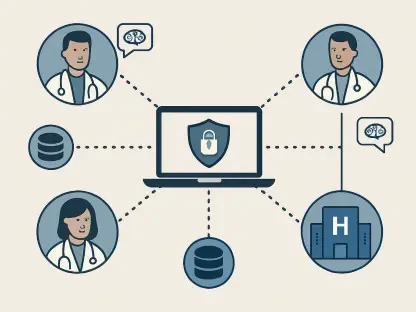

The United States healthcare system faces a startling reality where critical patient data often remains locked in physical filing cabinets despite a nationwide push for total digital transformation. This technological gap is particularly evident in behavioral health, where the disparity between mental health facilities and traditional medical centers creates a fragmented landscape for patient care. While acute care hospitals have achieved near-universal adoption of Electronic Health Records (EHRs), behavioral health institutions continue to operate under a significant deficit. A recent analysis from the Office of the National Coordinator for Health Information Technology (ONC) reveals that one in four facilities providing mental health or substance use treatment still relies on paper charts. This reliance on legacy systems complicates the immediate exchange of information, often leading to delayed interventions or incomplete clinical pictures. The persistent use of physical documentation in such a sensitive field underscores a systemic failure to modernize every corner of the healthcare sector equally.
Impact of Policy Exclusions on Health Information Systems
The roots of this technological divide can be traced back to historical legislative decisions that prioritized specific medical sectors over others during the early digital transition era. The Health Information Technology for Economic and Clinical Health (HITECH) Act established the initial momentum for digital adoption by offering financial incentives to hospitals and physicians, yet it notably omitted behavioral health providers from its scope. Consequently, while 97 percent of federal facilities have successfully integrated digital systems, state-run institutions lag far behind with an adoption rate of only 38 percent. Private organizations, both for-profit and non-profit, currently maintain a 68 percent adoption rate, showing that the lack of federal funding has left a permanent mark on the industry. Without the financial support seen in other sectors, these facilities face daunting costs associated with software licensing, hardware upgrades, and cybersecurity protocols. This financial barrier prevents the comprehensive integration required for modern medical standards.
Universal EHR adoption is no longer a luxury but a fundamental requirement for the coordination of complex patient care across multiple medical specialties. Digital records enable interoperability, allowing clinicians to share data seamlessly, which is essential when managing patients who require both physical and mental health treatments. When behavioral health data is siloed in paper files, it becomes incredibly difficult for primary care doctors or emergency room staff to access historical medication records or treatment plans. This isolation increases the risk of adverse drug interactions and prevents the realization of truly integrated care models that treat the whole person rather than isolated symptoms. Furthermore, the inability to participate in regional health information exchanges leaves behavioral health facilities on the periphery of the medical community. As the demand for substance use treatment and mental health services continues to rise, the lack of a standardized digital infrastructure poses a serious threat to patient safety and outcomes.
Current Initiatives for Modernization and Integration
To address these substantial gaps, several government-led initiatives are working to align behavioral health technology with the rest of the medical world starting in 2026. At the state level, Washington has successfully implemented a sophisticated management system designed to facilitate streamlined data sharing across various agencies, serving as a potential blueprint for other regions. On a national scale, the Department of Health and Human Services (HHS) and the Substance Abuse and Mental Health Services Administration (SAMHSA) have launched pilot programs to refine health IT standards specifically for this sector. Simultaneously, the Department of Veterans Affairs (VA) is continuing the rollout of its Electronic Health Records Modernization (EHRM) program across more sites through 2028. Although the VA program has encountered obstacles, such as high implementation costs and training deficiencies that have impacted staff morale, its progress remains a critical component of the national strategy to modernize veteran care. These efforts represent a shift toward prioritizing technological equity in healthcare.
The realization of a fully integrated national health network required a departure from the fragmented policies that once marginalized behavioral health providers. Leaders within the industry recognized that bridging the digital divide demanded more than just software; it required a commitment to sustained funding and specialized training programs for frontline staff. By adopting standardized data protocols and investing in scalable cloud-based solutions, facilities began to overcome the historical hurdles of the past decade. The successful transition of these institutions facilitated a more holistic approach to patient management, where mental and physical health data resided in a single, accessible environment. Moving forward, the focus shifted toward utilizing artificial intelligence and predictive analytics to identify patients at risk of relapse or crisis before an emergency occurred. Future developments in this space depended on the continued collaboration between state agencies and private vendors to ensure that no facility was left behind in the pursuit of high-quality, data-driven behavioral healthcare.