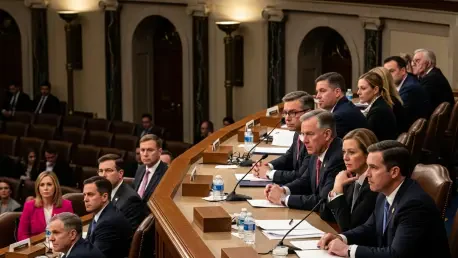

The escalating price of medical care in the United States has transformed from a persistent economic headache into a full-scale national crisis that threatens to bankrupt the average household. This volatility set the stage for a recent high-stakes confrontation within the House Ways and Means Committee, where federal lawmakers directly challenged the leaders of the nation’s most prominent health systems. The session served as a volatile forum for the deepening healthcare affordability crisis, highlighting a rare moment of intense public scrutiny for hospital management. The friction between federal oversight and the administrative strategies of medical institutions has become a critical focal point for national economic policy, as both sides argue over who is truly responsible for the checkbook-draining costs of staying healthy.
As the hearing progressed, it became evident that the divide between the perspectives of legislators and executives is vast and deeply entrenched. Lawmakers arrived with a litany of accusations regarding predatory pricing and a lack of transparency, while hospital CEOs defended their financial structures as a necessary response to systemic overhead and rising operational demands. This discussion offers a roadmap through the complex landscape of American healthcare, examining how the pursuit of institutional solvency frequently clashes with the basic need for affordable patient care.
The Breaking Point of American Medical Affordability
The American healthcare system is currently navigating a period of unprecedented strain, characterized by medical costs that have significantly outpaced general inflation for years. During the recent committee hearing, the atmosphere was one of urgent frustration as representatives pointed to the massive disparity between hospital revenues and the financial reality of the constituents they represent. This crisis has reached a breaking point where incremental adjustments no longer suffice, leading to a demand for fundamental structural reform that could reshape the entire industry.
National economic policy is now inextricably linked to hospital management because the healthcare sector represents a massive portion of the gross domestic product. When hospital costs rise, the ripples are felt in everything from federal budget deficits to the competitiveness of American businesses that provide employee insurance. The tension observed in Washington reflects a broader societal realization that the current trajectory is mathematically impossible to maintain without triggering a collapse in medical access for the middle and lower classes.
The debate essentially centers on a fundamental disagreement regarding the origins of these price hikes. On one side, federal oversight committees presented evidence of aggressive billing practices that seem designed to maximize profit at the expense of vulnerable populations. Conversely, hospital executives argued that they are managing a fragile ecosystem burdened by labor shortages, supply chain disruptions, and an increasingly aging population. This divide sets the stage for a deeper look into the specific mechanisms that have turned the hospital bill into a source of national anxiety.
Deconstructing the Conflict Between Pricing Strategies and Operational Realities
The conflict over medical pricing is not merely a matter of numbers on a page; it is a battle over the business models that define modern healthcare. Lawmakers are increasingly focused on how hospitals have transitioned from community-focused centers into massive corporate entities that utilize complex financial maneuvers to protect their margins. This evolution has created a disconnect between the clinical mission of healthcare and the aggressive fiscal strategies required to survive in a consolidated market.
Hospital leaders, however, maintain that their operational realities are far more precarious than they appear on a balance sheet. They contend that the high prices criticized by the public are a direct reflection of the rising costs of medical technology, specialized labor, and the maintenance of 24/7 emergency services. To understand this conflict, one must examine the specific areas where legislative intent and executive strategy have reached a stalemate.
Market Consolidation and the Expansion of Hidden Facility Fees
The legislative argument against current hospital practices often begins with the aggressive trend of market consolidation. Over the past decade, a wave of mergers has transformed regional healthcare landscapes into environments dominated by a few massive systems. Lawmakers argue that these regional monopolies effectively stifle competition, allowing providers to dictate prices without the natural downward pressure of a free market. When a single entity controls the majority of beds in a metropolitan area, insurers and patients alike lose the leverage necessary to negotiate fair rates.
One of the most controversial outcomes of this consolidation is the proliferation of “site-of-service” billing. This occurs when a large hospital system acquires an independent private practice and immediately begins charging “facility fees” for services that were previously provided at a lower cost. Patients often find themselves paying hundreds of dollars more for the exact same procedure in the exact same building, simply because the entity on the letterhead has changed. Legislators view this as a primary driver of inflation that provides no additional clinical value to the patient.
Executives counter this narrative by suggesting that these fees are essential for maintaining the broader infrastructure of a health system. They argue that a hospital-owned clinic must meet much higher regulatory and safety standards than a private office, which necessitates additional funding. However, the debate continues over whether these fees are a legitimate reflection of increased overhead or a byproduct of unchecked market power utilized by systems that have become too big to fail.
The Financial Weight of Administrative Overload and Regulatory Compliance
From the executive perspective, the federal government is often the primary architect of its own affordability crisis. Hospital leaders at the hearing emphasized that administrative overload has become a multi-billion-dollar burden that diverts resources away from actual patient care. The claim is that for every dollar spent on a doctor or nurse, a significant portion must also be spent on a small army of coders, billers, and compliance officers who navigate the labyrinth of federal and state reporting requirements.
To mitigate these costs, industry leaders have called for a radical simplification of the reimbursement process, including the implementation of a “one-claim” system. By standardizing how data is shared between providers and insurers, they believe the industry could eliminate much of the friction that currently defines the billing cycle. The argument is that the current fragmentation of the system creates unnecessary labor costs and administrative delays that ultimately get passed down to the consumer.
The risk of excessive bureaucracy extends beyond just the financial cost; it also stifles medical innovation. When executives are forced to focus their strategic energy on regulatory compliance and data reporting, they have less capacity to invest in new treatments or improved patient workflows. This perspective suggests that if policymakers are serious about lowering healthcare costs, they must first look in the mirror and address the red tape that makes the business of medicine so inefficient.
Chronic Illness Trends and the Burden of Uncompensated Care
The physical health of the American public also plays a massive role in the pricing debate, with hospitals reporting a sicker and more “complex” patient population than ever before. Rising rates of obesity, diabetes, and other chronic conditions mean that the average hospital visit requires more intensive resources, advanced imaging, and specialized staff. Executives argue that the cost of care is rising because the difficulty of the work is increasing, mandating a level of investment that was not required twenty years ago.
Furthermore, the expiration of pandemic-era protections has led to a resurgence in the volume of uninsured or underinsured patients. When a hospital treats a patient who cannot pay, those costs do not simply disappear; they are often shifted onto private payers and commercial insurance companies. This “cost-shifting” creates a cycle where the decline of the public safety net leads directly to higher premiums and out-of-pocket costs for those who are insured.
This reality challenges the assumption that hospital pricing is solely a choice made by greedy administrators. External health trends and shifting federal policies create a financial vacuum that hospitals must fill to stay operational. The discussion at the hearing highlighted the fact that as long as the underlying health of the population continues to decline, the resource use within the hospital setting will continue to climb, regardless of the billing structure in place.
Challenging the Ethics of Rural Classifications and Payment Parity
One of the more technical but explosive topics at the hearing involved the “dual-classification” of urban medical centers. Under current guidelines, some major hospitals located in large cities can claim rural status to access higher Medicare reimbursements and special drug pricing programs. Lawmakers presented evidence that many wealthy urban systems are utilizing these loopholes to pad their budgets, effectively siphoning off federal funds that were originally intended to support struggling facilities in remote areas.
The debate over site-neutral payments further complicates this issue. Policymakers are pushing for a system where Medicare pays the same rate for a procedure regardless of where it is performed. This would eliminate the incentive for hospitals to buy up local clinics just to trigger higher reimbursement rates. While this seems like a logical step for cost savings, hospital leaders warn that it ignores the 24/7 safety-net requirements that hospitals must maintain. They argue that a hospital’s higher rates subsidize the emergency departments and trauma centers that independent offices do not have to provide.
These technical loopholes influence the broader distribution of federal healthcare dollars in ways that are often invisible to the public. If a major Manhattan hospital can qualify for “rural” funding, it raises serious questions about the integrity of federal classification systems. The tension here lies in balancing the need for lower patient costs with the reality that hospitals provide a level of social utility and emergency readiness that requires a different financial model than a standard outpatient clinic.
Strategic Pathways Toward Transparent and Sustainable Healthcare
Synthesizing the takeaways from this clash requires a balanced view that recognizes the validity of both sides while prioritizing the protection of the patient. The path forward must involve a commitment to transparency that allows consumers to understand exactly what they are paying for before they receive a bill. Actionable strategies, such as streamlining quality metrics and closing reimbursement loopholes, could provide a middle ground that stabilizes the industry without bankrupting the public.
Policymakers have an opportunity to enforce transparency by mandating clearer pricing structures and limiting the use of facility fees in non-emergency settings. By closing the loopholes that allow urban hospitals to claim rural benefits, the government can ensure that federal dollars are reaching the communities that are truly at risk. At the same time, the industry must be given the tools to reduce administrative friction, allowing them to focus their resources on clinical outcomes rather than paperwork.
Ultimately, the goal is to create a system where hospital solvency and patient affordability are not mutually exclusive. This will require a departure from the “blame game” and a move toward collaborative reform. If the industry can adopt standardized data practices and more honest billing structures, it may be possible to slow the escalation of costs while maintaining the high quality of specialized medical services that the American system is known for.
Forging a Path Through the Systemic Stalemate
The hearing demonstrated that the current trajectory of escalating costs and mutual finger-pointing was unsustainable for both providers and the public. While lawmakers pushed for immediate legislative remedies, executives maintained that the root causes of inflation were far more complex than simple corporate greed. It became clear that the long-term implications of failing to reach a consensus on site-neutrality and administrative reform would be a continued decline in medical accessibility for millions of Americans.
A shift in focus toward measurable patient outcomes rather than the preservation of outdated billing structures emerged as the only viable solution. The discussion concluded with a realization that the systemic stalemate could only be broken by comprehensive policy shifts that addressed both the market power of hospitals and the bureaucratic weight of the government. In the end, the confrontation served as a stark reminder that the financial health of the nation depended on a fundamental reorganization of how medical care was priced and delivered. By moving toward a model that rewarded efficiency and transparency, the industry had the potential to restore public trust and ensure that life-saving care remained within reach for everyone.