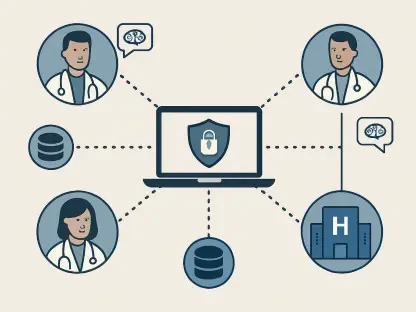

Relentless increases in reported syphilis cases, sharper attention to congenital transmission, and a pivot toward faster care have pushed syphilis immunoassay diagnostics from a niche focus to a strategic priority across health systems, retail channels, and digital care networks worldwide. Routine screening mandates, broader outreach to high-risk populations, and tighter linkages between testing and treatment have turned steady test demand into a durable market engine that rewards access, speed, and reliability. Against that backdrop, manufacturers are shifting investment toward point-of-care (POC) and home self-testing while preserving the central role of automated lab platforms that anchor surveillance and confirmatory algorithms. The resulting market is neither hype-driven nor cyclical; rather, it reflects fundamental epidemiology, practical policy choices, and product design that lowers barriers to timely diagnosis. The core question now is less about whether growth will continue and more about which formats—especially over-the-counter (OTC) blood tests and rapid, connected POC assays—will capture the largest share of volume and value through 2034.
Market Snapshot to 2034
The global syphilis immunoassay diagnostics market, valued at about US$ 548.5 million in 2023, is projected to exceed US$ 978.5 million by year-end 2034, reflecting a steady compound annual growth rate near 5.5%. This outlook rests on recurring use cases: antenatal screening embedded in policy, monitoring of treatment response in clinical pathways, and routine testing in sexual health clinics and community settings. It also reflects a pragmatic technology mix. High-throughput ELISA and chemiluminescence immunoassays (CLIA) remain indispensable for centralized workflows and surveillance, while rapid immunochromatographic assays extend reach into pharmacies, outreach sites, and mobile units. From 2026 to 2034, incremental gains in access and accuracy are expected to matter more than step-change disruptions, with adoption paced by reimbursement, procurement, and data integration.
What distinguishes the current cycle is the breadth of decentralized formats entering mainstream channels, not a displacement of lab testing. Kits and reagents drive recurring revenue across both centralized and decentralized models; instruments and analyzers sustain lab capacity; and simple cassettes paired with compact readers broaden testing footprints where infrastructure is thin. Margin profiles favor POC and OTC in many markets due to lower overhead and faster inventory turns, especially when bundled with digital services like care navigation. Portfolio synergies also help: diagnostics firms that unify multiplex menus, connectivity, and adaptable manufacturing can cross-sell more effectively, shorten launch timelines, and buffer supply risk. The result is a market that rewards operational excellence as much as scientific performance.
Epidemiology and Policy Tailwinds
Resurgent incidence has redefined urgency. Adults aged 15–49 in North America experienced roughly a 30% rise in cases between 2020 and 2022, while Europe recorded 35,391 confirmed cases in 2022, up 34% year over year. In the United States, congenital syphilis surpassed 3,700 cases in 2022, a stark indicator of missed prevention and delayed detection. Such figures have immediate operational consequences: more tests are ordered earlier in pregnancy, community clinics widen screening criteria, and outreach programs scale rapid testing in nontraditional venues. These shifts funnel consistent specimen volume across both decentralized sites and reference labs, reinforcing a dual-track ecosystem where speed at the front line pairs with rigor in confirmatory workflows.
Policy is amplifying the trend. Health authorities are recommending broader, more frequent testing for high-risk groups, while maintaining combined algorithms that sequence treponemal and non-treponemal assays to separate infection status from disease activity. This approach, refined over years of clinical use, demands both rapid screens and reliable follow-up. It also pressures suppliers to optimize sensitivity and specificity for fingerstick and venous samples, reduce invalid rates, and simplify instructions. As screening expands into pharmacies and telehealth-enabled home settings, discretion and data security have become central to design requirements, encouraging solutions that encrypt results, anonymize reporting, and guide next steps without sacrificing user control.
Technology Shifts Reshaping Access
Innovation is tilting decisively toward rapid immunochromatographic assays that deliver results in minutes with minimal equipment and training. Accuracy has improved with better antibodies, refined membrane chemistries, and quality-controlled manufacturing that curbs lot-to-lot variability. Many systems now pair lateral flow cassettes with compact readers or camera-based interpretation through secure mobile apps, curbing user error and enabling digital traceability. In high-throughput environments, CLIA and ELISA sustain throughput and automation, but connectivity is closing the gap at the edge: POC platforms upload de-identified outcomes to clinical records or public dashboards, where allowed, boosting visibility without inviting privacy risks.
Multiplexing is moving from pilot to standard. Chembio’s DPP HIV-Syphilis System, which received a CLIA waiver in 2023, illustrates why: a single fingerstick generates two actionable results, accelerating clinical decisions and conserving staff time in decentralized sites. The same logic is expanding to broader STI menus where syndromic testing reduces missed co-infections and streamlines pathways from screening to treatment. As vendors layer in connectivity, readers can prompt confirmatory steps, schedule retesting based on guidelines, and flag probable false positives in low-prevalence settings. This orchestration matters for outcomes and reimbursement alike, because it reduces avoidable follow-ups and improves adherence to care protocols.
Home and OTC Testing Momentum
OTC and at-home options are transitioning from curiosity to core channel. Labcorp’s FDA-authorized First to Know Syphilis Test brought blood-based self-testing into retail and e-commerce, signaling regulator and retailer confidence in consumer-directed diagnostics. Roche added consumer reach by obtaining access to LumiraDx’s OTC syphilis test technology, rounding out a portfolio that spans centralized labs to home use. These moves are expanding who gets tested and when. For users who avoid clinics due to stigma, work schedules, or transportation, discreet fulfillment and clear instructions reduce friction. For programs focused on congenital prevention, at-home screening earlier in pregnancy can prompt timely confirmatory testing and treatment.
The digital layer is proving decisive. Telehealth tie-ins, pharmacist-led counseling, and app-based guidance help convert a result into action. Privacy-preserving reporting supports public health tracking without exposing personal identities, while automated prompts reduce delays to confirmatory RPR or TPPA when indicated. Companies like Simple HealthKit and Mylab Discovery Solutions are broadening near-patient menus and refining sample collection workflows that feel familiar to consumers. Even so, product design must anticipate real-world variability—lighting for photo capture, lancet usability, and readable instructions for nonclinical users—because performance on paper is not the same as performance at home. The leaders in OTC will be those that treat usability as a clinical feature, not an accessory.
Competitive Playbook and Partnership Activity
Established diagnostics firms—Abbott, BD, bioMérieux, Bio-Rad Laboratories, Danaher, DiaSorin, Siemens Healthineers, Thermo Fisher Scientific, and Roche Diagnostics—are leveraging installed instrument bases, channel depth, and regulatory muscle to defend share while expanding into decentralized formats. Their playbook centers on three levers: raise analytical performance to minimize discordant results, compress time-to-result for rapid settings, and reduce steps for end users. That strategy aligns with provider and payer priorities: fewer inconclusive outcomes, faster linkage to care, and operational simplicity that holds up outside hospital labs. Importantly, these firms can cross-sell across menus and platforms, a structural advantage as customers consolidate purchasing.
Partnerships and M&A are compressing development cycles. Roche’s access to LumiraDx’s OTC technology injected proven microfluidic and connectivity assets into its consumer pipeline. Chembio’s CLIA-waived dual HIV-syphilis assay opened new doors in outreach programs and pharmacy clinics. Meanwhile, capital is aligning with the decentralized thesis: NowDx closed US$ 22.5 million to commercialize an OTC syphilis test, and a CDC-backed US$ 13 million initiative is accelerating rapid testing among high-risk groups. These signals matter beyond headline numbers. They indicate confidence in scalable manufacturing for lateral flow and reader-enabled formats, in regulatory pathways that reward robust evidence, and in digital ecosystems that can support both care navigation and anonymized surveillance.
Where Growth Concentrates: Segments and Regions
Growth concentrates first in products with recurring pull. Kits and reagents dominate revenue in both lab and rapid settings, refreshed with each test and insulated from capital spending cycles. Lateral flow cassettes and portable readers drive POC volume, especially where clinics are small and workflows must be lightweight. In parallel, instruments and analyzers remain vital for centralized labs that manage confirmatory testing, outbreaks, and longitudinal surveillance. On the technology axis, CLIA and ELISA persist as mainstays, while immunochromatographic assays expand share by delivering speed and simplicity. Diagnostic algorithms continue to combine treponemal and non-treponemal tests; multiplex panels streamline that logic by embedding decisions into a single encounter.
By testing location, POC leads volume growth, reflecting demand for immediate results in clinics, outreach sites, and pharmacies. Self-testing is the fastest-growing niche as OTC clears regulatory hurdles and earns retail shelf space. Central labs hold indispensable roles in complex cases, quality assurance, and epidemiologic monitoring. End users map to this split: hospitals and clinics, public health labs, and diagnostic laboratories remain core customers, while home care and consumer channels expand through OTC and subscription or mail-in models. Regional dynamics sharpen the picture. North America leads on infrastructure and enabling policy; Europe follows, propelled by rising incidence; Asia Pacific is expected to grow fastest as investment and access scale; and Latin America and Africa offer significant upside when local partnerships, adapted pricing, and training align testing with treatment pathways.
Action Plan: Navigating Barriers and Building Scale
Regulatory pathways for OTC and POC remain demanding, with rigorous validation, labeling, and post-market responsibilities that extend well beyond initial clearance. The fastest-moving companies are investing earlier in clinical evidence, human factors testing, and quality systems to shorten review cycles and prevent field recalls. Access barriers persist in low- and some middle-income regions where supply chains are fragile, refrigeration is unreliable, and budgets are tight. Here, durable cassettes with heat-stable reagents, simplified training modules, and distributor-led maintenance programs can make the difference between pilots and scale. Performance variability tied to sample type and user expertise underscores the need for built-in controls, reader-based interpretation, and continuous proficiency testing.
Digital tools can turn these constraints into manageable risks. Connected readers that timestamp results, verify control lines, and upload encrypted data reduce operator error and strengthen program reporting. Smartphone apps that guide users step by step, schedule confirmatory tests, and open telehealth visits shrink the gap between detection and treatment. For retailers and pharmacies, integrating inventory analytics with local epidemiology signals helps keep the right products in stock when demand spikes. For public programs, privacy-preserving data feeds from decentralized sites enhance situational awareness without compromising trust. Across settings, the message is consistent: invest in usability, training, and connectivity as core performance attributes, not add-ons, to translate scientific sensitivity into real-world impact.
What to Watch Through 2034
Stakeholders seeking durable advantage should prioritize three actions. First, align portfolios around multiplex and digitally connected rapid tests that deliver immediate, interpretable results and trigger guideline-based next steps; dual-target formats like CLIA-waived HIV-syphilis assays set the benchmark. Second, treat OTC as a full channel strategy—optimize packaging for discretion, instructions for clarity, and post-result navigation for speed—because conversion to confirmatory testing and treatment is where clinical value and payer support converge. Third, localize manufacturing and supply for emerging markets, pairing tiered pricing with training and service models that fit resource constraints; regional resilience will be a differentiator when demand surges or logistics tighten.
Investors and operators should also track policy and reimbursement signals that influence uptake from 2026 to 2034: payer coverage for OTC blood-based tests, retail pharmacy test-and-treat protocols, and data standards that streamline privacy-preserving reporting. Watching how AI-powered readers handle edge cases, how retailers manage counsel-at-counter models, and how public agencies structure bulk procurement will reveal where margins and volume concentrate. Taken together, these moves offered a path to sustainable growth: keep diagnostics close to the patient, bind results to rapid care, and design for the messy realities of decentralized use. If those conditions held, POC and OTC formats were poised to power the market’s next leg, translating epidemiologic urgency into faster diagnoses, broader reach, and more reliable control of syphilis through 2034.