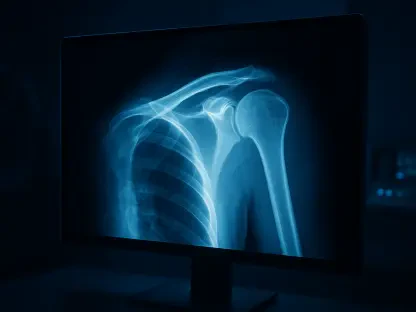

The fragility of traditional medical AI often results in significant performance drops when algorithms encounter data from different scanners or varying patient demographics in real-world settings. This persistent challenge has led researchers and healthcare providers to look beyond narrow, task-specific algorithms toward foundation models that mimic human-like generalization. In the past, AI in medical imaging was synonymous with specialized software that could only do one thing well, often failing when moved from the lab to the clinic. However, the current landscape is defined by large-scale pre-training on multi-institutional datasets, which provides a backbone for various applications simultaneously. By 2026, the focus has shifted to building systems that understand the broader context of anatomy and pathology rather than just recognizing pixel patterns. This evolution aims to create tools that are not only more accurate but also more resilient to the inevitable variations found across global healthcare environments.
Assessing Technical Evolution: The Path to Data Integrity
The Shift: Multimodal Learning and Architecture
The development of medical foundation models follows four distinct paths that redefine how computers process biological information. First, image-representation pre-training enables models to learn the fundamental geometry of organs and tissues without explicit labeling. Second, image-language alignment allows the AI to correlate visual findings with the descriptive terminology used by radiologists in their reports. Third, the integration of diverse clinical records, including longitudinal lab results and genomic data, provides a holistic view of patient health. Finally, the modeling of dynamic sequences, such as surgical videos or real-time ultrasound, captures the temporal aspect of medical procedures. Unlike previous iterations, these models develop a generalized understanding that allows them to perform across various clinical domains. This architectural shift enables the AI to pivot between tasks such as cancer subtyping and survival estimation effortlessly, providing a truly flexible toolset for the modern radiology and pathology departments.
Data Quality: Prioritizing Diversity Over Absolute Volume
While foundation models require millions of data points to function effectively, the true measure of their success lies in data diversity and patient-level independence rather than simple quantity. For a model to remain viable in a clinical setting, it must be trained on high-quality, paired data that reflects real-world variety across different medical centers and imaging equipment brands. Relying on a massive but homogenous dataset often leads to biased results that fail when applied to minority populations or specific scanner types. Therefore, modern curation strategies emphasize the inclusion of edge cases and rare pathologies that provide the model with a more comprehensive perspective. This focus on diversity ensures that the AI can handle the noise and artifacts commonly found in daily clinical practice. Ultimately, the shift toward quality-centric data collection marks a significant milestone in the maturation of medical AI, prioritizing reliability over the sheer scale of the training set used during the initial development phase.
Practical Validation: Moving Beyond Standard Accuracy
Clinical Reality: Implementing a Multidimensional Framework
Standard accuracy metrics and retrospective studies are no longer enough to prove that a foundation model is ready for the high-stakes environment of the exam room. To pass the clinical reality test, models must undergo rigorous evaluation regarding their algorithmic robustness under pressure and their actual utility when used by a physician in real-time. This means testing the AI against adversarial data, such as images with unexpected motion artifacts or non-standard positioning, to see if the system can still provide a reliable output. A multidimensional framework looks beyond the area under the curve and considers how the AI affects the speed and accuracy of the human clinician. It is not enough for an algorithm to be correct in a vacuum; it must be useful in the chaotic context of an emergency department or a busy diagnostic center. This paradigm shift in validation ensures that only the most resilient and practical tools make it into the clinical workspace for daily use.
Hospital Integration: Seamless Infrastructure and Governance
Successful deployment requires these models to be seamlessly embedded into existing hospital systems, such as Picture Archiving and Communication Systems (PACS) and Radiology Information Systems (RIS). If a foundation model operates as a standalone application, it creates friction in the diagnostic workflow, forcing clinicians to toggle between multiple screens and interfaces. Modern integration strategies focus on creating a unified experience where AI-generated insights appear directly within the primary viewer used by the radiologist. This technical synergy allows for faster decision-making and ensures that the AI is used as a natural extension of the clinician’s eyes. Moreover, ensuring compatibility with HL7 and DICOM standards is crucial for maintaining data fluidity across different departments. By 2026, the focus has shifted toward plug-and-play architectures that allow hospitals to swap or update AI components without disrupting the underlying IT infrastructure or patient care services.
Strategic Governance: Establishing Ethical Standards
Patient Safety: Addressing Regulatory and Ethical Hurdles
The clinical adoption of foundation models brings complex ethical and regulatory hurdles, particularly regarding data privacy, demographic bias, and informed consent. Because these models are trained on such vast datasets, ensuring that individual patient identities are fully protected remains a top priority for developers and hospital administrators alike. Furthermore, there is a constant need to monitor for demographic bias, ensuring that the AI performs equitably across different ages, genders, and ethnicities. Developers must implement uncertainty signals that allow the model to notify a user when it is unsure of a result, which is a critical safety feature in diagnostic medicine. These signals act as a safeguard, prompting a more thorough manual review when the AI encounters a case that falls outside its primary training distribution. Addressing these ethical concerns is not just a legal requirement but a fundamental part of building sustainable and trustworthy AI systems.
Strategic Outcomes: Reflecting on Systemic Accountability
The healthcare industry recognized that the long-term success of foundation models depended on more than just code; it required a cultural shift toward systemic accountability. Stakeholders prioritized the creation of collaborative networks where hospitals shared anonymized data regarding AI performance in diverse clinical scenarios. This collective intelligence allowed developers to identify and fix localized biases before they could affect patient outcomes on a larger scale. Governments and regulatory bodies also played a key role by establishing dynamic certification processes that adapted as models learned from new data. These efforts transformed AI from a mysterious black box into a transparent and reliable partner for medical professionals. By focusing on the human-centered design of these systems, the industry ensured that technology served as a bridge rather than a barrier between patients and their physicians during the initial rollout phase of the new diagnostic infrastructure.