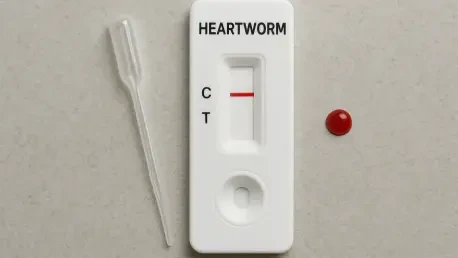

The shift toward miniaturized diagnostic processes allows general practices to implement immediate treatment plans for heartworm-positive patients during a single visit. This evolution represents a pivotal moment in veterinary medicine, where the traditional delay between sample collection and clinical action is being eliminated. A recent validation study published in the journal Parasites & Vectors underscores this progress by evaluating the trūRapid™ FOUR heartworm antigen test. Developed through a high-level collaboration between Mars Petcare Science & Diagnostics and Antech Diagnostics, the research highlights how this point-of-care solution mirrors the precision of laboratory-grade ELISA methods. By focusing on the detection of Dirofilaria immitis, the parasitic nematode that causes canine heartworm disease, the study provides a robust data set that confirms clinical efficacy within a tight ten-minute window, ensuring that pets receive accurate assessments.
The Biological Basis of Antigen Detection
The core mechanism of the trūRapid™ FOUR test relies on a sophisticated lateral flow immunoassay designed to identify specific glycoprotein antigens. These biological markers are secreted exclusively by adult female heartworms into the host’s bloodstream, providing a definitive indicator of an active infection. This distinguishes the assay from older antibody-based tests, which often merely suggest prior exposure rather than a current, reproducing population of parasites. By targeting these specific antigens, the test enables veterinarians to confirm the presence of adult worms with a high degree of certainty, allowing for immediate medical intervention. This specificity is essential because the treatment for heartworm disease is often intensive and requires precise confirmation before initiating complex pharmaceutical protocols. The ability to distinguish between exposure and active infection ensures that clinical resources are allocated appropriately and that patients are not subjected to unnecessary risks or the side effects of medications they do not actually require.
To validate these biological claims, researchers utilized a comprehensive panel of 350 canine serum samples, creating a rigorous testing environment that simulated real-world clinical challenges. The study compared the performance of the trūRapid™ FOUR against two well-established benchmarks: the DiroCHEK® laboratory-based microtiter plate ELISA and the SNAP® 4DX® Plus point-of-care assay. By selecting these specific comparators, the research team was able to measure the new technology against both the traditional “gold standard” used in reference laboratories and the current market leader used in private practices. This dual-benchmarking approach provides a holistic view of how the test functions across different diagnostic settings. The methodology focused on calculating sensitivity and specificity using samples that were already categorized as positive or negative by laboratory methods, ensuring that the final data was grounded in verifiable results that clinicians can trust during their daily rounds and high-stakes diagnostic situations.
Statistical Validation: Precision and Consistency
The statistical results of the evaluation demonstrated that the trūRapid™ FOUR performs with an accuracy level that is virtually identical to its laboratory counterparts. The test achieved a sensitivity of 98.7 percent, successfully identifying 147 out of 149 positive samples provided in the study. This high sensitivity is particularly significant because it ensures that even infections with a lower worm burden or lower antigen concentration are unlikely to be missed during a routine screening. Furthermore, the test recorded a specificity of 100 percent across 201 negative samples, meaning there were zero false positives throughout the trial. For a veterinarian, this perfect specificity is invaluable; it eliminates the psychological and financial burden placed on pet owners when a healthy animal is misdiagnosed. The narrow confidence intervals observed in the data further reinforce the reliability of these metrics, suggesting that the test’s performance remains stable across diverse canine populations and different clinical environments.
Beyond the basic metrics of sensitivity and specificity, the study examined the concordance between the trūRapid™ FOUR and the SNAP® 4DX® Plus to determine if the two platforms could be used interchangeably. The analysis revealed a concordance coefficient of 0.994, indicating an almost perfect agreement between the new test and the established industry standard. This level of consistency suggests that moving to a new diagnostic platform does not require a sacrifice in clinical confidence or a change in interpretative standards. When practitioners observe such high levels of correlation, it simplifies the decision-making process regarding equipment upgrades or inventory shifts. The data confirms that the results obtained from this rapid test are as dependable as those from more established systems, providing a seamless transition for clinics looking to modernize their diagnostic capabilities while maintaining the same high standard of care they have provided since the beginning of the decade for their patients.
Operational Impact: Speed in the Clinical Setting
The most immediate practical benefit of this technology is its ten-minute turnaround time, which aligns perfectly with the standard duration of a canine wellness examination. In a typical clinical workflow, a technician can draw blood and start the test at the beginning of the appointment, allowing the veterinarian to discuss the results with the owner before the visit concludes. This real-time feedback loop is transformative for client communication and patient outcomes. Instead of waiting several days for laboratory results to return, the medical team can immediately prescribe preventative medication or begin discussing the logistics of heartworm treatment. This efficiency significantly reduces the risk of owners failing to follow up on a positive result, which is a common hurdle in managing chronic parasitic diseases. By integrating high-level diagnostics directly into the exam room, the clinic creates a more cohesive experience for the client while ensuring the dog’s health is addressed without any unnecessary delays.
This operational efficiency extends beyond private practices and into high-volume environments like animal shelters and rescue organizations. In these settings, where animals often arrive with unknown medical histories and are frequently transferred between facilities, the ability to obtain laboratory-quality results on-site is a critical advantage. Rapid screening helps manage the flow of animals through the facility more effectively and ensures that infected dogs are identified before they can contribute to the local transmission cycle. Because heartworm is spread by mosquitoes, identifying and treating infected individuals in a shelter setting serves as a vital public health measure for the surrounding pet community. The ease of use associated with lateral flow assays means that staff members can be trained quickly, allowing the organization to maintain a high volume of testing without overextending its medical staff. This democratization of accurate testing ultimately leads to better welfare outcomes for all vulnerable animals.
Strategic Considerations for Diagnostic Implementation
The success of this heartworm assay reflects a broader strategic shift in the biotechnology sector toward the miniaturization of complex chemical processes. As we move through 2026, the trend of bringing reference-lab precision to the point of care is accelerating, driven by the need for more agile healthcare responses. This is particularly relevant as changing climate patterns allow mosquito populations to thrive in regions that were previously considered low-risk for heartworm disease. Furthermore, the increased movement of rescue animals across state and international borders has made heartworm a truly global concern that requires constant vigilance. The ability to deploy highly accurate, portable diagnostic tools allows veterinarians to stay ahead of these shifting environmental and demographic factors. While the study was supported by industry leaders, the rigorous comparison with competitor products provides an objective foundation for clinics to evaluate how these tools fit into their long-term health management strategies.
To maximize the benefits of these technological advancements, veterinary practices should have prioritized the integration of rapid testing into their standard annual screening protocols. The validation of the trūRapid™ FOUR provided a clear path for clinicians to enhance their diagnostic accuracy while improving the overall client experience. Looking back at the study’s outcomes, practitioners were encouraged to transition toward platforms that offered high sensitivity to minimize the risk of undiagnosed infections. The actionable data generated by these tests allowed for more proactive management of heartworm disease, shifting the focus from reactive treatment to early detection and consistent prevention. By adopting these validated tools, the veterinary community moved closer to a standard of care where diagnostic delays were eliminated. Ultimately, the successful implementation of this assay demonstrated that speed and precision were no longer mutually exclusive, providing a robust framework for managing canine health in an increasingly mobile and complex environment.