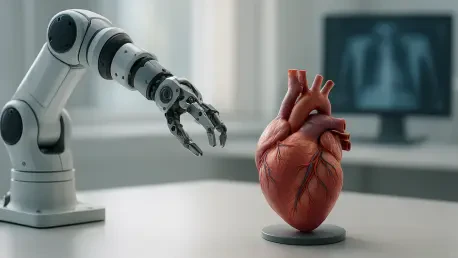

The increasing complexity of surgical robots requires a class of healthcare professionals who understand the internal mechanics and software driving these machines. As modern operating rooms transform into high-tech hubs filled with autonomous systems and precision instruments, the gap between the surgeon’s hands and the machine’s logic has widened significantly. This shift necessitated a fundamental change in how medical education is delivered to those at the forefront of surgical innovation. By merging the rigorous clinical training of a medical doctor with the technical depth of a master’s in robotics, Georgia Institute of Technology and Emory University established a collaborative framework that addresses these modern challenges head-on. This five-year dual-degree path prepares students to navigate both the biological complexities of the human body and the algorithmic complexities of artificial intelligence. It serves as a direct response to a healthcare landscape where the hardware is as critical as the diagnosis itself.
A Synergetic Approach to Interdisciplinary Education
Leveraging Institutional Leadership and Expertise
The foundation of this academic initiative rests upon the Wallace H. Coulter Department of Biomedical Engineering, which represents a highly successful long-term partnership between Georgia Tech and Emory University. This department has consistently pushed the boundaries of how engineering principles apply to biological systems, making it the ideal home for a program that demands excellence in both fields. Leadership from renowned roboticists like Jaydev P. Desai has been instrumental in crafting a curriculum that does not merely brush over technical concepts but requires deep mastery. Students are pushed to understand the physics of motion, the constraints of materials science, and the intricacies of control systems that allow a robotic arm to operate within a millimeter of vital organs. This level of institutional synergy ensures that the academic rigor of the engineering school matches the intensity of medical training, creating a unique environment for the development of future clinical experts.
Integration across various departments is a key feature that distinguishes this dual-degree program from traditional medical tracks or stand-alone engineering degrees. Experts from the George W. Woodruff School of Mechanical Engineering and the Department of Orthopaedics at Emory have collaborated to ensure that the robotics coursework remains grounded in practical surgical applications. This collaboration addresses the specific mechanical challenges found in orthopedic surgery, such as bone milling and joint replacement, where robotic precision can significantly improve outcomes. By involving surgeons who use these tools daily, the curriculum incorporates real-world feedback into the engineering design process from the very beginning. Students learn to critique current robotic designs while gaining the skills to propose hardware improvements that address common clinical frustrations. This feedback loop between the engineering lab and the operating theater is essential for future medical progress.
Cultivating a New Generation of Healthcare Leaders
Beyond the technical specifications and clinical rotations, the program focuses on developing a new archetype of healthcare leader capable of serving as a linguistic and conceptual bridge. Historically, a significant disconnect has existed between the engineers who build medical devices and the clinicians who utilize them in high-pressure environments. This gap often leads to products that are technically impressive but functionally cumbersome for a surgeon or nurse. The MD/MS in Robotics aims to solve this by producing physician-innovators who speak the languages of both coding and anatomy with equal fluency. These individuals can sit in a boardroom with software developers to discuss latency in remote surgery and then step into a clinic to explain the procedure to a patient. By fostering this dual perspective, the program empowers graduates to lead multidisciplinary teams that are more efficient at bringing viable medical solutions to the competitive technological market.
The pedagogical approach emphasizes that theoretical engineering possibilities must always be tempered by the practical, unpredictable realities of the human body and hospital workflow. While a robotics simulation might show a perfect outcome, the actual application in a patient with unique physiological variations requires a physician’s intuition. Students in this program are trained to recognize where a machine’s capabilities end and where human judgment must take over, ensuring that technology serves as an enhancement rather than a replacement. This understanding is deepened through a mandatory capstone project that requires students to apply their engineering skills to a specific medical problem identified during their clinical years. This bridge between theory and practice ensures that the innovations developed by these students are not just technically advanced but are also ergonomically and ethically sound for use in the diverse and often chaotic environment of modern healthcare facilities.
Addressing the Technological Evolution of Modern Medicine
Enhancing Patient Care Through Technical Proficiency
The rapid expansion of minimally invasive surgery has transformed the standard of care for millions of patients, yet it has also introduced a steeper learning curve for the medical professionals involved. Robotic-assisted platforms allow for smaller incisions and higher precision, which directly correlates to reduced tissue trauma and faster recovery times for those on the operating table. However, to maximize these benefits, the operator must have a granular understanding of the system’s haptic feedback and spatial mapping capabilities. The MD/MS program addresses this by embedding students in the mechanics of these systems during their first year at Georgia Tech before they ever touch a scalpel. This early exposure to artificial intelligence and robotic perception allows them to anticipate how a machine might react during a complex procedure. Consequently, these doctors are better prepared to handle technical glitches and optimize the efficiency of robotic tools during high-stakes surgery.
Safety is the paramount concern in any medical advancement, and technical proficiency is the primary safeguard against the risks associated with automated healthcare tools. By training physicians to understand the software architecture and potential failure points of surgical robots, the program adds an extra layer of security to patient care. These graduates are uniquely equipped to identify when a system is behaving outside of its intended parameters, potentially preventing errors before they occur. Furthermore, their ability to analyze the data generated by robotic platforms can lead to more personalized treatment plans and improved clinical outcomes over the long term. This deep-seated knowledge allows for the continuous refinement of surgical techniques, as these physician-innovators can collaborate with developers to tweak algorithms based on real-time clinical data. The result is a healthcare environment where technology is applied with a high degree of surgical precision and safety.
Driving Career Innovation Across Multiple Sectors
The career trajectories available to graduates of this dual-degree program are vast and reflect the growing demand for interdisciplinary expertise in the global economy. Some may choose the path of the academic physician-scientist, leading university research labs that develop the next generation of bio-hybrid sensors or autonomous surgical assistants. Others might enter the corporate sector as high-level executives or product managers for medical device companies, where they can oversee the development of life-saving technologies from a perspective of clinical utility. Entrepreneurship is another viable route, as these graduates possess the technical skills to build prototypes and the medical credentials to navigate the complex regulatory landscape of the FDA. By combining these distinct skill sets, the program enables its alumni to occupy high-impact roles that were previously inaccessible to those with only a single degree, fostering a culture of innovation across the health technology sector.
The decision to launch this dual-degree program reflected a strategic commitment to shaping the future of medicine through engineering excellence. It recognized that the next frontier of healthcare would not be conquered by medical knowledge alone but through the seamless integration of technology and clinical practice. By prioritizing a small, highly selective cohort of students each year, the partnership ensured that every participant received the focused mentorship necessary to excel in two demanding fields. This initiative set a new standard for how universities could collaborate to address the evolving needs of the healthcare sector. The program moved beyond traditional silos to create a pipeline of experts who were ready to optimize complex technological systems within the global health economy. As these pioneers entered the workforce, they provided the necessary leadership to ensure that robotic advancements remained patient-centered and fundamentally grounded in clinical reality during the ongoing evolution.