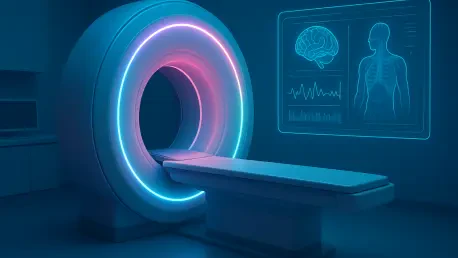

Advanced SPECT and PET cameras convert photons emitted by molecular tracers into three-dimensional maps of disease activity with unprecedented diagnostic sensitivity. This capability has repositioned nuclear medicine from a supporting role in hospitals to a primary engine of therapeutic progress. By 2026, the volume of procedures has exceeded 50 million annually, indicating that molecular imaging is no longer a niche luxury but a vital component of standard care. The discipline’s rapid ascent is largely due to its ability to visualize biological functions rather than just anatomical changes. Where traditional imaging might see a tumor, nuclear medicine sees the metabolic fire fueling it. This shift toward physiology-first diagnostics allows for earlier detection and more effective intervention strategies. The integration of specialized ligands and radioactive tracers has created a pathway where the invisible becomes visible, allowing doctors to preemptively address disease progression before physical symptoms manifest or structural damage occurs.
The Revolutionary Rise: A New Era of Theranostics
The arrival of theranostics represents perhaps the most radical shift in the management of complex diseases like cancer. This hybrid methodology operates on a straightforward yet profound find and treat philosophy, where a diagnostic molecule is first used to locate a specific cellular target. Once imaging confirms that the tracer has successfully bound to the tumor, the same molecular carrier is swapped with a potent therapeutic isotope. This ensures that the treatment is precisely matched to the unique biological signature of the patient’s disease. In 2026, this level of personalization is helping clinicians avoid the one-size-fits-all pitfalls of traditional chemotherapy. By ensuring that only patients who express the specific target receive the toxic payload, the medical community has significantly improved survival rates while reducing unnecessary side effects. This dual-purpose approach is now a cornerstone of clinical practice in major medical centers globally.
Precision Bombing: Targeted Isotopes in Cancer Therapy
Central to the success of theranostics is the sophisticated use of different radiation types to achieve specific therapeutic goals. Beta-emitting isotopes, most notably lutetium-177, deliver energy over a range of several millimeters, making them ideal for treating larger, solid tumor masses by creating a crossfire effect. Conversely, alpha-emitting isotopes like actinium-225 have emerged as a breakthrough for targeting microscopic disease. These particles release massive amounts of energy over a very short distance, often just a few cell diameters, causing irreparable double-strand DNA breaks in cancer cells. This precision bombing at the cellular level is remarkably effective at eradicating small clusters of cancer while leaving the surrounding healthy tissue virtually untouched. The successful application of these isotopes in treating metastatic prostate cancer and neuroendocrine tumors has solidified nuclear medicine’s place at the forefront of oncological care.
Global Logistics: Industrial Growth and Infrastructure Challenges
The clinical efficacy of radioligand therapies has triggered a massive surge in industrial investment, with global pharmaceutical giants aggressively pivoting their portfolios toward nuclear medicine. As of 2026, the market for radioactive drugs has matured into a multi-billion-dollar sector, attracting venture capital and driving intense competition among biotech firms. However, this commercial expansion has highlighted a significant vulnerability: the complexity of the medical isotope supply chain. Unlike traditional pharmaceuticals that can sit on a shelf for years, radioactive materials begin to decay the moment they are produced. This creates a relentless race against time, requiring a synchronized network of nuclear reactors, cyclotrons, and specialized radiopharmacies. Any disruption in this delicate logistics chain, whether due to reactor maintenance or transportation delays, can directly impact patient care, making isotope security a strategic priority.
Scaling Infrastructure: Moving From Research to Care
To meet the growing demand for these life-saving treatments, the focus has shifted toward building a more resilient and scalable infrastructure. This involves the expansion of regional radiopharmacy capacity and the development of new production methods, such as high-energy cyclotrons that can produce isotopes closer to the point of care. In 2026, policymakers and healthcare executives are recognizing that the ability to deliver these treatments to a broader population depends as much on logistics as it does on molecular science. Efforts are currently underway to standardize the handling and transport of radiopharmaceuticals, ensuring that patients in non-urban areas have the same access to innovation as those in major academic hubs. By addressing these industrial hurdles, the field is moving toward a more sustainable model where the benefits of nuclear medicine are no longer restricted by geographic proximity to specialized production facilities.
Digital Transformation: Artificial Intelligence in Imaging
Artificial intelligence has become an indispensable partner in the modern nuclear medicine workflow, primarily by managing the massive datasets generated during PET and SPECT scans. In 2026, machine learning algorithms are routinely used to reconstruct high-definition images from much shorter scan times, which significantly enhances the patient experience. Shorter scans mean less time spent in a confined space and, crucially, a lower required dose of radioactive tracers, reducing overall radiation exposure. Furthermore, AI-driven noise reduction techniques allow for clearer visualization of small lesions that might have been overlooked in previous years. This digital transformation has not only improved diagnostic accuracy but also increased the throughput of busy imaging centers. By automating the more labor-intensive aspects of image processing, radiologists and nuclear medicine physicians can focus their expertise on complex interpretation and treatment planning.
Radiomics and DatPersonalizing Treatment Response
The application of AI extends beyond simple image enhancement into the realm of radiomics, where algorithms extract thousands of subtle data points from medical images that are invisible to the naked eye. These quantitative features are being used to create predictive models that can forecast how a patient will respond to a specific radiotherapy long before the first dose is administered. By correlating imaging patterns with genetic data, AI helps clinicians identify the most aggressive phenotypes of a disease, allowing for a more proactive and tailored treatment strategy. However, the integration of these tools also brings challenges regarding regulatory validation and the need for diverse datasets to avoid algorithmic bias. As the field moves toward 2027 and beyond, the focus remains on ensuring that these automated systems are transparent, reliable, and capable of providing actionable insights that complement the human element of clinical decision-making.
Neurological Breakthroughs: Mapping Cognitive Decline
While oncology has traditionally dominated the headlines, nuclear medicine is making equally significant strides in neurology and cardiology. In 2026, the development of new tracers for amyloid and tau proteins has fundamentally changed the approach to Alzheimer’s disease and other neurodegenerative conditions. These molecular markers allow for a definitive diagnosis in the early stages of the disease, which is essential for the success of emerging disease-modifying therapies. Similarly, in cardiology, advanced perfusion imaging provides a highly detailed map of blood flow and tissue viability in the heart. This information is critical for determining which patients will benefit from complex surgical procedures like revascularization or bypass surgery. By providing a clear picture of the heart’s functional health, nuclear medicine helps prevent unnecessary surgeries and ensures that interventions are targeted where they will have the greatest impact on patient survival.
Cardiovascular Health: Imaging Blood Flow and Viability
Beyond the major killers like cancer and heart disease, molecular imaging is proving its worth in diagnosing chronic inflammatory conditions and complex infections. New tracers designed to target specific types of white blood cells or inflammatory markers are now used to detect vasculitis, prosthetic joint infections, and other difficult-to-diagnose ailments with high precision. This has been particularly transformative in the field of pediatrics, where specialized protocols and ultra-low-dose tracers are used to protect developing tissues while providing the high-quality diagnostic data needed for treatment. By tailoring these innovations to the unique needs of children, the medical community is ensuring that the youngest patients can benefit from the most advanced technology with minimal long-term risk. This broadening of scope demonstrates that nuclear medicine is a versatile, whole-of-medicine tool that addresses a wide spectrum of human health challenges across all age groups.
Global Healthcare: Striving for Equitable Access
As the technological sophistication of nuclear medicine continues to advance, the global medical community is increasingly focused on the challenge of equitable access. The high cost of specialized equipment, coupled with the logistical demands of isotope production, has historically limited these innovations to wealthy nations and elite academic centers. In 2026, there is a concerted effort among international health organizations to bridge this gap by standardizing protocols and lowering the barriers to entry for developing regions. This involves not only financial investment but also the transfer of technical knowledge to train a new generation of physicists, radiochemists, and nuclear physicians worldwide. By creating more affordable and portable imaging solutions, the field aims to ensure that the benefits of molecular medicine are distributed more fairly, preventing a future where life-saving theranostic treatments are only available to a small fraction of the global population.
Strategic Roadmap: Future Considerations in Molecular Care
The rapid evolution of nuclear medicine through 2026 demonstrated that the molecular identity of a disease could serve as both a diagnostic beacon and a therapeutic target. This period was marked by a fundamental shift in healthcare philosophy, where the integration of physics and biology allowed for unprecedented levels of precision. As the industry moved forward, the lessons learned from scaling theranostic infrastructure provided a blueprint for other specialized fields. Stakeholders prioritized the expansion of isotope supply chains and the refinement of AI-driven diagnostics to make care more accessible. Ultimately, the transformation of nuclear medicine laid the groundwork for a future where personalized treatment became the standard of care rather than the exception. By focusing on the cellular level, medical professionals established a more proactive approach to health, ensuring that the legacy of this era was defined by a commitment to innovation, precision, and the democratization of medical solutions.