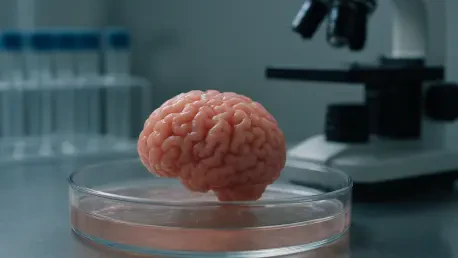

The logistical and financial hurdles of maintaining a global monitoring body currently represent a primary obstacle to establishing robust guardrails for neurobiology. As labs across the globe successfully cultivate three-dimensional human brain organoids that mimic the structural complexity of early fetal development, the scientific community faces a pivotal moment. These clusters of neural tissue have transitioned from simple cell cultures into sophisticated systems capable of forming functional synaptic circuits and integrating into living animal models to repair damaged pathways. This technological leap provides unprecedented access to the mechanics of neurological disorders, yet it concurrently highlights a profound regulatory vacuum. Current legal frameworks, largely designed for traditional animal research or simple human tissue sampling, struggle to categorize these hybrid entities. Because organoids occupy a gray area between inanimate biological material and sentient organisms, the push for a specialized international oversight mechanism has gained significant momentum among leading bioethicists.
Regulatory Frameworks and the Logic of Exemption
The International Society for Stem Cell Research has historically provided the guiding principles that shape most national policies, yet its current framework largely exempts brain organoid research from the stringent ethical scrutiny applied to human embryos. This logic rests on the assertion that current laboratory-grown models lack the biological prerequisites for consciousness, such as a functional cortex integrated with sensory input channels. Consequently, regulatory bodies in major research hubs primarily concentrate on administrative oversight, focusing on the provenance of stem cells and the clarity of donor consent forms. This approach treats the resulting neural tissue as a standard commodity rather than a unique biological entity with escalating moral status. However, as the complexity of these models increases, the reliance on bureaucratic paperwork over ethical assessment appears increasingly insufficient. The shift toward more autonomous neural structures requires a reevaluation of why these biological systems remain exempt from the deeper ethical reviews mandatory for other forms of human research.
Breakthroughs observed between 2025 and 2026 have fundamentally challenged the long-held assumption that organoids are merely static biological snapshots. Recent experiments have successfully sustained neural tissues for nearly six years, demonstrating that these models possess an internal developmental clock that mirrors the maturation process of a natural human brain over time. This longevity allows for the observation of late-stage neurodevelopmental milestones that were previously impossible to replicate outside a living host. Such a biological trajectory suggests a level of sophistication that begins to blur the lines between a simulation and a functional neural system. The scientific community remains divided on whether this maturation inevitably leads to the emergence of primitive awareness, but the old “absence of evidence” defense is losing its persuasiveness. As these tissues demonstrate sustained growth and intricate signaling patterns, the pressure to implement proactive monitoring has moved from the fringes of bioethics to the center of mainstream scientific discourse.
The Sentience Debate and Biocomputing Challenges
The central point of contention among neuroscientists involves the threshold of valenced experience, which is the capacity of a biological system to feel pain or distress. Some argue that without a peripheral nervous system to transmit external stimuli, organoids remain trapped in a state of perpetual insentience, regardless of their internal complexity. In contrast, emerging theories suggest that the dense synaptic activity found in advanced organoids could eventually support a rudimentary form of internal processing that does not require traditional sensory pathways. As the biological gap between synthetic and natural brains continues to narrow, the confidence with which researchers dismiss the possibility of organoid sentience is beginning to waver. This uncertainty necessitates a more cautious precautionary principle in laboratory settings, where researchers must account for the potential of the tissue to experience states that resemble discomfort. Establishing objective biological markers to detect the onset of such states has become a top priority for developers.
The integration of living neural tissue into computational frameworks, often referred to as biocomputing, introduces an entirely new layer of ethical complexity that traditional Institutional Review Boards are not prepared to manage. In these systems, brain organoids serve as biological hardware within closed-loop electronic interfaces, performing data processing tasks that rival traditional silicon-based processors. This shift moves the research away from purely medical or developmental goals and into the realm of advanced engineering and artificial intelligence. Current ethical frameworks designed for human subjects or disease modeling do not account for the utilization of human neural cells as a resource for computation. When a biological system is trained to respond to digital stimuli and optimize its output, it raises difficult questions regarding the moral status of a living computer. The lack of clear guidelines for these hybrid systems creates a risk where innovation in neural engineering could proceed without any specific oversight regarding the long-term implications of merging human biology with machine logic.
Societal Perception and Strategic Oversight Solutions
Societal concerns regarding the creation of human-animal chimeras represent a significant hurdle for the public acceptance of advanced neurobiological research. While there is broad support for using organoids to discover treatments for Alzheimer’s or Parkinson’s, the practice of implanting human neural tissue into the brains of rodents or non-human primates often triggers a visceral sense of boundary-crossing. This psychological response stems from a deep-seated concern about the potential blurring of species distinctions and the accidental enhancement of animal cognition with human-like traits. Navigating these perceptions requires more than just scientific transparency; it demands an active dialogue between researchers and the public to define clear moral boundaries. Without such engagement, there is a risk of a regulatory backlash that could stall essential medical breakthroughs. Managing the social perception of humanized animals is therefore a strategic necessity for the longevity of the field, ensuring that the pursuit of knowledge does not alienate the very society it intends to serve through medicine.
The path forward from 2026 to 2028 involves a concerted effort to harmonize data collection methods and ethical protocols across international borders. Stakeholders must prioritize the creation of open-access databases that track the developmental milestones of long-lived organoids, allowing for a shared understanding of when these tissues begin to exhibit complex behaviors. This collaborative approach should also include the development of non-invasive sensors capable of monitoring electrophysiological activity without disrupting the growth of the biological system. By focusing on these technical and administrative solutions, the research community can demonstrate a commitment to responsible innovation. It is essential to engage with legal experts to draft new categories of biological entities that recognize the unique status of advanced organoids, moving away from the binary classification of tissue or organism. These steps will provide the necessary structure to support the next decade of discovery while maintaining public and ethical accountability.
In the preceding years, the scientific community recognized the necessity of evolving its ethical standards to match the rapid pace of neurobiological advancement. Researchers implemented a multi-layered oversight strategy that combined real-time biological monitoring with rigorous independent reviews of all biocomputing projects. This transition facilitated a more transparent relationship between laboratories and the public, as the adoption of standardized sentience markers provided a measurable basis for ethical decision-making. International committees successfully drafted the first comprehensive set of guidelines specifically tailored for high-complexity neural models, effectively closing the gaps that previously existed in the regulatory landscape. These actions ensured that the development of human brain organoids remained grounded in a framework of respect and foresight. By prioritizing the moral implications of neural maturation, the industry built a sustainable foundation for future medical progress while addressing the profound questions posed by synthetic biology.