
Once health data is shared through a HIPAA legal exception, it typically loses its protected status and becomes vulnerable to secondary uses by government agencies. This quiet erosion of medical confidentiality occurs at the intersection of digital convenience and state oversight, where the most intimate details of a person’s life are transformed into searchable data points. In the current landscape, where physical charts have been replaced by interconnected clouds, the traditional sanctuary of the doctor-patient relationship is under increasing pressure from federal mandates and public health surveillance. While individuals often assume their diagnoses and treatments are guarded by an impenetrable legal fortress, the reality of modern governance reveals a system riddled with entry points for administrative scrutiny. As medical records are integrated into expansive national databases, the boundaries that once separated private health from public policy are dissolving, leaving citizens to wonder if their biological history is truly their own or merely a strategic asset for the state.
Structural Realities of Privacy Law
The Legal Landscape: Gaps in Federal Protection
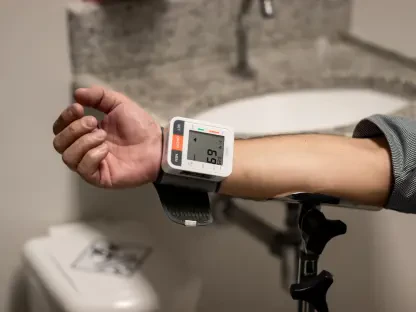
The American public often operates under the assumption that the Health Insurance Portability and Accountability Act serves as a comprehensive shield for all personal health data. However, this legal framework was designed with a relatively narrow scope, primarily regulating the conduct of healthcare providers, health plans, and clearinghouses. It does not extend to the vast ecosystem of consumer-facing technology that now dominates the health sector. Fitness trackers, wearable heart rate monitors, and specialized smartphone applications that track reproductive cycles or glucose levels fall outside these federal protections. When a user inputs sensitive biometric data into a third-party app, they are effectively moving that information into a legal vacuum where the primary protection is often a dense, non-negotiable terms-of-service agreement. This gap allows commercial entities to aggregate and potentially sell detailed health profiles that the government can later acquire through routine commercial transactions or administrative requests.
The Open Doors: Clinical Exceptions and Law Enforcement
Even within the traditional clinical environments where federal regulations do apply, there are significant open door provisions that permit the sharing of records without a patient’s knowledge or explicit consent. These exceptions are carved out for activities deemed essential to public interest, such as law enforcement investigations, judicial proceedings, and various regulatory oversight functions. When a hospital receives a subpoena or a national security letter, the patient is rarely informed that their psychiatric notes or blood test results are being scrutinized by federal agents. Once this sensitive information leaves the protective envelope of the medical provider and enters the broader government ecosystem, the initial safeguards that mandated confidentiality are frequently discarded. This creates a secondary lifecycle for health data where information originally intended for healing becomes a tool for investigation, potentially leading to discriminatory outcomes or heightened state surveillance.
Domestic Surveillance and State-Level Dragnets
The System: Prescription and Patient Monitoring
Prescription Drug Monitoring Programs have undergone a significant transformation, evolving from localized tools designed to stop drug diversion into a comprehensive federal surveillance apparatus. These databases now capture a near-complete history of controlled substance prescriptions, providing the government with a granular view of an individual’s medical needs and lifestyle. Federal agencies frequently bypass the traditional warrant process by utilizing administrative subpoenas to access these records, which does not require a judge’s approval or independent oversight. This capability allows for the tracking of patients across state lines, creating a national net of pharmaceutical observation. As the legal landscape for various medical treatments becomes increasingly complex at the state level, these centralized records serve as a powerful tool for investigative bodies. The result is a system where the simple act of filling a prescription creates a digital trail that can be scrutinized by the state without any evidence of wrongdoing.
The Unified Target: Centralization and Cyber Risks
The drive toward total medical data centralization has gathered momentum, with federal initiatives aiming to fully integrate state-level health information exchanges into a unified national system by 2028. This move toward a singular, identifiable repository for all medical records significantly heightens the risk of massive data breaches and systemic misuse. By consolidating the private health information of the entire population into one accessible network, the government has inadvertently created an attractive target for both state-sponsored hackers and criminal organizations. Furthermore, the existence of such a concentrated database invites a creep in its intended purpose, where data collected for public health might be repurposed for law enforcement or political profiling. The consolidation of records from 2026 to 2028 represents a fundamental shift in the approach to privacy, where the benefits of interoperability are seen as more important than the security provided by a fragmented system.
Technological Erosion of Medical Anonymity
The Myth: Limitations of Modern Data Stripping
Government officials frequently justify the collection of massive datasets by asserting that the records are anonymized through the removal of direct identifiers like names and addresses. However, this defense has become increasingly untenable due to the rapid advancement of artificial intelligence and machine learning. Researchers have demonstrated that membership inference attacks can accurately determine if a specific person’s data was included in a large dataset by analyzing subtle patterns and correlations. This means that even if a record is stripped of a name, a person’s unique medical footprint—consisting of specific diagnoses, treatment dates, and genetic markers—can be linked back to them with high precision. As algorithms become more adept at cross-referencing medical data with publicly available information from social media and consumer records, the concept of anonymity is effectively dead. The richness of modern data, which makes it valuable for research, simultaneously makes it a liability.
The Vulnerability: AI Analysis and Marginalized Groups
These technological vulnerabilities are not distributed evenly across the population, as individuals with rare medical conditions or those from historically marginalized communities face a much higher risk of re-identification. In a dataset of millions, a person with an uncommon diagnosis stands out as a unique statistical outlier, making it trivial for an adversary or a state actor to pinpoint their identity. For marginalized groups, the risk is compounded by historical patterns of surveillance and systemic bias, where re-identified health data could be used to justify discriminatory practices in insurance, employment, or law enforcement. The more detailed and comprehensive a medical record becomes, the easier it is for modern computational tools to peel back the layers of supposed privacy. This reality challenges the ethical foundations of large-scale data initiatives, as the promise of confidentiality cannot be guaranteed against the capabilities of evolving artificial intelligence.
Global Reach of Data Collection
Digital Sovereignty: Foreign Aid and Data Access
The pursuit of health data is no longer limited by national borders, as the government has increasingly integrated data-sharing requirements into international medical aid agreements. This practice has led to a phenomenon described by critics as digital colonialism, where developing nations are pressured to provide real-time access to their electronic medical record systems in exchange for essential funding. For these countries, the choice is often between receiving life-saving treatments for their citizens and maintaining the long-term privacy of their national health data. These agreements frequently lack transparent limits on the volume of data harvested or the specific purposes for which it will be utilized in the future. By leveraging its economic influence to acquire sensitive health information from foreign populations, the government is establishing a precedent that views human biology as a strategic asset. This global data dragnet extends surveillance far beyond domestic jurisdiction.
The Commodity: Global Health History as a Strategic Asset
These transnational data-sharing arrangements often operate in a legal vacuum, where the protections afforded to local citizens do not necessarily apply once information is transferred to foreign servers. The absence of modernized international standards for health data sovereignty leaves millions of people vulnerable to secondary uses that they never authorized and likely do not understand. As global health infrastructure becomes increasingly digitized, the control over that infrastructure is increasingly concentrated in the hands of a few powerful nations and corporations. This consolidation of medical information creates a strategic asset that can be used for everything from tracking disease outbreaks to biological research and intelligence gathering. The commodification of health history suggests a future where the most private aspects of human existence are traded as readily as oil or minerals. Without a significant shift toward transparent management, the global exchange of health data will benefit only the collectors.
Practical Solutions for Medical Sovereignty
Future Directions: Protecting Personal Records
To address these growing threats, a multifaceted approach to data sovereignty was developed to give patients more control over their digital footprints. Legal experts championed the implementation of end-to-end encryption for all electronic health records, ensuring that only authorized clinical staff could access sensitive information. Patients were encouraged to minimize the use of non-regulated health applications and to demand transparent data-sharing disclosures from their providers. Legislative efforts focused on closing the long-standing HIPAA loopholes by requiring judicial warrants for all government access to medical databases, regardless of the agency involved. Furthermore, individuals took proactive steps by opting out of elective data exchanges and supporting organizations that advocated for stronger digital rights. These actions collectively worked to restore the boundary between personal health and state oversight, ensuring that the doctor-patient relationship remained a private sanctuary.
Final Measures: Reclaiming Clinical Confidentiality
Healthcare providers also adopted data minimization protocols, which significantly limited the amount of peripheral information collected during patient visits. By focusing exclusively on data essential for immediate clinical outcomes, organizations reduced the size and attractiveness of their databases to potential intruders or state agencies. Advanced auditing tools were deployed to provide patients with real-time notifications whenever their records were accessed, ensuring a new level of institutional accountability. Furthermore, the development of decentralized health platforms allowed individuals to store their medical history locally, granting only temporary and granular access to physicians as needed. These technological shifts were complemented by a cultural movement that reasserted medical privacy as a non-negotiable human right. Through a combination of legislative reform and public vigilance, the integrity of the clinical relationship was largely restored, proving that modern medicine did not require the surrender of personal history.