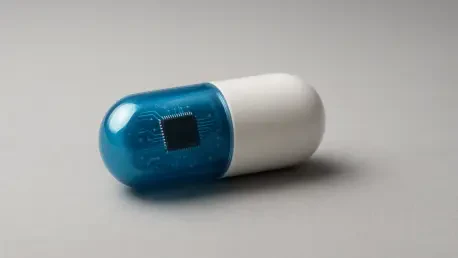

By calibrating the thickness of magnesium and molybdenum electrodes, scientists ensured that the metal levels released upon dissolution stay well below human daily intake limits. This breakthrough addresses the persistent danger of traditional lithium-ion or alkaline batteries, which are notorious for leaking toxic chemicals or causing corrosive damage within the gastrointestinal tract. Rather than relying on rigid, hazardous casings that necessitate surgical removal if they fail to pass naturally, these new power sources are designed to simply disappear after their clinical mission is complete. This innovative approach pivots away from the old paradigm of swallowable electronics toward a truly bio-integrated experience where hardware becomes transient. By utilizing materials already present in vitamins, the research team at the Massachusetts Institute of Technology has created a platform where the energy source is as safe as the medicine it helps deliver.
Engineering a Sustainable Internal Power Source
Material Composition: The Shift to Bio-Safe Components
To construct a battery that the body can safely process, the engineering team turned to a combination of magnesium for the anode and molybdenum trioxide for the cathode. These specific metals were chosen not only for their electrical properties but also for their status as essential minerals that the human body already metabolizes in small quantities. To hold these layers together without adding bulk or toxicity, plant-derived cellulose fibers were integrated into the structural architecture, providing the necessary mechanical strength to maintain electrical contact during the rigors of digestion. Perhaps the most significant innovation lies in the electrolyte solution, which traditionally involves caustic acids or flammable liquids. Instead, researchers utilized a biodegradable mixture composed of choline chloride and lactic acid. This food-safe liquid offers a more stable voltage than previous aqueous attempts.
Controlled Degradation: The Role of Natural Wax Encapsulation
Managing the lifespan of an internal battery requires a delicate balance between functional longevity and timely dissolution. To achieve this, the researchers encapsulated the entire energy cell in a protective layer of natural waxes, specifically beeswax and carnauba wax. These biocompatible coatings act as a temporary barrier against the highly acidic environment of the stomach, allowing the device to perform its intended tasks for a predetermined duration before the structural integrity begins to wane. Systematic testing in simulated gastric fluids confirmed that the battery can remain active and intact for several weeks or even months, depending on the thickness of the wax application. Once the protective coating eventually breaks down, the internal components dissolve progressively, leaving no solid waste behind. This mechanism transforms the battery from a foreign body hazard into a temporary guest in the system.
Clinical Applications and Performance Validation
Empirical Success: Testing in Biological Models
The practical utility of this technology was demonstrated through rigorous empirical testing using porcine models, which closely mimic human gastrointestinal physiology. The bioresorbable batteries successfully powered two distinct classes of medical hardware: a simple tracking tag and a more complex electroceutical device. The tracking tag provided a clear signal to clinicians upon ingestion, confirming that the capsule had reached the stomach and was ready to begin its monitoring phase. More impressively, the electroceutical application involved delivering continuous electrical stimulation to the stomach wall, a technique designed to modulate physiological responses. The device successfully increased the production of the hunger-regulating hormone ghrelin without causing any observable tissue damage. Throughout the testing period, the batteries maintained a steady output of power, proving that edible energy sources can meet the requirements.
Optimization Strategies: Refinement and Clinical Roadmaps
The recent advancements in bioresorbable battery design established a foundational framework for the next phase of clinical implementation. Moving forward, the development process shifted toward refining the energy density to support more complex sensors, such as high-resolution internal imaging or long-term neuro-modulation arrays. Engineering teams also identified the need to customize the degradation rates even more precisely to align with specific treatment protocols scheduled from 2026 to 2028. This required a deeper exploration of how varied dietary habits and metabolic rates might influence the dissolution of the wax coatings in different patient populations. Future iterations of this technology began to incorporate feedback loops where the battery output could be adjusted based on the physiological state of the wearer. By treating the power source as a dynamic component, researchers ensured the transition to edible pills became a reality.