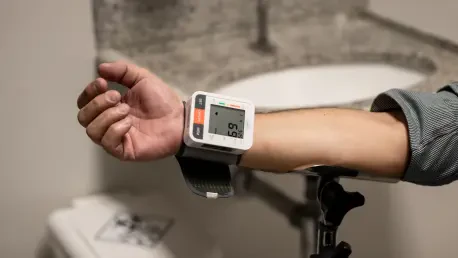

A study presented at the European Emergency Medicine Congress reveals that early stabilization of blood pressure is more effective when patients are shielded from the environmental stressors of the hospital. In the high-pressure environment of the emergency department, clinicians are constantly seeking innovative ways to manage acute conditions while optimizing patient comfort and resource efficiency. This groundbreaking research explores a non-pharmacological supplement to traditional treatment, specifically the use of virtual reality and classical music to manage hypertensive urgency. This approach shifts the focus from purely chemical intervention to a bio-psycho-social model, recognizing that the clinical environment itself often exacerbates the physiological symptoms patients present with. By immersing patients in calming, digital landscapes, researchers have demonstrated a significant, though time-specific, reduction in both blood pressure and psychological distress levels during medical crises.
Understanding Hypertensive Urgency and Physiological Triggers
Hypertensive urgency is defined by a significant elevation in blood pressure—typically a systolic reading of 180 mmHg or higher, or a diastolic reading of 110 mmHg or higher—without immediate signs of acute organ damage. While these patients require medical attention to prevent long-term complications, they do not necessarily require the aggressive, intravenous interventions used for hypertensive emergencies where organ failure is imminent. The emergency department serves as a challenging backdrop for these patients, characterized by sterile lighting, persistent noise from medical equipment, and a general atmosphere of uncertainty. Lead investigator Dr. Safa Dönmez posits that this environment induces significant anxiety, triggering the release of stress hormones like adrenaline and cortisol. These hormones cause blood vessels to constrict, which pushes blood pressure higher and complicates the effectiveness of standard medications during the initial evaluation period.
The release of stress hormones creates a physiological barrier that can hinder the effectiveness of standard blood pressure medications. When the body is in a state of “fight or flight,” the cardiovascular system remains on high alert, making it difficult for pharmacological agents to relax the vascular walls. This phenomenon, often referred to in clinical circles as “white coat hypertension,” can create a misleading picture of a patient’s baseline health, leading to potentially unnecessary escalations in treatment. By addressing the psychological tension through immersive technology, doctors can effectively reduce the physiological “noise” that often complicates the recovery process. This method allows the patient’s body to respond more naturally to the treatment, facilitating a smoother transition from a state of crisis to stability. The goal is to isolate the patient from the chaotic stimuli of the emergency room, thereby neutralizing the environmental triggers that sustain high arterial readings.
Methodology: Designing the Randomized Controlled Trial
The research was conducted as a randomized controlled trial involving 130 adult patients presenting with hypertensive urgency at a single center. The cohort was split evenly into two groups: a control group receiving standard pharmacological treatment and an intervention group receiving the same medication combined with virtual reality headsets and headphones. The VR experience transported patients into a serene natural landscape featuring a flowing river, lush forests, tall trees, and a wooden suspension bridge. Simultaneously, patients listened to a curated playlist of classical music on a smartphone. The selection included works by Bach, Mozart, Debussy, and Vivaldi—composers chosen for the structured, soothing, and harmonious qualities of their music. To measure the efficacy of this combined approach, researchers utilized Mean Arterial Pressure, which provides a comprehensive figure representing the average pressure in the arteries during a single cardiac cycle.
In addition to physiological monitoring, researchers utilized the State-Trait Anxiety Inventory to quantify the psychological changes occurring during the intervention. This standardized tool allowed the team to measure both current feelings of anxiety and the general personality disposition of each participant toward stress. The integration of these psychological metrics was essential for understanding how the immersive digital environment influenced the patient’s internal state. Participants in the intervention group were fitted with the hardware immediately upon arrival, ensuring that the sensory dampening began as soon as the medical evaluation commenced. This proactive deployment of technology aimed to catch the stress response before it could fully peak, creating a baseline of calm that could support the primary medical treatment. The use of standardized landscapes and musical compositions ensured that the stimulus remained consistent, providing a controlled environment within the unpredictable ward.
Physiological Outcomes: Accelerating the Stabilization Process
The data revealed a clear trend: the integration of virtual reality and music accelerated the stabilization of blood pressure in the critical early stages of treatment. Within the first 15 minutes, the intervention group showed a marked improvement. Their Mean Arterial Pressure fell from an average of 132 mmHg to 116 mmHg, representing a 12% reduction. In contrast, the control group saw their pressure fall from 138 mmHg to 126 mmHg, which was only an 8% reduction. This early “head start” is vital in a crowded emergency department where resource management is as important as clinical outcomes. Faster stabilization is not merely a matter of patient comfort; it is a strategic advantage. If a patient can be brought to a safer physiological state more quickly through non-invasive means, it reduces the immediate risk of complications and allows the medical team to prioritize other cases. The study highlighted that the first quarter-hour of care sets the tone for the entire recovery process.
By the 30-minute mark, the patients utilizing the VR headsets reached a Mean Arterial Pressure of 112 mmHg, totaling a 15% reduction from their baseline. Meanwhile, the control group reached 119 mmHg, an improvement of 14%. While both groups eventually converged toward similar levels of stability after the 60-minute mark, the initial speed of the intervention group remained statistically significant. This suggests that the immersive environment helped the medication work more effectively by reducing the external resistance caused by environmental stress. The findings imply that while pharmacological intervention is the primary driver of recovery, the psychological environment acts as a catalyst. In an emergency setting, achieving a faster response can prevent the need for escalating medication dosages or more invasive monitoring. The ability to shave several minutes off the stabilization period translates to better throughput in the hospital and a less traumatic experience for the individual patient.
Psychological Mitigation: Neutralizing the Stress Response
The psychological impact of the immersive experience was perhaps even more pronounced than the physical changes. Interestingly, the intervention group started the study with higher baseline trait anxiety scores, approximately 46, compared to the control group’s score of 38. Despite this initial disadvantage, the patients using the technology experienced a more substantial reduction in their overall anxiety levels. Specifically, the VR group saw an average drop of eight points on the assessment scale, whereas the control group only experienced a four-point decrease. This indicates that the technology was particularly effective for those who are naturally more prone to stress and environmental triggers. By providing a digital sanctuary, the treatment effectively neutralized the sterile and intimidating atmosphere of the hospital. The rapid decline in anxiety scores suggests that the brain’s focus shifted away from the medical crisis and toward the calming natural stimuli provided.
By the conclusion of the two-hour observation period, the group using virtual reality had reached the same low anxiety levels as the control group, effectively closing a significant gap through the use of technology. This psychological equalization is a critical finding, as it demonstrates that digital interventions can level the playing field for high-anxiety patients. When a patient is calm, they are more likely to comply with medical instructions and report their symptoms accurately, which further assists the diagnostic process. The researchers noted that the intervention was well-tolerated across the board, with no participants dropping out due to discomfort or motion sickness. This suggests that modern VR hardware has reached a level of sophistication where it can be used safely in a medical context without inducing secondary issues. The dual benefit of lowering blood pressure and anxiety simultaneously creates a more stable patient profile, aiding the department’s management.
Future Directions: Actionable Steps for Clinical Implementation
The research conducted between 2026 and 2027 established a clear foundation for the use of sensory dampening as a legitimate clinical intervention. Medical teams recognized that by humanizing the emergency experience, they could effectively improve physiological outcomes. For practitioners looking to implement these findings, the first step involved integrating portable VR units into the triage process for stable but hypertensive patients. Clinicians discovered that allowing patients to select their own calming environments—ranging from deep-sea dives to mountain vistas—maximized the therapeutic impact. Hospital protocols were eventually updated to include digital immersion as a standard supportive measure, reducing the reliance on immediate pharmacological escalation. These steps not only improved patient satisfaction but also optimized the use of staff resources during peak hours. Ultimately, the transition to a more holistic model proved that addressing the mind was critical for cardiovascular stability.
Another significant consideration is the duration of the follow-up period, which was limited to two hours in the current study. Long-term effects or the risk of blood pressure “rebounding” after the headset is removed were not explored in this initial phase. Furthermore, because virtual reality and classical music were used in tandem, it is currently impossible to determine if one component was more effective than the other, or if the synergy of both is required for the observed effect. The open-label nature of the study, where both staff and patients were aware of who was receiving the intervention, also introduces the possibility of a placebo effect or biased observations. To refine the methodology, future studies will likely need to decouple these variables and introduce a more diverse range of sensory stimuli. Exploring the impact of different musical genres or virtual environments could help personalize the treatment, making it even more effective for specific patient demographics.