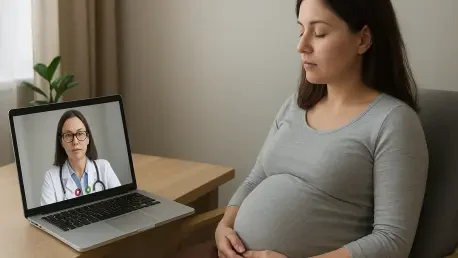

The fear of being reported to child welfare authorities remains a primary deterrent for pregnant women seeking addiction treatment through virtual platforms. As of late 2026, the maternal health landscape is at a critical crossroads as researchers and policy experts call for a standardized framework to manage Opioid Use Disorder (OUD) through telehealth. While remote care options have expanded significantly, a disconnect remains between federal policy shifts and the clinical data required to support them. Bridging this gap is essential for ensuring that pregnant and postpartum women receive consistent, evidence-based care regardless of their physical location or socio-economic standing. The current challenge lies in the fact that while the legal doors are opening, the clinical pathways remain obscured by a lack of uniform guidelines. This situation has created a landscape where the potential of technology outpaces the development of necessary medical protocols and safety standards required for high-risk obstetric care.
The Urgent Medical Stakes: Risks of Perinatal Addiction
Untreated Opioid Use Disorder during the perinatal period carries devastating risks that extend far beyond the immediate health of the mother. Clinical data from the current year consistently links untreated OUD to significantly higher rates of preterm labor, intrauterine growth restriction, and fetal death. Infants born to mothers who lack access to stable treatment are at an exceptionally high risk for Neonatal Opioid Withdrawal Syndrome, a condition that necessitates intensive and often prolonged medical intervention. Beyond these immediate medical complications, the social toll of untreated addiction often involves traumatic child welfare interventions and the potential loss of custody, which can further destabilize families and hinder long-term recovery efforts. Addressing these issues is no longer just a policy debate; it is a matter of life and death, as opioid-related overdoses have emerged as a primary, yet preventable, cause of maternal mortality across the United States.
Buprenorphine stands as the gold standard for treating Opioid Use Disorder in this specific population because it effectively manages cravings and withdrawal with a high safety profile. Its unique ceiling effect on respiratory depression makes it particularly well-suited for remote monitoring and management via telehealth platforms compared to full opioid agonists like methadone. Despite its proven efficacy and the relative ease with which it can be managed through virtual consultations, statistics from late 2026 show that a majority of pregnant women with OUD still do not receive these life-saving medications. This highlights a massive treatment void that telehealth is specifically designed to fill, provided that the medical community can align on how to deliver such care safely. The ability to initiate and maintain treatment from a patient’s home could fundamentally change the trajectory of recovery, yet the transition requires a delicate balance between expanding access and maintaining rigorous clinical oversight.
Federal Policy Shifts: Facilitating Remote Clinical Access
Significant federal shifts have recently created a unique window for reform by making audio-only telehealth encounters a permanent option for initiating buprenorphine treatment. This change, which became a cornerstone of federal policy by early 2026, removes the previous requirement for an initial in-person physical evaluation. Such a move is particularly vital for patients living in rural or underserved areas who may lack stable high-speed internet access or the expensive hardware required for high-definition video conferencing. By formalizing these flexibilities, which were once considered temporary, the government has simplified the first critical step toward recovery for the most isolated populations. This policy shift acknowledges that the barriers to in-person care, such as lack of transportation or childcare, are often insurmountable for pregnant women in crisis. Telehealth serves as a lifeline, bridging the physical distance between specialized medical providers and those who need them most.
Further support for this initiative comes from the widespread expansion of postpartum Medicaid coverage, which has extended from a mere sixty days to a full year in nearly every state across the nation. Since Medicaid finances approximately seventy-five percent of births involving Opioid Use Disorder, this longer coverage period is essential for maintaining stability during the high-risk first year after delivery. Historically, the period immediately following childbirth has been associated with a significant spike in relapse and overdose deaths, often coinciding with the loss of medical coverage. By ensuring that insurance remains active for a full twelve months, the healthcare system provides the financial and temporal backbone necessary for long-term telehealth engagement and consistent relapse prevention. This extension allows for a more holistic approach to maternal health, focusing on the long-term well-being of the mother-child dyad rather than just the immediate medical needs of the delivery itself.
Regulatory Obstacles: Navigating the Fragmented Healthcare Landscape
Despite these federal advancements, the implementation of telehealth for perinatal Opioid Use Disorder is hindered by a fragmented landscape of state-level regulations and inconsistent insurance policies. Many providers face significant reimbursement parity issues where telehealth visits are compensated at much lower rates than traditional in-person appointments. These financial hurdles frequently discourage medical practices from adopting virtual care models, even when they recognize the benefit to the patient. These challenges are often exacerbated by excessive documentation requirements, prior authorization hurdles, and the looming threat of audits from both state and federal agencies. Such administrative burdens leave the most vulnerable populations with very few provider options, as clinicians may choose to opt out of the Medicaid system entirely. The result is a zip code lottery where a patient’s ability to access life-saving virtual care depends entirely on the specific regulations of their home state.
Clinical and social barriers also persist, ranging from a fear of punitive legal actions to significant resistance at the pharmacy level. Pregnant women in states where substance use during pregnancy is treated as a criminal matter or child abuse often avoid seeking any medical help for fear of being reported. This climate of fear is a major obstacle that even the most advanced telehealth platform cannot easily overcome without changes in local laws. Furthermore, a significant red tape barrier exists at the pharmacy level, where some pharmacists refuse to fill buprenorphine prescriptions if the prescribing physician is located far from the patient’s home. These pharmacists often cite concerns over regulatory scrutiny or potential liability, creating a bottleneck that can block access to medication even when the prescription is entirely legal and medically necessary. This friction between federal guidelines and local pharmacy practices remains a primary point of failure in the virtual care delivery chain.
Evidence-Based Solutions: Establishing a Sustainable Integrated Framework
To move beyond anecdotal evidence, researchers called for a rigorous agenda that included mapping how various state laws influenced patient outcomes in the remote care environment. By creating a comprehensive database that tracked the complex interplay between Medicaid reimbursement policies and punitive legal environments, experts identified which frameworks actually supported recovery. Qualitative assessments were also utilized to understand the specific barriers patients faced on a daily basis, such as a lack of digital literacy or the absence of privacy at home for sensitive medical consultations. This research was essential for moving from a reactive model of care to a proactive one that anticipated and mitigated obstacles before they led to treatment discontinuation. Understanding the patient experience in a virtual setting was just as important as understanding the clinical efficacy of the medication itself, as the two were inextricably linked in the success of long-term recovery programs.
The synthesis of evidence suggested that for telehealth to be truly effective for perinatal Opioid Use Disorder, the medical community established a permanent, integrated infrastructure. This process required the development of formal clinical protocols by leading medical organizations to give providers the confidence to treat high-risk patients remotely. It became clear that these guidelines had to address the nuances of remote care, such as how to monitor patient progress virtually and how to integrate addiction specialists with local pediatric teams. Stakeholders recognized that aligning state and federal policies was the only way to ensure financial sustainability and clinical safety. By focusing on these systemic issues, the healthcare system moved toward better support for postpartum women, which ultimately reduced maternal mortality and improved long-term health trajectories. The efforts made by 2026 proved that while technology provided the tool, standardized clinical leadership was the necessary force to save lives.