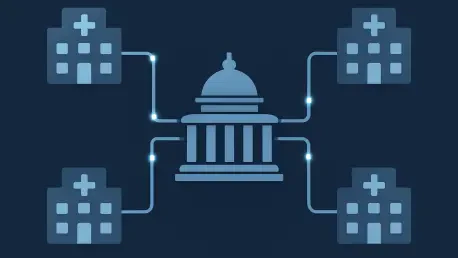

The shift from auditing health carrier records to maintaining a massive, pseudonymized database has prompted serious questions about the limits of executive administrative powers. This transition, orchestrated by the Office of Personnel Management, represents a fundamental change in how the Federal Employees Health Benefits program operates. Historically, the agency functioned as a contract manager, overseeing the private insurers that provide coverage to millions of federal employees and retirees. However, the move to aggregate medical claims data into a centralized Master Data File has triggered a deep legal analysis by the Congressional Research Service. This inquiry focuses on whether the executive branch has overstepped the boundaries established by the original 1959 legislation. While the agency argues that centralized data is essential for modern fraud detection, legislators are concerned that such an expansion requires explicit permission from Congress rather than administrative rules.
Statutory Interpretation: The Scope of the Federal Employees Health Benefits Act
The core of the dispute centers on the interpretation of the Federal Employees Health Benefits Act of 1959. This foundational law provides the Office of Personnel Management with the authority to perform audits and ensure that carriers are complying with their contractual obligations. The Congressional Research Service has pointed out that access to records for auditing purposes is traditionally understood as a localized review process. In this context, auditors visit the carrier or access specific files to verify billing accuracy. By contrast, the current initiative involves the wholesale transfer of millions of records into a government-controlled environment. This shift from a pull model of oversight to a push model of permanent data ingestion creates a new regulatory architecture that was never explicitly sanctioned by lawmakers. The distinction is not merely technical but philosophical, as it alters the relationship between the government and the individual policyholders.
Beyond the specific wording of the statute, the controversy touches on broader legal principles regarding agency discretion. Under current judicial scrutiny, particularly through the application of the major questions doctrine, federal agencies are expected to point to clear congressional authorization when implementing policies with significant economic impacts. The management of a database containing the medical history of approximately eight percent of the federal workforce certainly meets this threshold. The Congressional Research Service suggests that if the legislative branch intended for the Office of Personnel Management to serve as a massive clearinghouse for medical data, it would have specified the parameters of such a system. Instead, the agency appears to be relying on general program integrity mandates to justify a specific technological implementation. This reliance on broad, vague clauses to implement high-stakes data collection strategies remains a point of friction for oversight.
Data Centralization: Privacy Risks and Enrollee Security Concerns
The move toward centralization also raises concerns regarding the privacy and security of the Federal Employees Health Benefits program participants. Although the Office of Personnel Management utilizes pseudonymization techniques to mask direct identifiers like names, data experts warn that medical claims are inherently difficult to de-identify completely. Unique combinations of rare diagnoses and treatment dates can often be used to re-identify individuals through cross-referencing with other public databases. By moving this data into a single repository, the agency has created a centralized target for sophisticated cyber threats. While private carriers distributed this risk across dozens of technical environments, a single breach at the federal level could now expose the medical history of millions. The Congressional Research Service report highlights that the administrative benefits of a single source of truth for claims data must be weighed against the consequences of a security failure.
The resolution of this jurisdictional conflict demanded a more collaborative approach between the executive and legislative branches. Policymakers realized that the existing legal framework from the late twentieth century was insufficient for governing modern digital infrastructures. It became clear that any centralized data collection effort required a specific statutory amendment that defined the scope of data use and the exact security standards required for the Master Data File. The Congressional Research Service’s critical assessment served as a necessary catalyst for these discussions, highlighting the risks of administrative creep in the absence of clear law. Moving forward, the implementation of more robust, decentralized auditing technologies offered a potential middle ground, allowing for oversight without the risks of mass data aggregation. This period of reflection encouraged a shift toward privacy-by-design principles, ensuring that program integrity was never pursued at the expense of rights.