
A Houston medical practitioner is facing federal charges after allegedly billing the government for 9,000 office visits on a single day during the height of the COVID-19 pandemic. This staggering figure lies at the heart of a 12-count indictment unsealed against Dr. Joseph A. Montes, a 66-year-old physician whose medical practices are now under intense federal scrutiny. Prosecutors allege that between 2020 and 2022, Montes orchestrated a sophisticated scheme to defraud the Health Resources and Services Administration (HRSA) of approximately $30 million. Out of these fraudulent claims, the government reportedly disbursed nearly $20 million to entities controlled by the doctor, specifically Joseph A. Montes MD & Associates, P.A. and Montes Medical PLLC. The case represents one of the most significant enforcement actions taken by the Department of Justice to date regarding the exploitation of pandemic-era healthcare relief funds, highlighting a massive breach of professional ethics and public trust.
Deceptive Billing Practices: The Mechanics of Upcoding
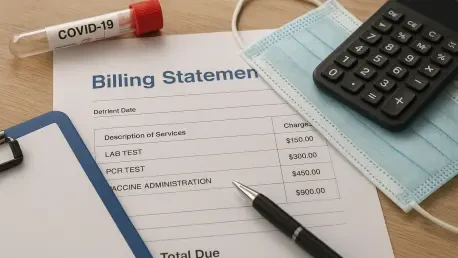
The operational core of this alleged conspiracy involved the creation and management of numerous “pop-up” COVID-19 testing sites scattered throughout the Houston metropolitan area. While these temporary facilities did provide actual nasal swab tests to thousands of concerned citizens, the billing procedures behind the scenes were allegedly far from legitimate. Instead of submitting claims for the relatively low-cost administration of a diagnostic test, the clinics utilized Dr. Montes’s professional credentials to bill for high-level “evaluation and management” office visits. These specific billing codes are reserved for complex medical consultations that require significant time and expertise from a licensed practitioner, services that federal investigators contend never actually took place. By misrepresenting these simple procedures as intensive medical encounters, the entities were able to inflate their reimbursement rates exponentially, effectively turning a public health necessity into a highly profitable revenue stream.
This practice, commonly referred to in the healthcare industry as “upcoding,” involves submitting provider claims for a more expensive service than the one actually performed. In the context of the pandemic, federal programs like the HRSA Uninsured Program were designed to streamline payments to ensure rapid care, a flexibility that prosecutors say Montes and his co-conspirators exploited for financial gain. The indictment suggests that Montes permitted third-party operators to use his medical license and name to facilitate these transactions, providing a veneer of professional legitimacy to the fraudulent billing activities. Such deceptive practices not only defrauded the government but also distorted the medical records of the individuals who sought testing at these sites. When a simple swab is recorded as a comprehensive office visit, it creates a false clinical history that could potentially impact a patient’s future insurance coverage or medical assessments, complicating the long-term fallout of the scheme.
Statistical Anomalies: Identifying the Patterns of Fraud
The sheer scale of the alleged fraud was brought to light through detailed data analysis by the Department of Health and Human Services Office of Inspector General. Investigators uncovered staggering statistical anomalies that made the clinics’ claims appear physically impossible. For instance, on approximately 29 different dates during the peak of the pandemic, the medical entities controlled by Dr. Montes submitted more than 3,000 claims for office visits per day. To put this in perspective, a typical high-volume medical practice might see a few dozen patients in a single day. The most egregious example cited by prosecutors occurred on December 1, 2021, when the group allegedly billed for more than 9,000 individual office visits in a 24-hour period. These numbers served as immediate red flags for federal auditors, as no medical staff, regardless of their efficiency, could legitimately provide that level of complex patient care within such a limited timeframe, leading to the eventual indictment.
Beyond the fabrication of medical services, the indictment provides a detailed roadmap of how the $20 million in government payouts was purportedly laundered and spent. Rather than utilizing the federal reimbursements to improve community health outcomes or support legitimate medical infrastructure, prosecutors claim the funds were diverted to satisfy a desire for luxury assets. The legal filings outline a series of high-end purchases that include multiple luxury vehicles from high-end dealerships and significant expenditures at prestigious retailers like Tiffany & Co. These transactions form the basis of the money laundering charges, as investigators worked to trace the path of federal money from the HRSA program into private bank accounts and eventually into tangible luxury goods. This aspect of the case underscores the predatory nature of the alleged crime, where funds intended to provide a safety net for the most vulnerable citizens were instead used to finance a lavish lifestyle for those managing the testing network.
Systemic Consequences: Protecting the Integrity of Public Health
The impact of this alleged fraud extended far beyond the financial loss to the Department of Treasury, as it directly undermined the HRSA COVID-19 Uninsured Program. This initiative was a vital pillar of the national pandemic response, specifically designed to reimburse healthcare providers for the costs of testing, treating, and vaccinating individuals who lacked health insurance. By ensuring that the uninsured could access care without the burden of unexpected medical bills, the program aimed to slow the spread of the virus and protect public health. However, the rapid depletion of these funds—driven in part by the type of upcoding and fraudulent billing seen in the Montes case—forced the program to stop accepting testing and treatment claims in early 2022. The premature exhaustion of these resources left many legitimate providers without reimbursement and potentially restricted access to care for individuals who needed it most, demonstrating the devastating real-world consequences of systemic healthcare fraud.
Legal experts recognized that the prosecution of Dr. Montes established a critical precedent for holding medical professionals accountable for the misuse of emergency federal funding. While the statutory penalties for such crimes included decades of potential prison time and millions of dollars in fines, the broader focus shifted toward enhancing the oversight mechanisms of federal health programs. To mitigate future risks, authorities recommended that patients who utilized temporary testing sites during the pandemic period proactively requested their medical transcripts to ensure no unauthorized services were recorded in their names. Furthermore, insurance providers and government agencies implemented more robust real-time data monitoring to detect billing spikes before payouts were finalized. This proactive approach sought to safeguard taxpayer resources and ensured that future emergency relief programs remained resilient against exploitation. The resolution of this case eventually provided a clear warning that the integration of forensic auditing would be a permanent fixture.