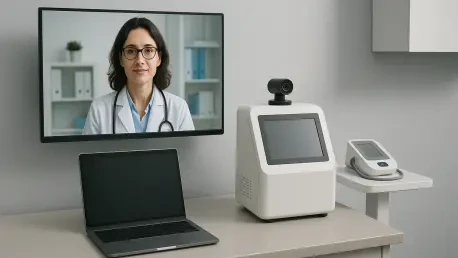

While the consumer interface of a medical website remains simple, the backend must manage a complicated chain of events to ensure clinical and legal compliance. The American telehealth sector has undergone a massive transformation, evolving from a temporary pandemic-era fix into a permanent pillar of the modern economy. This shift is driven not just by patient demand, but by a sophisticated, hidden technology stack that manages the complex backend of digital medicine. At the forefront of this movement is Bask Health, a software firm providing the modular infrastructure necessary to handle patient data, clinical oversight, and pharmaceutical logistics. By streamlining these intricate systems, the company has lowered the barriers to entry for healthcare entrepreneurs, allowing the industry to scale at an unprecedented rate. This evolution marks a shift from experimental digital tools to a standardized utility that powers the delivery of modern medicine across the nation, ensuring that patient care remains as efficient as any other digital service.
Streamlining the Logistical Labyrinth
Navigating Regulatory and Licensing Hurdles
The operational landscape of digital health is far more complex than a standard e-commerce transaction, requiring the synchronization of multiple distinct silos to function legally and safely. Behind a simple user interface lies a sequence of events where patient intake data must be securely transmitted to a clinician licensed in the patient’s specific state. Because medical licensing in the United States is fragmented across state lines, navigating this regulatory landscape was historically a significant hurdle for new businesses trying to achieve national reach. A clinician in New York cannot legally treat a patient in California unless they hold the proper credentials in that specific jurisdiction, creating a massive logistical bottleneck. Automated systems now manage these verifications in real time, ensuring that every interaction remains within the bounds of state law. This automated compliance layer allows platforms to focus on patient outcomes rather than getting bogged down in the manual verification of doctor credentials across various regions.
Integrating Fragmented Healthcare Workflows
The operational challenge continues once a clinical decision is made, as the encounter must be documented in a compliant electronic medical record system before being routed to a fulfillment pharmacy. Each phase involves different stakeholders, including payment processors, doctor groups, and pharmacies, who must all be integrated into a single, cohesive workflow. Before the rise of infrastructure-as-a-service platforms like Bask Health, building these connections was a cost-prohibitive endeavor that could take nearly a year to complete. Modern modular solutions have replaced the need for bespoke engineering, allowing for the seamless transfer of data between clinicians and pharmacists. This integration ensures that prescriptions are not only written accurately but also routed to the most efficient facility for shipping and delivery. By unifying these disparate systems into a single dashboard, the technology removes the friction that previously characterized the telehealth experience, making it possible for providers to scale their operations without sacrificing data integrity or security.
From Bespoke Software to Scalable Solutions
The Genesis of Modular Health Platforms
The story of Bask Health is rooted in the experiences of founders Zachary and Elias Dorf, who initially struggled to launch a direct-to-consumer healthcare brand. During their attempt to build a startup for eyelash treatments, they discovered that they had to spend approximately $500,000 and ten months just to build the necessary backend infrastructure. Realizing that this technical bottleneck was a universal problem for healthcare entrepreneurs, they pivoted from a product-focused business to creating a standardized, configurable platform. This shift reflected a broader realization within the industry: the true value was not in the medicine itself, but in the software that made the delivery of medicine possible. By focusing on the plumbing of the system, they addressed a fundamental market inefficiency that had kept smaller innovators from entering the space. Their experience highlighted the massive gap between having a clinical idea and actually possessing the technical tools to execute it in a highly regulated environment.
Democratizing Entry via the Shopify Model
This approach allows founders to manage patient records, payments, and pharmacy connections through a single dashboard without hiring a dedicated development team for every technical change. Often compared to Shopify, the platform provides a toolkit that essentially democratizes the ability to launch and manage a telehealth enterprise. By the fall of 2026, the platform had significantly consolidated industry resources, offering a marketplace that includes over 60 pharmacy options and five major provider groups. This accessibility has changed the competitive landscape, allowing niche providers to enter the market with specialized services that were previously too expensive to launch. Entrepreneurs can now configure their workflows using pre-built modules rather than writing code from scratch, which drastically reduces the initial capital required for a launch. This democratization ensures that innovation is driven by clinical needs and market demand rather than the depth of a company’s venture capital funding or its ability to recruit a massive team of software engineers.
Responding to Market Surges and Technological Shifts
Meeting the Growing Demand for Specialized Care
The recent explosion of interest in weight-loss medications served as a critical stress test for the agility of telehealth infrastructure across the country. As millions of Americans sought access to these treatments, the existing platform infrastructure enabled entrepreneurs to launch competing services in a matter of days rather than months. Data indicated that by early 2026, a significant portion of adults taking these medications sourced them through online providers, highlighting the shift in consumer behavior. By providing pre-designed templates and an established network of pharmacies, the technology allowed startups to focus on branding and marketing while the software handled the heavy lifting of clinical and logistical compliance. This speed-to-market has redefined how the healthcare industry reacts to pharmaceutical breakthroughs and sudden shifts in public health trends. It has created a more responsive ecosystem where patient needs are met with rapid service expansion, ensuring that the supply chain and clinical oversight can keep pace with unprecedented consumer interest.
Building AI-Native Foundations for Digital Medicine
Looking ahead, the industry is trending toward AI-native infrastructure that supports automated workflows and rapid software development. As founders utilize advanced artificial intelligence tools to build front-end interfaces, the underlying plumbing, such as prescription routing and license verification, must remain robust and fail-safe. The goal is to ensure that while AI may accelerate the creation of digital health storefronts, the core requirements of reliability and data integrity remain uncompromised. The next generation of telehealth software will likely involve more autonomous development, but the human-in-the-loop requirement for clinical safety remains a non-negotiable standard. This technological evolution ensures that the backend remains invisible to the patient while becoming increasingly intelligent in how it handles complex medical logistics. By embedding security and compliance directly into the software architecture, providers can leverage the latest AI advancements without risking the legal or clinical errors that could arise from using unspecialized or generic development frameworks.
Establishing a Resilient Standard for Modern Healthcare
The evolution of telehealth infrastructure demonstrated that the most significant barrier to medical innovation was the technical and regulatory framework rather than clinical capability. By standardizing the invisible layer of healthcare delivery, platforms like Bask Health allowed the sector to move toward a more resilient and consumer-centric model. Stakeholders who prioritized the decoupling of their frontend branding from their backend logistics found themselves better equipped to handle rapid shifts in pharmaceutical demand and regulatory changes. For entrepreneurs and clinicians entering the market, the primary takeaway was the necessity of investing in modular systems that could adapt to the emerging landscape of automated care. Decision-makers were encouraged to focus on interoperability and data integrity as the foundational elements of growth, ensuring that software enhancements never compromised patient safety. As the digital and physical healthcare realms continued to merge, the industry established a new baseline for speed, security, and accessibility across the nation.