
By 2030, Singaporean healthcare professionals will focus on data analytics to move from intuition-based decision-making to evidence-backed clinical leadership roles. This strategic pivot comes as Singapore grapples with a massive demographic shift often described as a silver tsunami, where one out of every four residents will be aged 65 or older within the next few years. The National University Health System (NUHS) has identified that the current trajectory of hiring 6,000 new healthcare workers annually is mathematically unsustainable. Instead of pursuing a traditional growth model that relies solely on increasing headcount, the city-state is fundamentally reimagining the patient journey through advanced automation and machine learning. This transformation is not merely about replacing human effort but rather about augmenting the capabilities of existing staff to handle an increasingly complex patient load. By integrating these technologies, Singapore aims to maintain high standards of care while addressing the pressing labor shortage.
Mission Command: Decentralized Clinical Leadership
The core of this systemic evolution lies in a management philosophy known as Mission Command, a strategy derived from military operations to foster agility in high-stakes environments. Within the NUHS framework, this approach decentralizes decision-making power, providing frontline clinicians and administrative staff with the autonomy to execute tasks based on high-level institutional goals. By stripping away layers of top-down bureaucracy, the organization ensures that healthcare providers can respond rapidly to the shifting needs of an aging population. This cultural shift empowers employees at every level to take ownership of innovation, transforming it from a distant administrative mandate into a tangible, grassroots movement. Consequently, the daily reality of patient care is improved through immediate problem-solving and localized adjustments that aggregate into significant system-wide efficiencies. This structural flexibility is essential for a system that must evolve faster than the demographic challenges it faces.
Breaking Silos: Multidisciplinary Leadership Structures
To complement this decentralized command structure, NUHS has dismantled traditional professional silos by introducing multidisciplinary leadership groups called triads and quadrats. These groups intentionally mix diverse job families, including doctors, nurses, pharmacists, and operations managers, to collaborate on large-scale transformation projects. By forcing these different departments to work toward a common goal, the healthcare system ensures that new technologies and processes are integrated seamlessly across the entire patient journey rather than being confined to specific wards. This collaborative model prevents the formation of innovation pockets where progress is isolated and instead creates a unified strategy for implementing artificial intelligence. The resulting cross-pollination of ideas ensures that automation tools are designed with the input of every professional who will interact with them, leading to higher adoption rates and more practical clinical applications that genuinely reduce the burden on the workforce.
The Lighthouse Model: Guiding Technological Adoption
Rather than adopting a reactive stance toward the rise of generative artificial intelligence, Singaporean healthcare leaders have pioneered the Lighthouse model for technological adoption. In this framework, senior leadership functions as the lighthouse, casting a long-range guiding light to define the overarching direction of the organization’s digital transformation. Meanwhile, greenhouses are established as controlled, real-world environments—such as specific oncology clinics or acute care wards—where specialized teams can test and refine emerging AI tools. This dual-layered strategy allows the organization to fail fast and learn faster, identifying potential flaws in software or workflow integration before a technology is scaled across the entire network. Over the past 18 months, more than 40 percent of the NUHS workforce has undergone specific training in AI, ensuring that the human element is prepared to harness these tools effectively from the moment they are deployed.
Augmented Service: Redefining the Allied Health Workforce
The primary vision for this technological integration is the achievement of an augmented service state by the end of the decade, specifically targeting the allied health and pharmacy sectors. This vision rests on three pillars: empowering patient self-care through digital monitoring tools, increasing the involvement of family caregivers through education, and expanding virtualized care options. By delegating routine clinical tasks to automated systems or remote monitoring platforms, professionals such as physiotherapists and dietitians can pivot toward more complex clinical leadership roles. Proficiency in data analytics is becoming a mandatory skill set, allowing these practitioners to move away from legacy methods of care and toward precision medicine. This shift not only enhances the quality of individual patient outcomes but also optimizes the allocation of limited human resources. The goal is to create a symbiotic relationship where technology handles repetitive data tasks while humans focus on high-value clinical judgment.
Strategic Metrics: Measuring Beyond Patient Volume
One of the most persistent hurdles in healthcare transformation is accurately measuring success beyond surface-level volume metrics. NUHS has transitioned its focus toward six specific domains of healthcare quality: safety, effectiveness, patient-centeredness, timeliness, efficiency, and equity. Real-world case studies from recent years demonstrate that meaningful transformation often arises from clever process redesign rather than the acquisition of expensive hardware. For instance, by implementing a consent-by-default model for financial aid applications, medical social workers successfully eliminated 50 manual man-hours of paperwork, allowing vulnerable patients to receive assistance much faster. Similarly, when a critical CT scanner reached its end-of-life cycle, administrators chose to upgrade the existing internal components rather than commissioning a full replacement. This pragmatic decision saved approximately S$1.5 million and reduced equipment downtime from two months to just two weeks, showing that resource management is as vital as tech.
Data Interpretation: Understanding Complexity and Prudence
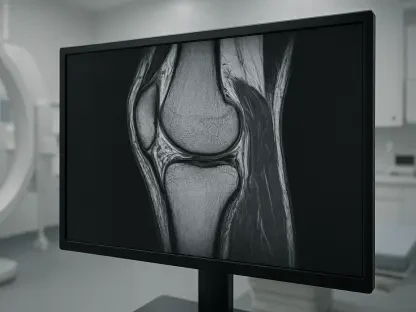
Interpreting productivity data in this new era requires a deep understanding of shifting clinical complexities. For example, while some diagnostic departments might report a modest 6 percent increase in productivity, their actual workload often surges by the same amount, frequently involving more intricate procedures like MRI or PET-CT scans that require significantly more time than basic X-rays. Conversely, a statistical decline in the output of laboratory services may actually indicate a successful implementation of prudent test ordering. In this scenario, doctors use AI-assisted decision tools to avoid ordering unnecessary tests, meaning the system is operating more intelligently even if raw volume numbers appear lower. These nuances highlight the necessity for healthcare leaders to look past superficial data to understand how automation is truly impacting operational efficiency. By interrogating these metrics, the system can ensure that productivity gains are sustainable and do not cause staff burnout.
Global Standards: Building a Resilient Medical Ecosystem
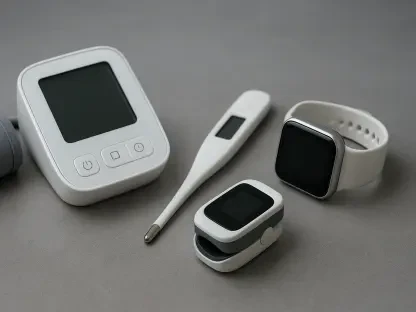
As the healthcare sector transitioned toward a more automated reality, the final phases of development focused on the widespread adoption of predictive analytics to prevent illness before it required hospitalization. This shift from reactive acute care to proactive population health management successfully reduced the strain on physical infrastructure. Health systems integrated wearable technology data directly into clinical workflows, which allowed for real-time adjustments to treatment plans without the need for physical clinic visits. This transition to a decentralized, tech-enabled model represented the most viable path forward when faced with daunting demographic realities. In previous eras, such changes took decades, but the accelerated pace of innovation ensured that a fully augmented healthcare system was achieved. By fostering a culture of continuous learning and structural adaptability, the city-state established a global blueprint for a sustainable system that remained resilient despite an aging population.