
Training programs for local medical staff are currently underway to bridge the gap between traditional surgical methods and the requirements of high-tier robotic technology. For years, the healthcare narrative in the region was dominated by the flight of patients seeking advanced treatments in foreign jurisdictions, a trend that impacted the local economy and healthcare morale. However, the current revitalization of clinical infrastructure in the state is beginning to challenge this status quo. By introducing sophisticated diagnostic and therapeutic tools, the state is creating a sustainable model for high-end medical care that was previously inaccessible to most of the population. The focus is no longer just on basic health services but on specialized interventions that require extreme precision and advanced oncology protocols. As local centers acquire the capacity to handle complex cases, the financial burden on families is gradually being lifted. This evolution represents a strategic shift toward medical self-sufficiency, ensuring that cutting-edge treatments are available locally.
Technical Precision: The Future of Surgical Innovation
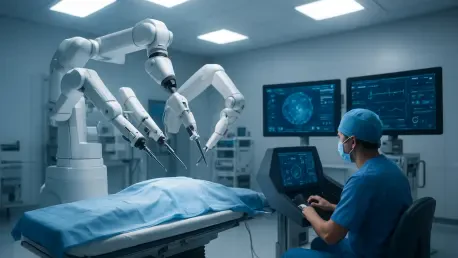
The adoption of robotic-assisted surgical systems has introduced a new era of minimally invasive procedures, particularly in the treatment of various cancers and complex internal ailments. These systems provide surgeons with enhanced dexterity and high-definition visualization, allowing for precise tumor removal while minimizing damage to surrounding healthy tissues. This level of accuracy is beneficial in oncology, where the margins of resection determine the long-term success of the treatment. Furthermore, patients benefit from smaller incisions, reduced blood loss, and faster recovery times, which are critical factors in improving the patient experience. By localizing these advanced capabilities, the healthcare system is addressing the reasons why patients previously sought care in overseas facilities. The integration of robotic technology into the surgical workflow is a fundamental shift that elevates the standard of care to a global level, making local treatment a viable and often preferred option for those facing life-threatening diagnoses.
In tandem with surgical advancements, the installation of state-of-the-art linear accelerators has transformed the oncology landscape by providing highly targeted radiotherapy. These machines enable clinicians to deliver concentrated doses of radiation to malignant cells with sub-millimeter accuracy, sparing healthy organs and significantly reducing the adverse effects typically associated with cancer treatment. This localized approach to cancer care is essential for patients who require long-term management and frequent treatment sessions, which were traditionally difficult to maintain during international medical trips. The availability of such sophisticated technology within the state creates a comprehensive care continuum, from early diagnosis to complex intervention and post-operative monitoring. By establishing a robust oncology center of excellence, the region is successfully retaining patients who would otherwise contribute to the multi-billion dollar medical tourism industry. The synergy of robotic precision and advanced radiotherapy ensures that the clinical outcomes achieved locally are comparable to those in top-tier medical destinations across the globe.
The successful deployment of these advanced medical technologies proved that strategic investments in healthcare could drastically reduce the reliance on foreign medical facilities. It was found that by empowering local clinicians with the right tools, the state managed to improve patient outcomes and restore public confidence in the regional health system. To ensure the long-term viability of this initiative, stakeholders established dedicated funding for the maintenance of specialized equipment and continuous professional development for the medical workforce. It became clear that the integration of robotics and oncology was not just a clinical success but also an economic stabilizer for the region. Future efforts focused on expanding the reach of these services through innovative insurance schemes and community outreach programs to ensure equitable access. By prioritizing localized high-tech care, the state successfully paved the way for a self-sustaining healthcare ecosystem. This transformation served as a blueprint for other regions aiming to achieve medical independence and excellence through the application of modern science.