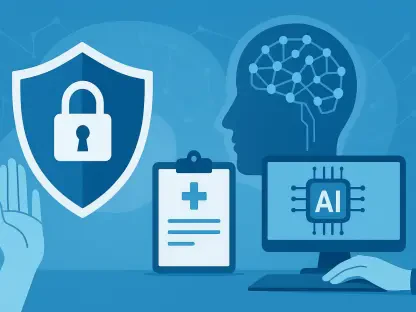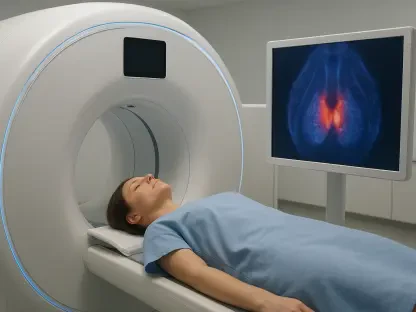

The assumption that removing a name and social security number from a medical record ensures complete anonymity is rapidly becoming a relic of the past as sophisticated artificial intelligence systems evolve. While healthcare providers have long relied on de-identification protocols to share data for research, recent findings suggest that these digital fingerprints are far more unique than previously understood. When large-scale datasets are fed into machine learning models, the resulting algorithms can inadvertently memorize specific patterns that correlate back to individual patients. This creates a paradox where data meant to improve public health outcomes could potentially bridge the gap between a nameless record and a living person. As medical AI becomes more integrated into diagnostic workflows, the boundary between collective knowledge and individual privacy is thinning. Understanding the mechanics of this vulnerability is essential for patients and providers alike who navigate a landscape where data is the primary currency for medical advancement.
1. Overview of Medical AI Privacy Risks
A groundbreaking study published in the journal Nature has cast a shadow over traditional data protection methods by demonstrating that AI models can pinpoint specific individuals within supposedly anonymous datasets. Researchers discovered that even when the most obvious identifiers are scrubbed, the inherent complexity of clinical data acts as a signature. This level of precision allows for what experts call “re-identification,” where an AI can cross-reference clinical information with external datasets to find a match. The study underscores that de-identification is fundamentally different from total anonymity, particularly when the data involves multi-dimensional inputs like genomic sequences or high-resolution medical imaging. Because AI excels at detecting subtle correlations that human eyes would miss, the removal of demographic labels is no longer a sufficient barrier against re-identification attempts.
The risk stems from the fact that modern machine learning models are designed to be highly sensitive to the nuances of the training data they consume. While this sensitivity makes them effective at diagnosing rare conditions, it also makes them susceptible to “overfitting” on rare data points. When a model becomes too familiar with the specifics of a patient’s history, it essentially encodes that individual’s medical narrative into its internal parameters. If an adversary gains access to the model, they can use specialized techniques to query whether a specific person’s information was included in the training set. This capability raises significant ethical concerns about the future of open-science initiatives that rely on the broad sharing of clinical datasets. Without more robust safeguards, the push for collaborative medical research could inadvertently compromise the privacy of millions whose data was contributed under the promise of confidentiality.
2. Groups Facing the Greatest Identification Risk
Not all patients face the same level of exposure; instead, the risk of identification is disproportionately higher for those whose medical profiles deviate from the statistical norm. Individuals with rare diseases find themselves in a precarious position because their clinical markers are inherently unique, making them stand out like a bright light in a dark room. For example, a patient with a condition that affects only one in a hundred thousand people provides a data signature that is nearly impossible to mask effectively through standard de-identification techniques. Similarly, those with atypical scan results or unusual physiological symptoms provide the AI with distinctive patterns that are easily distinguishable from the broader population. This uniqueness becomes a clear identifier for a machine learning model trained to recognize patterns. Consequently, the very people who might benefit most from AI research are often the ones whose privacy is most at risk.
Beyond clinical rarity, socioeconomic factors play a significant role in determining how easily a patient can be re-identified by AI systems. Minority groups that are under-represented in medical datasets are particularly vulnerable because their information lacks the safety in numbers that members of the majority population enjoy. When a dataset is dominated by one racial group, the records of individuals from other backgrounds become statistically salient, making them easier for an algorithm to isolate. Furthermore, patients on public insurance programs like Medicaid often have different healthcare utilization patterns compared to those with private insurance, which serves as another identifying filter. Long-term medical histories also increase risk; the more interactions a patient has with the healthcare system, the more data points are created to form a unique chronological trail. Each visit adds another layer to a digital profile that becomes harder to anonymize effectively.
3. How the Research Was Conducted
To quantify these risks, researchers from several prestigious European institutions conducted an extensive analysis involving seven large-scale clinical datasets that included both electronic health records and medical images. The methodology was rigorous, involving the creation of approximately 200 distinct versions of AI models for each dataset to ensure the findings were consistent across different architectures. By simulating various “membership inference attacks,” the team sought to determine if they could accurately guess whether a specific person’s data had been used to train a given model. These attacks involved feeding the AI specific clinical profiles and analyzing the model’s output to look for signs of familiarity. The researchers were not just looking at the broad success rate of these attacks but were specifically focused on how the model responded to outliers. This approach provided a detailed map of where the current de-identification standards fail most spectacularly.
The results of this large-scale experimentation revealed a stark contrast between group averages and individual outcomes in terms of privacy preservation. While the overall probability of a successful re-identification across a whole dataset might appear low, the risk for specific individuals was alarmingly high. For those with unique clinical characteristics, the AI models were able to confirm their presence in the training data with nearly 100% accuracy. This finding highlights a critical flaw in current privacy metrics, which often focus on aggregate data security rather than the protection of the most vulnerable individuals within a group. The research demonstrated that even sophisticated AI models that had passed traditional privacy audits were still capable of leaking information about the outliers in their training sets. This disparity suggests that the industry needs to move away from “one-size-fits-all” privacy standards toward a more individual-centric approach to data protection.
4. Proactive Measures for Patients
While the technical challenges of AI privacy are complex, patients can take several proactive steps to protect their personal information in this increasingly data-driven healthcare environment. One of the most effective strategies is to become an active participant in the consent process by asking specific questions about how clinical data will be utilized beyond immediate treatment. When presented with hospital intake forms, patients should inquire whether their data will be used to train machine learning models and what specific de-identification techniques are being employed. Understanding the distinction between internal use and external use for third-party commercial development is crucial. Patients have the right to know if their medical history is being shared with tech companies that may not have the same rigorous privacy standards as a medical institution. Being informed is the first line of defense against the unauthorized or unintended use of sensitive health information.
In addition to asking questions, patients can leverage legal frameworks like the Health Insurance Portability and Accountability Act to request formal restrictions on data usage. Under federal law, individuals have the right to ask their healthcare providers to limit how their protected health information is shared for research purposes. While there are certain exceptions for public health reporting, many institutions provide opt-out mechanisms for patients who do not wish their data to be included in large-scale AI training sets. For those living with rare illnesses, it is particularly important to ask about advanced protections such as differential privacy, which can offer a higher level of security by mathematically masking individual contributions. Patients can also advocate for broader systemic change by supporting legislation that mandates independent privacy audits for any AI model. This proactive stance helps ensure that the benefits of AI do not come at the cost of personal privacy.
5. The Path Forward for Healthcare AI
Addressing the vulnerabilities identified in recent research required a shift toward more sophisticated technical and regulatory solutions that moved beyond basic de-identification. The industry began to embrace differential privacy, a technique that added carefully calibrated noise to datasets during the training process of AI models. This approach ensured that while the model learned the overarching patterns necessary for medical accuracy, it could not pinpoint the specific data of any individual. Developers found that by using this method, they could maintain high levels of diagnostic performance while significantly reducing the success rate of membership inference attacks. Furthermore, the introduction of mandatory privacy audits forced companies to prove that their models were safe at the individual patient level before they were allowed to be deployed in clinical settings. This focus on privacy by design became the new gold standard for medical software development.
Regulatory bodies such as the FDA and the Department of Health and Human Services responded to these findings by updating their guidelines to reflect the realities of the machine learning era. They established new rules that required clear disclosure of data provenance and the specific privacy-preserving technologies used in the creation of medical AI products. These updates provided a much-needed framework for accountability, making it easier for healthcare providers to vet the tools they integrated into their practices. As a result, the healthcare industry moved toward a more transparent model where the protection of patient privacy was viewed as being just as important as the accuracy of the AI’s predictions. This transition helped rebuild public trust, as patients felt more confident that their unique medical histories were being treated with security. By prioritizing individual protection, the medical community ensured that AI remained a force for good.