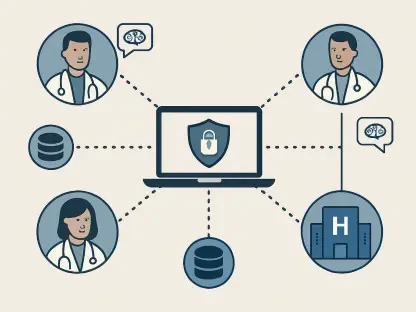

The global wearable health technology market is projected to reach $69.2 billion by 2028, driven by demand for continuous health monitoring outside clinical settings. Wearable devices generate real-time data between appointments, giving care teams earlier visibility into changing conditions, adherence patterns, and risk signals that scheduled visits miss.
That shift from episodic to continuous monitoring is opening investment opportunities across device development, data platforms, care coordination, and health system integration. This article explores the clinical and operational value of wearable health technology, the market dynamics shaping investment decisions, and what digital health investors should evaluate when assessing opportunities in this category.
The Clinical and Operational Case for Wearable Health Technology
Wearable health devices continuously collect physiological data in real-world conditions, representing a fundamental shift from how health data has traditionally been gathered. While clinic-based measurements capture a single point in time, wearables capture patterns across days, weeks, and months, providing a richer, more representative picture of a patient’s health status.
According to Roche Diagnostics, wearable technology is increasingly used to monitor conditions such as cardiovascular disease, diabetes, respiratory illness, and neurological disorders, enabling health management previously possible only in clinical settings. That capability has direct implications for how health systems detect, manage, and prevent disease.
The clinical value of active monitoring translates into operational and financial value across three dimensions:
Early detection reduces the cost of late-stage intervention. Wearable devices that detect early warning signals, such as irregular heart rhythm, declining oxygen saturation, or rising glucose levels, allow clinical teams to intervene before a condition escalates to an acute event. Preventing hospitalizations and emergency department visits reduces costs for health systems and payers while improving patient outcomes.
Continuous monitoring supports chronic disease management at scale. Chronic conditions, including heart disease, diabetes, and chronic obstructive pulmonary disease, account for a major portion of healthcare costs. Wearable monitoring enables care teams to manage larger patient populations more efficiently by spotting patients who need immediate attention, rather than applying the same contact frequency to every patient regardless of their risk level.
Remote monitoring extends care beyond clinical walls. As health systems face workforce constraints and capacity pressures, remote patient monitoring supported by wearable devices enables agile care delivery without requiring a physical meeting. That flexibility supports more sustainable care models and opens access to patients in geographically underserved areas.
Given these factors, the clinical case for adopting health technology is strong and increasingly supported by real-world evidence. For digital health investors, it is essential to know where durable commercial value sits within the wearable health technology landscape.
Where Investment Value Is Concentrated in Wearable Health Technology
The healthcare wearable technology market spans hardware, software, data infrastructure, and care-delivery integration. Not all segments carry the same investment opportunities, and understanding where value concentrates helps digital health investors allocate funds with greater precision. Four segments consistently attract the strongest commercial returns: clinical-grade devices, data platforms, reimbursement-backed business models, and chronic disease management solutions. Each represents a different entry point, risk profile, and growth trajectory.
Clinical-Grade Devices Create Defensible Market Position
Consumer wearables, such as fitness trackers and smartwatches with health features, have driven significant market awareness. However, clinical-grade devices that meet regulatory standards for diagnostic or monitoring use carry stronger commercial defensibility. Health systems, payers, and care delivery organizations are more likely to commit budget to devices with validated clinical evidence than to consumer-grade alternatives.
Sermo research indicates that physician comfort with recommending wearable monitoring is growing, especially for clinical use cases where underlying data quality meets established standards. Higher adoption of medical devices indicates the potential for health system integration and, by extension, sustainable revenue at scale. Based on this, health tech investors should evaluate the regulatory pathway and clinical validation evidence for any device-focused opportunity. Strong evidence is what moves a device from a funded pilot to system-wide deployment.
Data Platforms Generate Compounding Value Over Time
Next, the most durable investment value in wearable health technology often sits in the data layer rather than the device itself. Devices generate data, but platforms that aggregate, analyze, and present that data in actionable formats for clinicians and care teams create the stickiness and switching cost that support defensible business models.
Platforms that connect wearable data to electronic health record systems, care coordination workflows, and population health management tools become embedded in clinical operations. That integration creates a commercial moat that is significantly harder to replicate than the device itself.
As such, investors should assess the depth of health system integration, the quality of clinical workflow embedding, and the platform’s ability to generate insights that improve care decisions, not just data that adds to documentation burden.
Reimbursement and Payor Relationships Define Commercial Scale
Additionally, a wearable health technology business that depends on patients paying out of pocket faces a ceiling on the addressable market. Businesses that achieve reimbursement through government health programs, private insurance, or employer health plans can access larger patient populations and ensure more predictable revenue streams.
Reimbursement frameworks for remote patient monitoring have expanded in several major markets, particularly in the United States, following regulatory changes that created billing pathways for connected care services. This means that businesses with established payor relationships and proven billing capabilities hold a meaningful commercial advantage over those still navigating coverage approval. Health tech investors should evaluate the target market’s reimbursement status, the trajectory of coverage expansion, and the company’s ability to navigate payor contracting.
Chronic Disease Management Represents the Highest-Volume Opportunity
The chronic disease population is large, expensive to manage, and growing in most markets. Wearable solutions that address high-prevalence conditions such as cardiovascular disease, diabetes, and respiratory illness have access to patient populations broad enough to support significant commercial scale.
To capitalize on this, health tech investors should look for platforms with clinical evidence, payor relationships, and health system integration to reach these populations at a meaningful scale. They should also avoid platforms that demonstrate clinical value in a narrow cohort without a clear pathway to broader deployment.
Knowing where value sits in wearable technology is only part of the work. The next step is evaluating the specific characteristics that distinguish high-potential opportunities from those that look compelling but lack the commercial foundation to scale.
What Digital Health Investors Should Evaluate in Wearable Health Technology
Wearable health technology attracts significant attention, but not all opportunities reflect durable commercial value. A disciplined evaluation framework helps investors distinguish platforms with sustainable growth from those dependent on favorable market conditions or continued subsidy. Four evaluation criteria can help separate durable investments from those that underperform at scale.
Clinical Evidence Must Support the Commercial Claim
The most common risk in wearable health investment is the gap between what a device measures and what clinical outcomes it improves. Digital health investors should require peer-reviewed evidence, real-world outcome data, or health system validation studies demonstrating that device use leads to meaningful clinical results.
Devices that generate data without demonstrating how that data changes clinical decisions or patient outcomes are commercially vulnerable. Clinicians, health systems, and payors will not sustain budget commitment to monitoring that does not visibly improve care.
Integration Determines Adoption Durability
Beyond clinical evidence, a medical device or platform that operates alongside existing clinical workflows rather than within them faces constant adoption friction. To avoid this, investors should assess how deeply a solution integrates with the electronic health record systems, clinical communication tools, and care coordination workflows that health systems already use.
Integration does not require clinical staff to change preexisting behaviors. Instead, it enables productivity by reducing the learning curve and increasing the likelihood of sustained adoption. This integration also makes the medical solution harder to replace, which protects long-term revenue retention.
Regulatory Strategy Must Reflect the Intended Use Case
Alongside integration depth, wearable devices used for monitoring or diagnostic purposes in clinical settings face regulatory requirements that consumer devices do not. Health tech investors should confirm that the regulatory strategy matches the clinical claim and that the path to market clearance is realistic for the target market and intended use. Any regulatory missteps, including overstating clinical claims or pursuing the wrong approval pathway, can delay commercialization and create liability exposure that undermines the investment intention.
Business Model Must Connect to Sustainable Revenue
Finally, pilot programs and grant-funded deployments demonstrate clinical feasibility but do not validate commercial sustainability. A business that cannot show recurring revenue from health system contracts, payor reimbursement, or employer health programs has not yet proven that clinical value translates into a paying market. Digital health investors should look for retention rates and contract renewal data alongside revenue figures, because sustained adoption is a stronger signal of commercial durability than initial deployment volume.
Conclusion
Wearable health technology has moved from a peripheral category to a core component of how health systems monitor patients, manage chronic disease, and deliver care beyond clinical walls. The platforms that connect continuous monitoring data to clinical workflows, payor systems, and population health management will shape how care is delivered.
For digital health investors, the opportunity is significant but not uniform. Device-level differentiation is difficult to sustain without clinical evidence and regulatory validation. Platform-level value compounds as integration deepens and data assets grow. Meanwhile, reimbursement access determines whether a strong clinical solution can reach commercial scale.
Investors who have not yet built a clear framework for evaluating clinical evidence, health system integration, and reimbursement trajectory are making allocation decisions without the full picture. In wearable health, a strong clinical use case does not automatically translate into a scalable business. The investors who assess both dimensions with equal discipline will be best positioned to back the platforms that define the next phase of health technology.