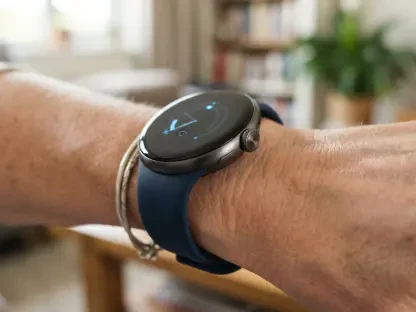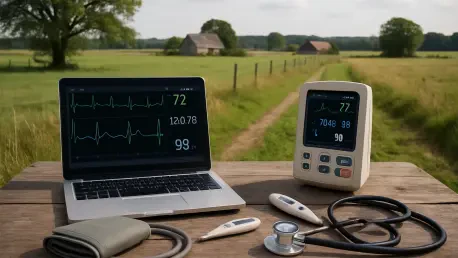

Rural healthcare delivery often faces severe limitations due to geographic isolation and the absence of reliable technological infrastructure to monitor patients with chronic illnesses. The predictive data transmission model only sends packets when a significant deviation occurs between estimated vitals and real-time sensor observations. This breakthrough was introduced through the Bio-Inspired Self-Learning Energy-Aware Wireless Sensor Network (BISLE-WSN), a framework designed to maintain critical medical oversight in resource-scarce environments. The system, developed by a team led by M. Ashok Kumar, prioritizes network longevity by addressing the high energy costs typically associated with continuous health data streaming. By integrating cross-layered design principles, the researchers moved beyond fragmented engineering fixes to create an autonomous network that functions reliably in villages where medical professionals are few and sensor maintenance is difficult. The resulting architecture serves as a blueprint for resilient, low-maintenance remote healthcare.
Adaptive Architecture and Energy Intelligence
The current landscape of rural medical technology in 2026 revolves around the critical need for systems that can operate independently of the failing or non-existent power grids found in remote provinces. Researchers have realized that creating efficient sensors is not merely about using larger batteries, but about developing intelligent software that manages those resources with biological precision. The BISLE-WSN framework represents the cutting edge of this philosophy, integrating self-awareness directly into the hardware’s operational logic. By harmonizing energy management with the specific demands of physiological data processing, the system ensures that healthcare providers can maintain a digital presence in areas where physical visits are impossible. This approach relies on a cross-layered architecture that allows the network to adapt its performance based on both the urgency of the patient’s medical state and the remaining power available across the entire sensor grid.
Bio-Inspired Resource Allocation
The bio-inspired philosophy at the heart of the BISLE-WSN framework rejects the use of rigid, static programming in favor of a more dynamic and adaptive operational model. Each individual node in the network is tasked with monitoring its own residual energy levels, which are calculated by subtracting the energy spent on transmission and reception from the initial battery capacity. When the system detects that a node’s reserves have fallen below a critical threshold, it triggers an automatic transition into a low-power sleep mode to prevent complete exhaustion. This mimics the way biological organisms allocate limited resources to vital organs while scaling back non-essential functions during times of stress. By redistributing the active sensing and data relay responsibilities to nodes with higher power reserves, the network maintains continuous operation. This decentralized approach ensures that the failure of a single node due to power depletion does not compromise the integrity of the entire patient monitoring system.
Self-Learning Energy Prediction
To move beyond simple reactive energy management, the framework incorporates a self-learning component that adds a predictive dimension to how the network operates. This system utilizes a lightweight weighted prediction model to forecast future energy availability based on historical data regarding a node’s consumption patterns and its interaction frequency with neighbors. The predictive model is refined in real-time through a gradient descent-based feedback mechanism, employing a specific learning rate of 0.01 and mean absolute error as the loss function. Because the computational requirements for this model are minimal, it can run effectively on the modest hardware found in standard sensor nodes without becoming a drain on the battery itself. This allows the network to proactively assign demanding roles, such as acting as a cluster head, to nodes that are forecasted to have the most robust energy reserves over the next several cycles. Such foresight prevents the common issue of network bottlenecks occurring during periods of high data activity.
Optimized Communication and Data Privacy
Modern remote healthcare protocols must prioritize both the speed of data transmission and the absolute security of patient information to be considered viable for real-world deployment. In 2026, the volume of data generated by wearable medical sensors has increased significantly, putting immense pressure on traditional wireless networks that were never designed for such intensive, continuous use. To combat this, the BISLE-WSN framework utilizes advanced communication strategies that reduce redundant traffic while maintaining a high level of accuracy for critical vitals. At the same time, the rise in cyber threats targeting medical infrastructure has made localized data processing and encrypted transmission more important than ever. By combining optimized routing with decentralized learning techniques, this architecture provides a comprehensive solution that protects patient privacy without sacrificing the energy efficiency required for long-term rural monitoring.
Intelligent Clustering Mechanics
The organization of nodes into clusters is a fundamental aspect of the BISLE-WSN architecture, designed to streamline data flow and reduce the energy cost of long-distance communication. The process of selecting cluster heads is modeled after the collective foraging behaviors observed in ant and bee colonies, where the most efficient paths and leaders are identified through shared environmental feedback. A multi-factored fitness function is used to evaluate potential cluster heads, taking into account their predicted energy levels, proximity to other nodes, and current communication capacity. This ensures that only the most capable sensors take on the energy-intensive task of coordinating the group and aggregating data for further transmission. When a cluster head’s energy levels dip below a predetermined threshold, the system automatically rotates the leadership role to a more suitable neighbor. This rotation prevents any single node from being overtaxed, thereby extending the total operational lifespan of the network.
Health-Aware Routing Efficiency
Communication efficiency is further refined through a combination of event-driven transmission and a context-sensitive routing protocol that prioritizes patient safety. The system estimates what the sensor readings should be based on previous vitals and only initiates a data packet transmission when a significant deviation occurs between the prediction and real-time observations. This approach drastically reduces the volume of redundant data streaming across the network, which is often the primary cause of battery depletion in traditional monitoring systems. Furthermore, the routing protocol adapts to the medical state of the patient; if the physiological data indicates stability, the network directs traffic through the most energy-efficient paths available. However, if a sudden spike in heart rate or a drop in oxygen levels is detected, the system immediately shifts its priority to minimize latency. This ensures that urgent medical alerts reach doctors with the highest possible speed when time is a critical factor.
Privacy Preservation: Federated Learning
Maintaining the confidentiality of patient health records is a paramount concern for any modern medical technology, and the BISLE-WSN addresses this through Federated Learning. In this advanced setup, raw physiological data collected by the sensors never leaves the local cluster, significantly reducing the risk of interception or unauthorized access during transmission. Instead, the cluster heads use the local data to train machine learning models, and only the resulting mathematical weights are sent to a global aggregator for processing. The aggregator employs the Federated Averaging algorithm to refine the global monitoring model over several rounds, ensuring that the system learns from a wide range of patient data without compromising individual privacy. This decentralized training method not only enhances security but also decreases the total amount of data moving through the network. By transmitting model parameters rather than raw datasets, the system conserves energy and improves efficiency.
Performance Validation and Future Implementation
Validating a complex framework like the BISLE-WSN requires a rigorous testing environment that can simulate the unpredictable nature of human physiology and the technical constraints of rural wireless networks. Using advanced computational tools like MATLAB, the research team was able to create detailed clinical models that represent a wide range of patient conditions, from baseline stability to acute cardiac events. These simulations are essential for determining whether a network can survive the thousands of communication rounds necessary for multi-month deployments without requiring human intervention or hardware replacements. The metrics gathered during these tests—such as network lifetime, latency, and packet delivery ratios—provide the objective data needed to compare this bio-inspired approach against the industry-standard protocols currently in use. This empirical foundation is what allows researchers to move forward with confidence into the next phase of development and eventually toward physical testing.
Simulation Results and Metrics
The effectiveness of the BISLE-WSN was rigorously validated through extensive MATLAB simulations that mirrored various real-world clinical scenarios, including sudden medical emergencies. When compared to traditional sensor protocols, the framework demonstrated a 21% improvement in total network lifetime, sustaining 2,300 communication rounds before significant power depletion occurred. Reliability was also significantly higher, with the system achieving a 97% packet delivery ratio even in complex simulated environments with high interference levels. Data latency, which is perhaps the most critical metric for emergency response, was reduced by 24% to a mere 380 milliseconds. This represents a substantial leap forward in ensuring that remote healthcare systems can react nearly instantaneously to life-threatening changes in a patient’s condition. Additionally, the network maintained a throughput of 3,800 kbps, indicating that it can handle the dense data streams required for high-resolution physiological monitoring without significant loss.
Future Field Testing: Actionable Next Steps
The transition from successful mathematical simulations to physical field implementation was established as the most critical next step for this technology. The researchers indicated that practitioners must prioritize the integration of the BISLE-WSN framework into commercial wearable devices to evaluate how the system performed against the unpredictable nature of real-world medical data. They highlighted the necessity of testing these sensors in diverse geographic locations to account for environmental factors such as physical obstructions and varying temperatures. Furthermore, developers were encouraged to focus on refining the interoperability of the network with existing hospital management systems. The next phase of development was described as involving large-scale clinical trials to validate the medical accuracy of the event-driven alerts. By taking these documented steps, the study concluded that the medical community had a viable path to turn this blueprint into a reliable safety net for underserved populations.