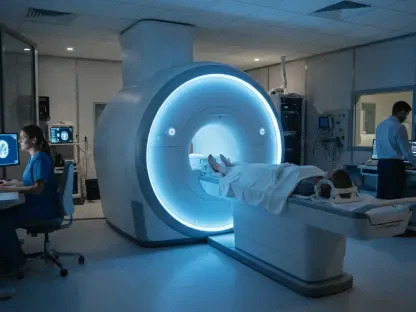

The variability challenge remains a significant barrier to the widespread adoption of AI, requiring models that can adapt to different equipment brands and scanning protocols. This fundamental technical hurdle defined much of the discourse at the 2026 National Healthcare Security Medical Imaging AI Recognition Competition in Nanning, serving as a critical testing ground for the next generation of diagnostic tools. By gathering over 1,300 teams from China and various ASEAN nations, the event transcended its role as a mere competition, becoming a strategic nexus for regional healthcare integration. As modern imaging equipment now generates thousands of detailed images per scan—a massive leap from the mere hundreds produced in previous years—the cognitive load on radiologists has reached a breaking point. This shift necessitated the development of sophisticated AI systems capable of processing vast datasets with both extreme speed and clinical precision to ensure no abnormality is missed.
Advancing Clinical Utility and Technical Adaptability
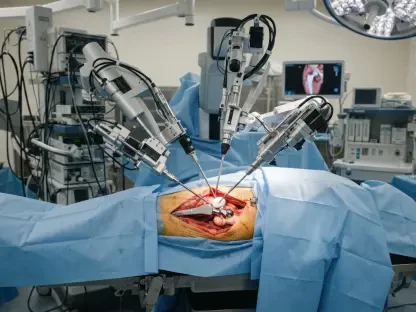
Bridging the Gap: From Software to Surgery
The evolution of medical artificial intelligence is currently moving away from isolated theoretical models toward integrated clinical assistants that mirror the complex workflow of a modern physician. Current software designs no longer focus exclusively on flagging a single anomaly within an image; instead, they are engineered to analyze specific pathological characteristics and generate structured reports that integrate seamlessly into a radiologist’s professional environment. This transition ensures that the technology provides meaningful support across the entire patient journey, beginning with the initial screening phase and extending into long-term follow-up and surgical planning. By automating the more repetitive aspects of image interpretation, these tools allow surgeons and diagnostic specialists to spend more time on high-level decision-making and patient interaction, ultimately enhancing the overall quality of care within busy hospital settings across the region.
Furthermore, the implementation of these tools is helping to standardize the quality of diagnostic reporting, which is essential for consistent patient outcomes. In a typical oncology department, the nuance of a tumor’s borders or its density can be interpreted differently by different specialists; however, AI provides a baseline of objective analysis that can be used to ground these discussions. This collaborative approach between machine logic and human expertise is particularly valuable during the treatment planning phase, where precise measurements of a lesion’s growth or reduction can dictate the intensity of chemotherapy or the boundaries of a surgical resection. As these algorithms become more familiar with various disease manifestations, they are evolving into indispensable partners that assist in the complex navigation of modern medicine, ensuring that the transition from a digital scan to a successful surgical intervention is as safe and data-driven as possible.
Technical Resilience: Overcoming Diagnostic Disparity
A significant hurdle in the deployment of these advanced technologies is algorithmic robustness, which refers to the ability of an artificial intelligence model to perform consistently across diverse medical environments. It is a known industry challenge that a model developed and trained in a high-tech metropolitan hospital may struggle to maintain its accuracy when utilized in a rural clinic that uses older imaging hardware or different scanning protocols. Current development efforts are therefore prioritizing the creation of highly adaptable software that maintains its diagnostic precision regardless of the variations in image quality, equipment brands, or institutional standards. This focus on resilience is critical for ensuring that the benefits of digital health are not restricted to major urban centers but are instead accessible to patients in every corner of the China-ASEAN economic corridor, regardless of their local infrastructure.
In addition to hardware compatibility, software developers are now focusing on the inherent variability of human anatomy and the presentation of disease across different populations. A model must be flexible enough to account for differences in patient demographics, which can affect the baseline appearance of tissues and the progression of certain pathologies. By training algorithms on more diverse datasets that include a wide range of demographic information, researchers are working to eliminate the biases that have historically hindered the broad application of medical AI. This shift toward technical adaptability means that the next generation of diagnostic tools will be better equipped to handle the complexities of real-world medicine, providing reliable results in the face of the unpredictable variables that define daily clinical practice in both developed and developing regions.
Regional Strategy and Collaborative Frameworks
Strategic Hubs: Innovation and Cross-Border Synergy
The geographic location of Guangxi makes it a natural hub for the regional “Medical Opening-up” strategy, facilitating a continuous exchange of technology and expertise with Southeast Asian nations. Through established platforms like the China-ASEAN Artificial Intelligence Application Cooperation Center, the region is actively tailoring its technological solutions to meet the specific needs of diverse healthcare systems. This localized approach ensures that digital tools are relevant to the unique demographics and clinical standards of each participating country, rather than being imported as a one-size-fits-all solution. By fostering this type of targeted innovation, the center is helping to bridge the gap between Chinese technological capabilities and the practical requirements of ASEAN healthcare providers, creating a more cohesive and efficient regional medical network that benefits all parties involved.
The success of these medical AI initiatives depends heavily on deep, sustained collaboration between software engineers and clinical practitioners who understand the realities of patient care. By involving radiologists and specialists directly in the development phase, engineers can better understand the intricate nuances of medical pathologies, such as identifying micro-calcifications in breast tissue that might otherwise be missed by a general algorithm. This collaborative model is currently serving as a template for joint research initiatives across the China-ASEAN corridor, aiming to harmonize different regulatory frameworks and privacy laws to facilitate cross-border clinical validation. Such efforts are essential for creating a shared ecosystem where new technologies can be tested and approved more rapidly, ensuring that life-saving innovations reach the bedside without unnecessary bureaucratic delays.
Implementation Roadmaps: From Data Sharing to Bedside Care
The future of medical AI is inextricably linked to the development of a robust cloud infrastructure that allows for the secure and efficient sharing of imaging records across international borders. A centralized medical imaging cloud serves a dual purpose: it provides clinicians with immediate access to a patient’s historical data and offers the high-quality, diverse datasets necessary to train more effective and accurate AI models. Standardizing these data protocols is a primary goal for regional authorities, as it is essential for creating the regional data-sharing agreements that will benefit both Chinese and Southeast Asian populations. By establishing a secure foundation for data exchange, the region can ensure that patient privacy is protected while still allowing the medical community to leverage the power of collective information to improve diagnostic accuracy and treatment outcomes.
Moving from a successful competition entry to a fully functional hospital tool requires a rigorous path of clinical validation and regional regulatory approval. To bridge this gap, dedicated action plans are focusing on the commercialization of emerging technologies, supporting specialized firms in scaling their production while seeking international partners for real-world clinical trials. These efforts are specifically designed to improve diagnostic efficiency in underserved areas, ensuring that advanced care reaches those with limited access to specialized medical resources. By focusing on the practical application of these tools in diverse settings, the roadmap for implementation is paving the way for a more equitable healthcare system where the latest advancements in AI are used to support doctors and improve patient lives on a truly global scale.
Professional Integration: The Future of Practice
A critical consensus in the contemporary medical field is that artificial intelligence is intended to augment, rather than replace, the essential human expertise of trained physicians. While AI systems can filter through thousands of images in a matter of seconds to identify potential areas of concern, they still lack the holistic judgment required to integrate a patient’s entire medical history and unique symptoms into a final diagnosis. By acting as a sophisticated “first filter,” these tools allow medical professionals to focus their mental energy on the most complex and high-risk cases, ultimately leading to better patient outcomes and a more resilient global healthcare network. This partnership between human intuition and machine efficiency represents the most promising path forward for the industry, ensuring that technology serves as a tool for empowerment rather than a substitute for clinical skill.
The 2026 National Healthcare Security Medical Imaging AI Recognition Competition in Nanning established a clear precedent for how technological excellence and diplomatic strategy could successfully converge. The event demonstrated that the challenges of data volume and diagnostic variability were solvable through international cooperation and interdisciplinary research. By the conclusion of the summit, participants from across the ASEAN region had identified key areas for future investment, focusing on the commercialization of the most robust algorithms tested during the trials. The initiative provided a practical blueprint for how high-quality diagnostic care could be made accessible to a broader population, regardless of local institutional resources. Ultimately, the collaborative efforts in Guangxi proved that the momentum for digital healthcare transformation was no longer a localized trend but a shared international priority for the coming years.