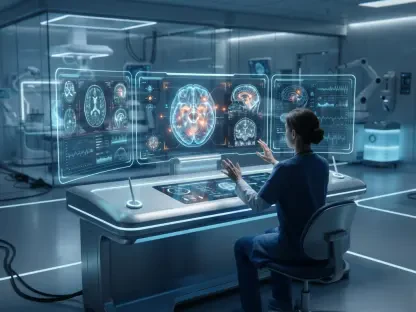

The transition from theoretical lectures to hands-on clinical practice is often hindered by the unpredictable flow of patients in busy ophthalmology departments. This fundamental challenge has led educators at the University of Liverpool to investigate the efficacy of digital interventions in orthoptics education, a field that demands extreme precision in diagnosing binocular vision disorders. Their recent findings, published in Bioelectronic Medicine, highlight a complex relationship between student engagement and the practical utility of simulation technologies. As healthcare institutions navigate the period from 2026 to 2028, the integration of high-fidelity tools becomes vital to offset the limitations of traditional clinical placements. While immersive virtual reality offers a promising path toward realistic training, the established effectiveness of 2D desktop simulations remains a significant factor in pedagogical success. Balancing these methods is now the primary focus for researchers and developers alike.
Addressing the Limitations of Clinical Practice
The Growing Need for Standardized Training Environments
Orthoptics is a highly specialized discipline where the diagnosis of conditions like strabismus or ocular motility limitations requires nuanced observation. Traditionally, students have relied on a “gold standard” model that combines theoretical coursework with direct clinical observation. However, this model faces increasing pressure from rising enrollment numbers and a limited supply of supervised placement slots. Moreover, the prevalence of binocular vision disorders affects roughly five percent of the general population, meaning students might never encounter rare or complex cases during their limited time in the clinic. Ethical concerns also arise when novice learners perform repetitive diagnostic tests on patients with sensitive conditions, potentially causing discomfort or distress. These systemic hurdles necessitate the development of robust virtual learning environments that can provide consistent, high-quality exposure to a wide variety of clinical scenarios regardless of patient availability.
Overcoming Ethical and Capacity Constraints
Patient safety and comfort are paramount in any clinical setting, yet the repetitive nature of student examinations can place a strain on those suffering from acute vision disorders. By shifting the initial stages of training to digital environments, educators provide a safe space where students can refine their skills without the risk of patient fatigue. This approach is particularly effective for mastering complex maneuvers, such as the cover test or the assessment of prism fusion range. In 2026, the adoption of standardized virtual patients ensures that every student is evaluated against the same diagnostic criteria, removing the element of chance inherent in real-world placements. Furthermore, these simulations allow for the replication of rare ocular conditions that might only appear once in a decade in a typical hospital. By exposing learners to these anomalies in a controlled setting, healthcare programs are better equipped to produce graduates who are ready to handle the full spectrum of binocular vision issues.
Enhancing Clinical Exposure with Digital Simulation
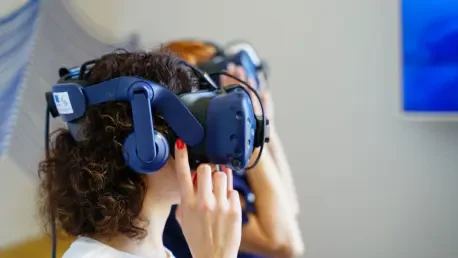
The evolution of virtual learning environments has introduced a variety of tools aimed at bridging the gap between theory and practice. One such tool is the Strabismus Simulator, a 2D interactive program that has served as a pedagogical cornerstone for several years. This simulator allows students to engage with diagnostic logic and develop the critical thinking skills necessary for identifying ocular deviations. While it provides an accessible platform for practice, its primary limitation lies in its monoscopic interface, which cannot replicate the depth perception required for physical eye exams. To address this, current research has integrated 3D virtual reality systems like the HTC Vive Focus 3, which offer a stereoscopic view of the virtual patient. This advanced hardware allows students to develop the spatial awareness and motor skills that are essential for accurate clinical performance. As the industry advances from 2026 to 2028, the integration of these high-fidelity systems will likely redefine the standard for medical training.
Comparing Static and Dynamic Learning Models
When comparing static 2D models to dynamic 3D simulations, the difference in learning outcomes often hinges on the specific diagnostic task being performed. The 2D desktop environment excels at teaching the cognitive sequence of an examination, allowing students to focus on the logical progression of tests and the interpretation of results. It is a highly efficient tool for learning the “how” and “why” of orthoptics without the distraction of complex physical controls. However, the 3D VR environment offers a more comprehensive simulation of the “physicality” of the exam. In a 3D space, students must manage their own body position relative to the patient, a skill that is often overlooked in traditional screen-based learning. This level of realism is crucial for building the spatial confidence needed to work in a real clinical environment. By 2026, educators have recognized that while both formats have distinct advantages, their successful application depends on matching the technology to the specific learning objectives of the curriculum.
Evaluating User Experience and Technical Fidelity
The Motivational Power of Immersive Reality
One of the most significant findings in the recent study was the high level of emotional engagement reported by students using virtual reality. Participants found the VR environment to be significantly more exciting and immersive than traditional desktop simulations, a quality referred to as “hedonic” value. This increased engagement is a powerful motivator, encouraging students to spend more time practicing and exploring the virtual clinic. By “gamifying” the diagnostic process, VR transforms potentially repetitive training exercises into stimulating challenges that maintain student focus. In 2026, the use of immersive technology is seen as a key strategy for improving information retention and student satisfaction in complex medical fields. When learners are genuinely interested in the tool they are using, they are more likely to take a proactive approach to their education. This hedonic success suggests that VR is not just a technological gimmick but a vital educational asset that can rejuvenate traditional medical curricula and inspire a deeper commitment to the profession.
Balancing Engagement with Practical Diagnostic Utility
Despite the clear engagement benefits of virtual reality, the 2D desktop simulation remains the preferred choice for practical diagnostic tasks. Students in the study rated the desktop environment higher for its “pragmatic” utility, noting that it was easier to navigate and more efficient for reaching a diagnosis. This preference is largely due to the familiarity of standard computer interfaces and the “interface friction” associated with VR controllers. Most students who entered training programs in 2026 had extensive experience with laptops but limited exposure to head-mounted displays. The time required to adjust to a 3D interface often distracted from the medical learning objectives, making the desktop tool feel more productive for short-term goals. To maximize the effectiveness of VR, developers must work to make the controls more intuitive, mimicking the natural movements used in a physical eye exam. Until these technical barriers are lowered, the desktop simulation will continue to serve as a vital tool for rapid, focused practice in the classroom.
Presence and Professionalism in Virtual Healthcare
The sense of “being there,” or presence, is a critical factor in the effectiveness of any medical simulation. Surprisingly, the study found that both VR and desktop simulations provided a comparable sense of presence for digital natives. This suggests that students are highly adept at immersing themselves in a digital environment regardless of the hardware used. Furthermore, the comfort levels regarding “patient proximity” were found to be more influenced by a student’s prior clinical experience than by the simulation format. Those who had already completed real-world placements were consistently more comfortable with the physical closeness required for an eye exam. This finding reinforces the idea that digital simulations, while valuable, are most effective when used as a supplement to hands-on clinical experience. By 2027, the goal for many programs is to use these virtual tools to build a foundation of professional behavior and spatial awareness before students are introduced to real patients in a high-pressure clinical setting.
Building a Sustainable Future for Orthoptic Education
The successful implementation of these digital tools during the 2026-2028 academic cycle required a clear focus on reducing interface friction while maintaining high engagement levels. Educators discovered that a hybrid model, which introduced desktop logic before VR immersion, provided the most comprehensive training for novice orthoptists. Developers responded by refining 3D controls to match the intuitiveness of traditional software, ensuring that technical hurdles no longer obstructed clinical learning. This shift toward a more balanced digital curriculum eventually resolved long-standing issues with placement capacity and patient variety. By integrating these advanced simulations, institutions paved the way for a more resilient healthcare workforce capable of diagnosing complex vision disorders with unprecedented accuracy. Ultimately, the transition to immersive learning environments proved to be a vital step in modernizing medical education, ensuring that students gained the necessary spatial confidence before interacting with real-world patients.