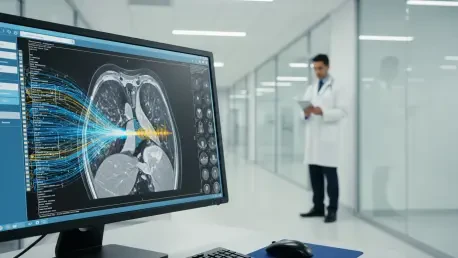

The landscape of respiratory medicine is undergoing a profound transformation as healthcare providers grapple with the mounting pressures of diagnostic delays and the inherent complexities of managing chronic pulmonary conditions. Recent advancements in medical technology have introduced integrated solutions like the Viz Pulmonary Suite, which addresses these challenges by merging automated diagnostic tools with existing electronic health record systems. This shift is particularly critical for high-stakes scenarios where every minute counts, such as identifying a massive pulmonary embolism or managing a severe exacerbation of chronic obstructive pulmonary disease. By leveraging sophisticated algorithms, clinicians can now receive real-fledged notifications the moment a scan is processed, ensuring that patients move through the care continuum with unprecedented speed. This integration effectively removes the traditional silos that often exist between the radiology department and the attending physician at the bedside.
Beyond the immediate speed of diagnosis, this technological evolution focuses on the synthesis of disparate patient data to provide a comprehensive clinical overview. The suite utilizes advanced chart summarization and guideline support to distill complex medical histories into actionable insights, allowing specialists to focus on treatment rather than manual data entry. For patients suffering from lung nodules or persistent chronic obstructive pulmonary disease, this means that their care is guided by the most recent clinical protocols without the risk of human oversight. The objective is to ensure that no patient falls through the cracks of a busy hospital system by automatically matching individuals with the correct specialists. This proactive approach to patient management not only optimizes the utilization of hospital resources but also significantly enhances the quality of care by providing a data-driven foundation for every clinical decision made within the pulmonary department.
Enhancing Hospital Efficiency: The Rise of Agentic AI Systems
The implementation of automated detection for pulmonary embolisms has already yielded measurable improvements in clinical outcomes, including higher survival rates and shorter durations of hospital stays. Dr. Tim Showalter has highlighted how these diagnostic capabilities serve as a vital safety net, catching life-threatening issues that might otherwise be delayed in a standard manual review queue. Building on this diagnostic foundation, the introduction of the Viz Agent Studio represents a move toward agentic artificial intelligence, where the software does more than just flag abnormalities. This platform allows healthcare providers to design and scale customized care pathways using natural language, effectively creating digital assistants that orchestrate complex clinical workflows. By automating the logistical aspects of patient care, such as scheduling follow-ups and ensuring guideline compliance, these agentic systems allow medical professionals to dedicate more of their cognitive bandwidth to direct patient interaction and complex problem-solving.
As of late 2026, these intelligent systems have been deployed across approximately 2,000 hospitals, reaching nearly two-thirds of the population in the United States. This massive scale demonstrates a clear industry commitment to bridging the gap between sophisticated imaging and practical bedside application. Moving forward, health systems should prioritize the full integration of these agentic tools into their standard operating procedures to maximize the return on technological investment. The shift from passive analysis to active workflow orchestration suggests that the next logical step involves expanding these AI-driven pathways to include post-discharge monitoring and long-term chronic disease management. Clinicians were encouraged to adopt these customizable platforms to ensure that local care protocols are reflected in the automated logic of the software. This transition ensured that the healthcare continuum remained fluid, reducing the incidence of missed diagnoses while consistently applying high-level clinical standards.