
The modern American medical landscape is currently grappling with a paradox where cutting-edge surgical robotics and genomic therapies coexist with archaic paper-based administrative systems that move at a glacial pace. While clinical technology has surged forward, the back-office operations of many specialty providers remain tethered to fax machines and manual data entry, creating a bottleneck that delays essential patient care. This administrative friction accounts for more than a trillion dollars in annual overhead, representing a significant portion of healthcare spending that provides no direct clinical benefit. Recent advancements in artificial intelligence have finally begun to penetrate this stubborn sector, offering a way to digitize the “messy” reality of medical documentation. Coral, a New York-based startup, has emerged as a frontrunner in this space by securing twelve and a half million dollars in Series A funding led by Lightspeed and Z47. Their platform focuses on the invisible infrastructure of healthcare, aiming to eliminate the manual labor involved in insurance eligibility and referral processing.
The Technological Bridge: Integrating With Legacy Systems
Seamless Connectivity: The Power of Invisible Integration
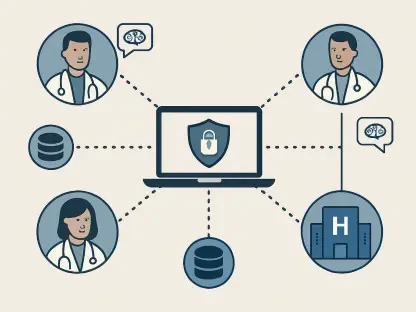
One of the most significant barriers to digitizing medical administration is the fragmentation of existing Electronic Health Record systems, which often do not communicate effectively with one another. Many healthcare facilities are hesitant to adopt new software because of the steep learning curve and the potential for disruption during the transition period. Coral addresses this challenge by implementing an “invisible” integration strategy that connects directly with current EHR infrastructures and existing fax lines without requiring a total system overhaul. This approach allows medical staff to continue using the interfaces they are familiar with while the AI works in the background to extract and organize data. By sitting on top of established workflows rather than replacing them, the technology reduces the friction of adoption and ensures that providers can start seeing benefits immediately. This strategic choice has allowed the company to scale rapidly, as it bypasses the long implementation cycles that usually plague enterprise healthcare software deployments.
Beyond simple connectivity, the platform utilizes sophisticated machine learning models to interpret the varied formats of medical documentation that flow through these legacy channels. Whether a document is a handwritten form, a low-quality scan of an insurance card, or a complex layout from a payer portal, the AI maintains a remarkable accuracy rate of ninety-nine point seven percent. This level of precision is critical because even minor errors in administrative data can lead to claim denials or significant delays in patient treatment. By automating the extraction of key data points from “messy” inputs, the system ensures that the information entering the digital record is clean and actionable. This capability is particularly transformative for specialty providers, such as infusion centers and durable medical equipment suppliers, where the volume of specialized documentation is exceptionally high. The reduction in manual data entry not only speeds up the intake process but also allows human workers to focus on more complex tasks that require clinical judgment or patient interaction.
Operational Velocity: Accelerating the Patient Intake Lifecycle
The impact of administrative automation is most visible in the drastic reduction of the time required to move a patient from referral to active treatment. In traditional settings, the process of checking insurance eligibility, obtaining prior authorizations, and assembling referral packets could take several hours or even days of back-and-forth communication. Coral’s AI-driven platform has demonstrated the ability to compress these complex tasks into a timeframe of under five minutes, fundamentally changing the operational tempo of specialty clinics. This acceleration is not merely a matter of convenience; for patients requiring life-critical treatments, every hour saved in the administrative queue translates to better clinical outcomes and reduced stress. The platform’s ability to clear these backlogs instantly is a primary reason why many enterprise customers are now paying their full contract values upfront, a rare occurrence in the risk-averse healthcare market. This immediate return on investment highlights the industry’s desperate need for solutions that provide tangible relief to overworked administrative teams.
This increased velocity also provides medical facilities with a new level of operational intelligence that was previously buried in stacks of paper and disparate digital files. As the AI processes every interaction, it begins to identify patterns in why certain claims are denied or which referral sources consistently provide incomplete information. This data allows providers to address the root causes of administrative delays rather than just treating the symptoms. The software essentially transforms raw, disorganized administrative data into a strategic asset that can be used to optimize the entire business side of the practice. By providing clarity on payer behaviors and internal workflow bottlenecks, the system helps healthcare organizations operate more like modern, data-driven enterprises. This shift toward intelligence-led administration is a key component of the startup’s projected four hundred percent growth through 2026. As the platform evolves, it is moving beyond simple data extraction toward becoming a comprehensive engine for medical business logic that manages the entire lifecycle of a patient’s administrative journey.
Future Horizons: Expanding the Scope of Automation
Beyond Data Entry: The Rise of Autonomous Workflows
As the foundation of administrative data extraction becomes more stable, the focus is shifting toward the automation of more interactive and communicative tasks. Coral is currently expanding its suite of tools to include AI-powered voice and text workflows designed to handle the tedious process of following up with insurance payers and patients. These autonomous agents can verify the status of a pending authorization or remind a patient to submit a missing piece of documentation, tasks that previously required a staff member to spend hours on the phone. By taking over these repetitive communication loops, the AI further reduces the burden on human employees and ensures that no task falls through the cracks due to a busy office environment. This expansion reflects a broader trend in the industry where AI is moving from being a passive tool of record-keeping to an active participant in the coordination of care. The integration of voice and text capabilities allows the platform to manage the entire “last mile” of administrative work, ensuring that data is not just processed but also acted upon.
To further empower healthcare organizations, the introduction of a “no-code” workflow builder is set to democratize how administrative processes are designed and implemented. This tool allows clinical and administrative staff—who understand the practical needs of their practice better than any external IT department—to build custom automated workflows without writing a single line of code. For example, a clinic could design a specific sequence of events for a new type of therapy or a unique payer requirement, ensuring that the AI handles the nuances of their specific specialty. This flexibility is essential in a medical landscape that is constantly changing due to new regulations and shifting insurance policies. By putting the power of customization in the hands of the end-users, the platform ensures that the technology remains relevant and adaptable to the specific needs of different medical disciplines. This democratization of AI technology is a significant step toward making sophisticated automation accessible to smaller practices that may not have extensive technical resources.
Strategic Outcomes: Building a Sustainable Healthcare Infrastructure
The long-term goal of these advancements is to build a more resilient and sustainable healthcare infrastructure that can withstand the increasing demands of an aging population and rising costs. By systematically removing the administrative barriers that have historically slowed down the delivery of care, AI platforms are enabling a shift toward more patient-centric models. When the “paperwork tax” is reduced, providers can reallocate their resources toward improving patient experiences and expanding their service offerings. The success of early adopters has shown that it is possible to modernize even the most antiquated sectors of the medical economy through targeted, high-accuracy automation. This transition is not about replacing human workers, but rather about elevating them by removing the drudgery of manual data management. As these technologies become more deeply embedded in the daily operations of clinics across the country, the standard for administrative efficiency is being permanently raised. The focus is now moving toward creating a unified ecosystem where information flows as seamlessly as the care it supports, ensuring that the business of medicine never stands in the way of the practice of medicine.
In summary, the integration of specialized AI into the healthcare back office represented a necessary evolution in the management of medical administration. Providers who successfully implemented these tools found that they could process patient intakes with unprecedented speed, reaching a level of accuracy that virtually eliminated common financial errors. The move toward autonomous follow-up systems and customizable workflow builders allowed medical staff to reclaim their time and focus on the human elements of patient care. Moving forward, healthcare organizations prioritized the adoption of “invisible” technologies that complemented their existing systems rather than forcing disruptive changes. This strategic approach ensured that the transition to automated administration was both manageable and highly effective across diverse medical specialties. Stakeholders emphasized the importance of continuous data monitoring to further refine these workflows and identify new areas for optimization. Ultimately, the industry learned that addressing the administrative crisis was as much about intelligent data management as it was about technological innovation.