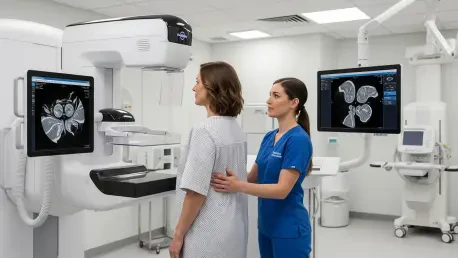

The detection of breast cancer remains a high-stakes race against time where the difference between a successful recovery and a complicated prognosis often hinges on the clarity of a single diagnostic image. Orillia Soldiers’ Memorial Hospital (OSMH) recently completed a monumental step in this local health initiative by officially unveiling a cutting-edge mammography unit designed to replace outdated technology. This modern equipment represents more than just a routine hardware upgrade; it is a vital pillar for the Diagnostic Imaging department that ensures residents do not have to travel far for top-tier preventative care. By integrating this sophisticated system, the facility effectively addresses the critical need for early detection while bolstering the overall quality of clinical services provided to the community. This transition from end-of-life machinery to state-of-the-art technology secures a sustainable future for local imaging, prioritizing patient health and diagnostic accuracy in an evolving medical landscape. The upgrade also serves as a strategic response to the growing demand for higher-precision diagnostics, ensuring that the hospital remains competitive and capable of providing life-saving interventions within its own walls.
Advancing Clinical Accuracy and Patient Comfort
Precision: Modern Imaging Technology
The primary benefit of this technological leap lies in the extraordinary level of detail provided by the new imaging hardware, which surpasses the capabilities of previous iterations. Radiologists at the hospital now utilize a platform that produces high-resolution visuals, enabling them to distinguish with greater certainty between benign tissues and suspicious lesions. This improvement in clarity reduces the likelihood of false negatives and provides a clearer roadmap for subsequent biopsies or surgical interventions if necessary. In the context of early-stage screening, where subtle changes in breast density can signal the onset of disease, having access to superior spatial resolution is an indispensable asset. The integration of such high-fidelity tools allows medical teams to make faster and more accurate assessments, which is a fundamental requirement in modern oncology. Furthermore, the reliability of this new unit ensures that the diagnostic process remains uninterrupted, providing a stable foundation for the hospital’s high-volume screening programs during the 2026-2028 cycle and beyond.
Design: Enhancing the Patient Experience
Beyond the technical metrics of image quality, the new mammography system incorporates ergonomic features specifically designed to improve the overall comfort of the patient during the procedure. The physical experience of a mammogram is frequently cited as a source of stress and physical discomfort for many individuals, which can sometimes lead to the avoidance of regular screenings. By addressing these concerns through softer compression techniques and a more intuitive machine interface, the hospital aims to foster an environment where patients feel more at ease. This reduction in procedural anxiety is expected to encourage higher participation rates in local screening programs, ultimately leading to better health outcomes across the region. Additionally, the versatile architecture of the machine allows for the eventual introduction of contrast-enhanced mammography, a technique that could further refine the diagnostic process for complex cases. This forward-looking approach ensures that the facility remains at the forefront of medical technology, adapting to new clinical requirements without needing further major overhauls.
Community Philanthropy and Resource Sustainability
Giving: The Role of Private Contributions
The realization of this project was made possible through a significant influx of community support, demonstrating the power of private philanthropy in modernizing public health infrastructure. A notable $18,000 pledge from Dr. Greg Price-Jones and Laurel Price-Jones highlighted the personal connections that often drive such significant investments, as their gift was inspired by the care provided to a long-serving employee. Similarly, a $10,000 contribution from the Think Big Group Inc. showcased how corporate leadership can align with healthcare goals to improve the welfare of the local workforce and residents. These donations reflect a broader trend where the acquisition of life-saving equipment is increasingly facilitated by localized fundraising efforts rather than relying solely on government allocations. This collaborative model between the hospital and its supporters ensures that the facility can bypass the limitations of aging equipment and provide the high standard of care that the community expects. Such contributions are instrumental in maintaining the technological edge required to combat breast cancer effectively.
Standards: Long-term Regional Health Impact
The arrival of this sophisticated imaging equipment reinforces the hospital’s commitment to providing comprehensive care that rivals larger urban medical centers. By maintaining high regional health standards, the institution minimizes the need for patients to travel long distances for specialized screenings, which is a major factor in improving the accessibility of healthcare. This localized approach not only saves time for the patients but also streamlines the workflow for clinicians who can now rely on immediate, high-quality data generated on-site. The project serves as a clear indicator of how a cohesive effort between medical professionals and community donors can result in a more efficient and supportive healthcare ecosystem. This investment ensures that the hospital is prepared to handle the increasing demand for diagnostic services expected from 2026 to 2030, fostering a sense of security for the local population. The ongoing modernization of these facilities is essential for retaining top-tier medical talent, as specialized practitioners are naturally drawn to environments that provide the most advanced tools available for patient care.
Future Considerations and Strategic Outcomes
The successful deployment of the new mammography unit established a clear path forward for the hospital’s oncology department. Medical administrators finalized the training protocols for staff, ensuring that the benefits of the high-resolution imaging were immediately felt by the patient population. Looking toward the next decade, the facility prioritized the expansion of its diagnostic repertoire to include contrast-enhanced imaging, which will further improve the sensitivity of cancer detection in dense breast tissue. Hospitals and clinics seeking to replicate this success should focus on building strong philanthropic networks that connect local donors with specific, high-impact clinical needs. By aligning community generosity with technological requirements, healthcare providers effectively addressed the challenges of equipment obsolescence while enhancing the standard of regional care. This model of local investment proved that sustainable healthcare development is most effective when it is driven by a combination of clinical excellence and broad-based community support, ultimately securing a higher quality of life for all residents.