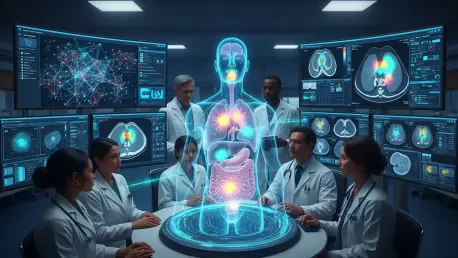

The sheer complexity of oncological diagnostics is shifting as healthcare systems integrate sophisticated computational frameworks that once seemed relegated to the realm of speculative science. Modern clinical environments are currently witnessing a profound transition where the interpretation of medical data is no longer solely dependent on the human eye or traditional algorithmic thresholds. Instead, a dual-pronged approach involving multimodal large language models and highly specialized niche algorithms is redefining the accuracy of early detection protocols. While clinicians have historically balanced massive amounts of patient data against their own experiential intuition, the current technological landscape provides a rigorous digital secondary opinion that operates with a speed and granularity previously unattainable. This evolution is particularly critical as medical facilities grapple with increasing patient volumes and the rising demand for preventative screenings. By offloading the initial burden of high-volume data analysis to automated systems, medical professionals can focus their efforts on complex case management and personalized treatment strategies that require nuanced human judgment.
Advancements in Clinical Reasoning and Diagnostic Accuracy
The landscape of medical diagnostics has been fundamentally altered by the introduction of advanced reasoning models that demonstrate an uncanny ability to navigate complex clinical scenarios. Recent comparative assessments involving seasoned physicians have highlighted a surprising trend: autonomous AI systems frequently match or exceed the diagnostic accuracy of human experts working in isolation. This does not imply that the medical professional is becoming obsolete; rather, it suggests that the baseline for diagnostic reliability is being elevated to a new standard. Large language models like GPT-4 are now utilized to synthesize vast quantities of unstructured clinical notes, lab results, and patient histories to identify subtle correlations that might be overlooked during a standard review. These systems provide a comprehensive analysis that serves as a robust safety net, catching potential oversights before they can impact patient outcomes. The result is a more resilient diagnostic pipeline where the integration of machine logic and human expertise creates a multifaceted defense against misdiagnosis and delayed treatment.
Building on the successes of generalized reasoning, specialized systems are achieving breakthroughs in identifying microscopic indicators of disease with unprecedented precision. At institutions like the University of Southern California, researchers have deployed algorithms capable of filtering millions of healthy blood cells to isolate a mere handful of malignant ones in a matter of minutes. This level of sensitivity is a cornerstone of the burgeoning liquid biopsy field, which aims to detect cancer through simple blood draws long before physical tumors are visible on standard scans. Meanwhile, the Mayo Clinic has successfully implemented predictive models that scan routine abdominal CT images for early signatures of pancreatic cancer. These models are identifying high-risk markers up to three years before the onset of symptomatic disease, providing a critical window for intervention. In an era where pancreatic cancer continues to pose a significant threat to thousands of Americans annually, such early-warning systems represent a shift from reactive medicine to a proactive, surveillance-based approach that prioritizes early detection as the primary tool for survival.
Technical Methodologies and the Path to Clinical Adoption
The technical architecture supporting these medical breakthroughs is diverse, utilizing a combination of deep learning frameworks and supervised training on massive proprietary datasets. While large language models excel at processing textual and sequential data to support diagnostic reasoning, specialized computer-vision models are the workhorses of radiological and cytological analysis. These specialized algorithms are trained on millions of annotated medical images, learning to recognize the distinct morphological features of various pathologies with a consistency that human observers cannot maintain over long shifts. This rigorous training allows the software to ignore common image noise and focus exclusively on the high-value pixels that indicate cellular abnormality. However, the transition from successful laboratory research to standard clinical practice is a disciplined process that requires more than just high-performance metrics. The current focus within the industry is on the validation of these tools through prospective randomized trials that test their efficacy across diverse demographic groups and varying imaging hardware to ensure universal reliability.
As the industry moves forward, the practical hurdles of implementation are becoming the primary focus for healthcare administrators and regulatory bodies. For a new diagnostic tool to become a staple in the American healthcare system, it must clear the rigorous hurdles of FDA clearance and secure a pathway for insurance reimbursement. This involves not only proving that an algorithm works in a controlled environment but also demonstrating its utility within the chaotic workflow of a real-world hospital. Integration into existing electronic health records is a major technical priority, ensuring that AI-generated insights are delivered to the physician at the point of care without disrupting established clinical pathways. Furthermore, there is an ongoing effort to establish clear standards for transparency and “explainability” in AI decisions, as clinicians must understand the rationale behind a digital recommendation to trust it fully. As these administrative and technical pieces fall into place, the role of AI is transitioning from an experimental adjunct to a fundamental component of the modern oncological diagnostic toolkit.
Future Directions and Actionable Implementation Strategies
The strategic implementation of diagnostic AI in the coming months will require a shift toward holistic data integration and the establishment of ethical oversight committees within medical institutions. Facilities must move beyond siloed pilot programs and instead focus on creating unified data environments where AI can analyze information from radiology, pathology, and genomics simultaneously. This multimodal approach will likely yield the most significant gains in diagnostic precision, as it mimics the interdisciplinary tumor boards used in top-tier oncology centers. Medical leaders should prioritize the procurement of platforms that are “AI-ready,” meaning they feature open APIs and high-speed data pipelines capable of supporting real-time algorithmic analysis. Additionally, healthcare providers need to invest in staff training programs that focus on “algorithm literacy,” ensuring that doctors and technicians can effectively interpret and challenge AI outputs when necessary. This proactive preparation ensures that when the next generation of validated tools arrives, the infrastructure and the workforce are already equipped to leverage them for maximum patient benefit.
The evolution of cancer detection has reached a point where the integration of digital intelligence is no longer optional but a prerequisite for maintaining the highest standards of care. Looking back at the initial rollout of these technologies, it became clear that the most successful implementations were those that treated AI as a collaborative partner rather than a replacement for human judgment. Future developments will likely focus on refining the specificity of these models to further reduce false-positive rates, which remains a primary concern for screening programs. Developers and clinicians must continue to collaborate on the creation of diverse, high-quality training sets that reflect the actual patient populations served by American hospitals. By fostering an environment of continuous validation and transparent communication, the medical community established a foundation for a more precise, equitable, and effective diagnostic landscape. This transition successfully moved the industry toward a model of care where the smallest cellular changes are identified and addressed with surgical precision, fundamentally changing the trajectory of patient survival in the modern era.