

The rapid deployment of artificial intelligence within hospital administrative departments has created a billion-dollar efficiency gap that benefits the bottom line rather than the patient bedside. The integration of advanced algorithms into the healthcare sector was initially hailed as a

A dual-path architecture enables a model to balance the forest and the trees by capturing both long-range slide context and immediate local tissue morphology. The digitization of pathology slides has ushered in an era where billions of pixels describe a single patient biopsy, yet this abundance of

The Office of the National Coordinator for Health Information Technology emphasizes that reducing manual data handling is essential for maintaining patient safety and organizational health. In the modern healthcare environment, data serves as the essential bridge between clinical practice and

The Modern Healthcare Landscape: From Systems of Record to Systems of Intelligence The traditional patient chart has undergone a metamorphosis from a static paper folder into a dynamic digital organism that breathes with the rhythm of real-time clinical data. For decades, the global healthcare
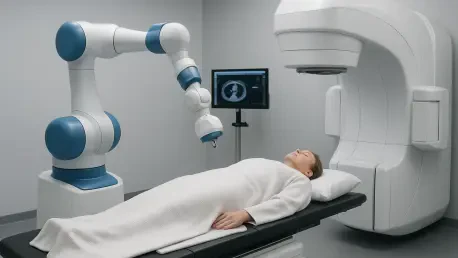
The transition from reactive AI co-pilots to autonomous agentic systems marks a foundational shift in how clinical oncology manages the overwhelming volume of multimodal patient data. As the current landscape of cancer care becomes increasingly saturated with complex genomic profiles,

Medicare Advantage plans have faced scrutiny for using automated systems that allegedly led to forty billion dollars in additional federal payments via coding practices. This financial shift highlights a broader trend where artificial intelligence is no longer confined to operating rooms or