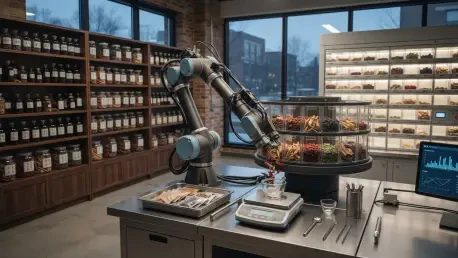

Every yuan invested in TCM robotics research is intended to translate abstract medical experience into standardized and visualized information for clinical support. At the 2026 Krypton Global Sustainable Leaders Summit, the discussion on this transformation reached a new peak with the unveiling of a strategic initiative that bridges centuries of wisdom with cutting-edge robotics. This effort represents a significant commitment of approximately 130 million yuan toward research and development, illustrating how embodied intelligence can navigate high-stakes healthcare environments. By partnering with more than 300 hospitals, developers have moved beyond conceptual frameworks into a data-driven reality where high-quality medical information serves as the foundation. This multi-year project focuses on the intersection of physical AI and biological variability, ensuring that qualitative traditional diagnostics are preserved while undergoing a rigorous transition into the digital era of medical science.
Quantifying Diagnostic Traditions Through Advanced Data Synthesis
The core of this innovation lies in the Tianhui Traditional Chinese Medicine vertical large language model, which is designed to transform subjective diagnostic methods into objective, quantitative data. This model is built upon a massive repository that includes longitudinal medical records from over 200,000 unique individuals, totaling more than 500,000 distinct clinical entries. By leveraging such a vast dataset, the system learns from the dynamic, physical realities of current patients rather than relying solely on static historical texts. This approach allows the AI to synthesize patterns that were previously invisible to the naked eye or dependent on individual intuition. The architecture of this data collection process ensures that every digital profile created is a comprehensive reflection of the patient’s physiological state. Consequently, the transition from qualitative observation to mathematical precision marks a pivotal moment in the evolution of healthcare analytics, providing a scalable solution for modernizing ancient diagnostic standards.
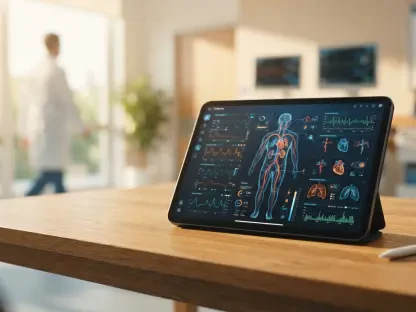
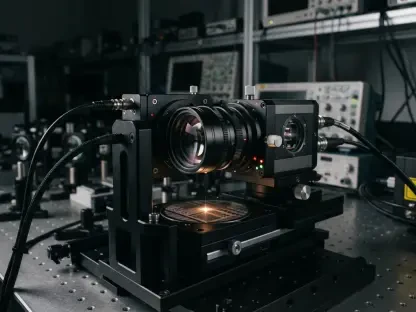
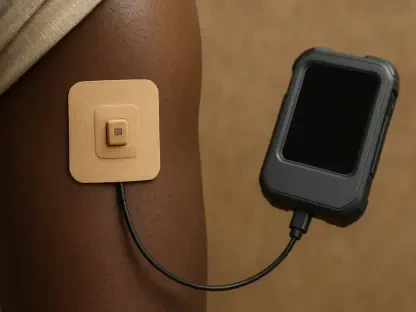
Capturing the intricate nuances of a single clinical patient is a remarkably labor-intensive process that places a high premium on data accuracy and contextual integrity. To ensure the inputs are captured without loss, each diagnostic session typically requires a dedicated three-person team to manage equipment operation, record information, and provide procedural oversight. This rigorous on-site methodology utilizes advanced sensors to detect blood flow fluctuations at the wrist, effectively digitizing the ancient tactile art of pulse-taking. The TCM robot converts these physical vibrations into high-resolution visual waveforms and graphics that the AI can analyze with mathematical precision. By standardizing these tactile skills into traceable digital assets, the technology bridges the gap between traditional manual skills and modern computational verification. This level of detail, which includes high-resolution images and audio recordings of the patient’s voice, ensures that the resulting digital data remains a faithful representation of the clinical encounter.
Establishing Clinical Authority Through Physician-Led Verification
Data volume alone is insufficient for high-stakes medical applications, as the clinical utility of an AI model is determined by the quality of the professional interpretations attached to that data. To address this, the project engaged over 500 Traditional Chinese Medicine physicians, all of whom hold the rank of associate senior physician or higher, to participate in the labeling process. These experts utilized a back-to-back labeling methodology where multiple senior practitioners evaluated the same data points independently without consulting one another. This rigorous system allows the research team to identify areas of consensus and divergence, effectively eliminating individual bias and creating a robust verification loop. By comparing these independent professional judgments, the team can refine the model’s underlying logic and ensure its conclusions are rooted in the highest standards of medical expertise. This iterative process of cleaning and labeling converts abstract experience into a standardized asset that can be used to train and validate future diagnostic systems.
Transitioning a laboratory model into a functional medical device requires meeting stringent regulatory benchmarks and passing exhaustive performance tests. The TCM robotic system successfully underwent 58 distinct test verifications conducted by the Taier Laboratory of the China Academy of Information and Communications Technology. These evaluations focused on the hardware and software’s ability to operate in harmony, ensuring that human-computer interaction remains seamless across different clinical scenarios. Validation extended beyond technical specifications to include real-world stress tests designed to measure performance in varied environments and with diverse patient demographics. Unlike general artificial intelligence chatbots that process text and images in a vacuum, this embodied intelligence must navigate the complexities of physical interaction and biological variability. By focusing on a vertical scenario rather than a broad, general-purpose application, the developers ensured that the model is a practical tool capable of supporting physicians in actual diagnostic settings with reliability.
Future Pathways for Embodied Intelligence in Global Healthcare
A recurring theme in the evolution of this technology is the clear distinction between general artificial intelligence and the specialized requirements of physical, embodied intelligence. While general AI excels at processing vast amounts of information, embodied systems must convert three specific types of data—real interactive data, simulation data, and experimental environment data—into usable clinical capabilities. This goal-oriented approach prevents the common pitfall of collecting data for its own sake and ensures that every investment translates into measurable health outcomes. Developers must first define specific medical tasks before determining the necessary data collection methods and testing frameworks. By narrowing the focus to specialized vertical scenarios, the industry can better manage the transition from digital theory to physical application. This strategic clarity is essential for creating AI that does not just talk about medicine but actively participates in the diagnostic process. As these systems move toward wider adoption, sensors and feedback will continue to redefine medical standards.
The development of the TCM robot was viewed as an ongoing, iterative journey where real-world usage provided the most valuable insights for future refinement. When the system entered the clinical feedback stage, any friction in the user experience or professional disagreement with an AI diagnosis served as a critical tool for identifying technical gaps. This closed-loop system allowed the research teams to perform targeted updates, such as supplementing the database with new samples or adjusting the processing algorithms to better reflect clinical nuances. Ultimately, the project demonstrated that high-quality health data must be meticulously constructed through the collaboration of machines and human experts rather than simply discovered in records. For the next phase of implementation, stakeholders should prioritize the expansion of physician-led labeling protocols and the standardization of sensor-based pulse data across international borders. As these systems become more integrated, maintaining the rigor of data verification will remain the primary determinant of success in the global pursuit of sustainable, tech-driven healthcare solutions.