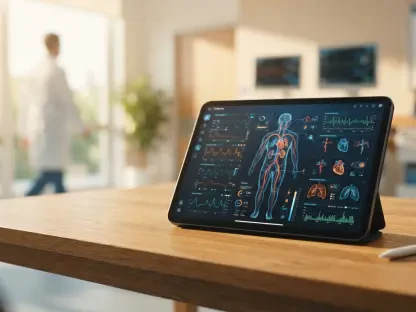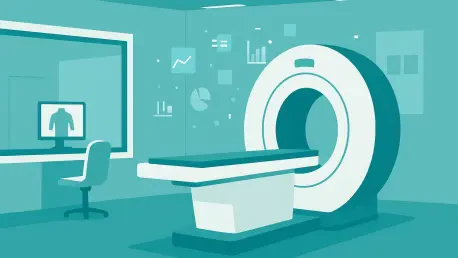

Integrating AI technology into the existing teleradiology workflow allows Krsnaa to maximize the utilization of its capital assets without increasing fixed costs. This strategic partnership with Azmed reflects a broader movement within the healthcare sector to stabilize diagnostic accuracy while managing an unprecedented volume of medical data. Across India’s vast landscape, the demand for rapid CT and MRI interpretations has outpaced the growth of the specialized workforce, creating a bottleneck that often delays critical treatment for patients in remote districts. By embedding advanced algorithms into the core of their reporting infrastructure, the organization can now offer a seamless transition from image acquisition to preliminary analysis. This approach not only streamlines the path for the 350 radiologists on staff but also sets a new standard for how technology can bridge the urban-rural divide. The deployment of these automated tools represents a proactive effort to future-proof the diagnostic process against the complexities of a modernizing medical market.
Operational Efficiency and Technological Scaling
The integration of Azmed’s diagnostic tools serves as a powerful force multiplier for the company’s specialized team of over 350 radiologists. By automating the preliminary triaging of routine scans, the system identifies anomalies with high sensitivity, allowing human experts to focus their attention on the most complex and critical cases. This automated approach is particularly crucial for the 212 pathology labs and 191 CT and MRI centers where daily scan volumes can fluctuate significantly. With AI handling the initial filtering, the turnaround time for reports has seen a marked improvement, ensuring that life-saving information reaches clinicians faster than ever before. This technological synergy allows for a scalable reporting model where the volume of processed images can grow independently of the size of the medical staff. Consequently, the organization has neutralized many of the logistical bottlenecks traditionally associated with large-scale operations in diverse regions.
Beyond internal efficiency, this digital transformation strengthens the company’s strategic position within the competitive landscape of Indian healthcare, especially regarding Public-Private Partnership contracts. Governments and private entities increasingly prioritize providers who can offer high-tech diagnostic capabilities at scale, and the inclusion of AI-driven precision provides a compelling value proposition. By bridging the significant gap between urban specialist availability and rural patient needs, the company has created a robust infrastructure that supports universal health access. This model leverages high-speed connectivity to maintain teleradiology nodes in remote areas, effectively bringing world-class expertise to underserved populations. The ability to maintain high clinical standards across more than 8,400 patient touchpoints has established a new benchmark for diagnostic reliability. As the industry moves toward standardized AI validation, the data gathered will further refine the accuracy of diagnostic algorithms.
Financial Resilience and Future Strategic Roadmap
From a financial perspective, the recent institutional backing and the BSE in-principle approval for the issuance of 16.21 lakh convertible warrants to the promoters highlight a deep-seated confidence in this AI-centric trajectory. This move, scheduled for late October, indicates that the leadership is willing to commit significant capital to ensure the long-term success of these technological initiatives. Investors have viewed these developments as a bullish signal, suggesting that the operational efficiencies gained through AI will directly support healthy profit margins even as the company expands into rural markets. The shift toward a tech-heavy capital expenditure model reduces the long-term reliance on the labor-intensive recruitment of scarce medical specialists, which has historically been a major cost driver in the sector. By securing this funding, the organization has positioned itself to absorb the initial costs of software integration while preparing for a period of non-linear growth across its extensive network.
The successful rollout of this partnership necessitated a rigorous focus on several actionable priorities that reshaped the future of the diagnostic landscape. Stakeholders identified that maintaining high-speed connectivity across all regional hubs was paramount to preventing latency in the teleradiology workflow. Furthermore, the clinical team established a protocol for continuous AI validation to ensure that algorithmic insights remained consistent with evolving medical standards. Leaders also addressed the regulatory complexities of AI-assisted tools by collaborating with policy experts to create a framework for ethical and accurate reporting. These steps moved the organization toward a more resilient, digitized model that anticipated the challenges of a data-driven medical economy. Future considerations included the potential for expanding these AI capabilities into predictive health analytics, providing patients with proactive insights. By synthesizing precision with a vast physical footprint, the firm established a blueprint for scalable healthcare.