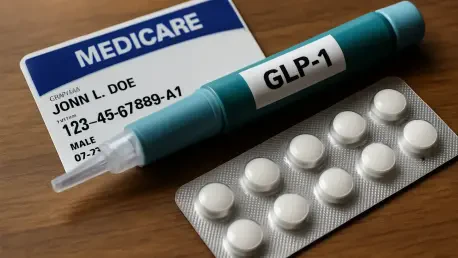

James Maitland brings a unique perspective to the evolving world of healthcare economics, where the rapid advancement of pharmaceutical technology often outpaces traditional insurance frameworks. As a visionary in medical innovation and policy, he has spent years observing how systemic changes impact both the federal budget and the individual patient experience. In this discussion, we delve into the seismic shift occurring within Medicare as it launches the GLP-1 Bridge program, a temporary demonstration project that could redefine obesity treatment in America. We explore the massive scale of eligible beneficiaries, the staggering multi-billion-dollar financial implications for federal spending, and the clinical hurdles patients must clear to access revolutionary medications like Wegovy and Zepbound.
With nearly four million individuals meeting specific clinical and insurance criteria for low-cost weight management, how do you perceive the immediate impact of the Medicare GLP-1 Bridge program on the current healthcare landscape?
Around 3.8 million people—a subset of the 13 million who clinically qualify based on BMI—are now standing at the gate of this new initiative starting this July. It is a massive undertaking that carefully filters out those who already had coverage through Type 2 diabetes diagnoses or those who have already filled a prescription earlier this year. For these individuals, the program represents a rare, life-changing window of opportunity to access medications that were historically out of reach due to statutory barriers. Seeing nearly one-quarter of all Medicare enrollees meet the initial BMI criteria shows just how deep the obesity crisis runs within our aging population and highlights the sheer pressure on the system to provide modern solutions.
The financial projections for this program are quite staggering, ranging from $1.3 billion to potentially $10 billion over the course of the demonstration. How should policy makers balance this immense cost against the clear demand for these medications?
The math is undeniably daunting, with costs potentially ballooning to $10 billion if 50% to 75% of eligible beneficiaries choose to participate in the program. When you consider that national healthcare spending has already surged by more than 7% to a total of $5.7 trillion, a single program adding billions in a matter of months feels like a fiscal tidal wave. We are looking at a scenario where even a modest 10% uptake still costs the government $1.3 billion, which forces an uncomfortable but necessary conversation about the long-term sustainability of high-cost prescriptions. It’s a delicate dance between the visceral need to treat a chronic condition and the cold reality of a federal budget that is already feeling the inflationary heat of expensive new drug classes.
Given that the list prices for these drugs often hover around $1,000 per month, what does the $50 monthly copayment represent for the average senior who has previously been priced out of this treatment?
For many seniors living on fixed incomes, the $1,000 monthly list price was essentially a “keep out” sign that turned a medical breakthrough into an unattainable luxury. Lowering that barrier to a $50 monthly copayment isn’t just a minor policy tweak; it is a vital lifeline that removes the crushing weight of financial anxiety from the patient’s shoulders. We know from existing data that cost is the primary reason patients decide to discontinue these medications, so this bridge is specifically designed to keep them on the path to better health. Imagine the sensory relief of a retiree who no longer has to choose between their monthly groceries and a medication that could prevent a future heart attack.
The eligibility requirements for this pilot are surprisingly specific, excluding those with Type 2 diabetes who already have coverage pathways. What are the clinical and logistical challenges of navigating these strict boundaries for the millions who meet the BMI criteria?
Navigating this clinical maze is where the program becomes a complex logistical puzzle, as the criteria require a BMI of 35 or higher, or 27 with specific co-morbidities. It creates a strange tension where 10 million Part D enrollees meet the raw clinical requirements, yet less than half—roughly 3.8 million—actually qualify because of exclusions regarding prior prescriptions or existing diabetes coverage. This temporary demonstration project, which runs through 2027, is essentially a high-stakes trial to see if the government can manage such a large-scale rollout without the administrative system buckling under the weight of manual eligibility checks. Doctors and patients will have to be incredibly diligent in documenting these specific conditions to ensure they don’t lose access to the “bridge” mid-treatment.
We saw national healthcare expenditures jump significantly last year, largely fueled by these types of prescriptions. In your view, will the potential health improvements from weight reduction eventually offset the massive upfront investment Medicare is making?
The “ultimate cost” to the federal government is the million-dollar question because we must weigh the immediate spending against the potential for massive future savings. If these 3.8 million people successfully manage their weight and reduce their BMI, we should see a significant drop in the expensive complications that typically follow obesity, such as cardiovascular disease or chronic joint issues. The KFF analysis rightly points out that potential cost offsets could accrue over time, turning what looks like a massive expenditure today into a long-term investment in the public health of our seniors. It is about moving away from the “siloed” thinking of pharmacy costs and looking at the holistic health of the beneficiary over the next several years.
What is your forecast for the future of weight management coverage within federal programs once this temporary demonstration concludes in 2027?
I expect that the data gathered between now and 2027 will make it politically and clinically impossible for Medicare to return to a total ban on weight-loss coverage. While the current 18-month program is framed as a “bridge,” it is likely setting the foundation for a permanent policy shift where obesity is finally treated with the same urgency as diabetes or hypertension. We will likely see a move toward more aggressive price negotiations with manufacturers to bring that $1,000 list price down, especially as the federal government realizes it cannot sustain $10 billion a year for a single drug class indefinitely. Ultimately, this pilot will prove that the demand is too high and the health benefits are too significant to ignore, leading to a new era of integrated chronic disease management in federal policy.