
If a genetic mutation causes a three-fold drop in analytical sensitivity, the manufacturer must immediately perform a risk analysis and implement necessary mitigations. This specific requirement is a cornerstone of the new regulatory framework finalized by the Food and Drug Administration in late 2026, marking a significant evolution in public health preparedness. By transitioning from the preliminary drafts of early 2025 to a permanent guidance document, the agency has established a definitive roadmap for the validation of in vitro diagnostic tests during declared emergencies. This structure is firmly anchored in Section 564 of the Federal Food, Drug, and Cosmetic Act, which empowers the Secretary of Health and Human Services to authorize medical products for emergency use. The guidance serves as a critical shield against the systemic vulnerabilities exposed during previous outbreaks, ensuring that the diagnostic market is no longer flooded with suboptimal tools that could potentially compromise clinical decision-making or broader epidemiological tracking efforts.
Establishing Evidentiary Standards and Clinical Precision
Balancing Flexibility: Scientific Rigor in Clinical Trials
The agency maintains a specialized “may be effective” standard for emergency use authorizations, providing a necessary degree of flexibility compared to the rigorous effectiveness requirements seen in permanent marketing applications. This standard allows for a faster response to emerging infectious threats while still demanding a high level of scientific integrity from manufacturers. However, the FDA has been explicit that this flexibility is not an invitation to submit data based on inadequate or unrepresentative sample sizes. Historical data from the pandemic era showed that tests validated with only a dozen samples often saw their accuracy plummet when tested against a broader population. Consequently, the new guidance emphasizes that clinical performance must be proven through statistically significant data sets to avoid the distribution of unreliable diagnostics. This approach ensures that the initial speed of market entry does not come at the cost of long-term diagnostic accuracy or public safety.
To provide a concrete benchmark for developers, the FDA generally expects a minimum of 30 positive and 30 negative specimens from the intended use population when utilizing sensitive technology. This requirement is born from a cautious analysis of past failures, such as a specific case where a manufacturer demonstrated perfect performance using 12 positive samples, only to see accuracy drop to 71% when the sample size was doubled. Such drastic variations in performance demonstrate why small pilot studies are insufficient for authorizing tools meant for nationwide distribution. By mandating a more robust specimen count, the agency protects the integrity of the diagnostic landscape and provides healthcare workers with the confidence that a positive or negative result is backed by solid statistical evidence. This standard also creates a level playing field for manufacturers, as the expectations for clinical validation are now clearly defined and applied consistently across the entire molecular and antigen diagnostic industry.
Navigating Scarcity: Pragmatic Study Designs for Emergencies
Recognizing the inherent difficulty of obtaining natural clinical specimens during the earliest stages of an outbreak, the guidance establishes a pragmatic hierarchy for study materials. The gold standard remains prospective, all-comers studies conducted in real-world clinical environments where the pathogen is actively circulating. However, if such specimens are unavailable, the FDA allows manufacturers to utilize archived samples or, as a final resort, contrived samples created by spiking natural matrices with known quantities of the pathogen. This tiered approach ensures that regulatory hurdles do not stall the development of tests when the disease is still localized or in its infancy. By providing a clear pathway for the use of alternative materials, the agency enables a rapid technological response that can scale alongside the spread of the pathogen, ensuring that diagnostic infrastructure is ready before a localized outbreak becomes a widespread health crisis.
In extreme scenarios where even the pathogen stocks are inaccessible to commercial developers, the guidance permits the use of synthetic materials, such as synthetic RNA for RNA-based viruses. These synthetic analogs must closely mimic the biological behavior of the natural pathogen to ensure that the test’s chemical reactions remain consistent when used on actual patients. Crucially, any authorization granted on the basis of contrived or synthetic materials is viewed as a temporary measure. The FDA mandates that manufacturers must fulfill post-authorization requirements by evaluating natural patient specimens as soon as they become feasible to obtain. This ensures that the initial “may be effective” determination is continuously validated by real-world data, allowing the agency to refine or even revoke authorizations if the test fails to perform as expected against the live virus or bacteria. This dynamic validation cycle maintains a high bar for performance throughout the lifecycle of an emergency.
Technical Benchmarks and Specialized Testing Environments
Ensuring Accuracy: Analytical Benchmarks and Inclusivity
The technical validation of a diagnostic test must go beyond basic clinical trials to include a rigorous assessment of its analytical sensitivity. The limit of detection is now strictly defined as the lowest concentration of a pathogen that can be consistently detected in at least 95% of replicates. To ensure these results are applicable to human health, the FDA explicitly prohibits the use of artificial or simulated matrices during these studies, requiring instead the use of authentic human clinical samples. This requirement prevents the overestimation of a test’s sensitivity, which often occurs when pathogens are tested in idealized laboratory environments rather than complex biological fluids. By focusing on how a test performs in the presence of natural inhibitors and varied human biology, the guidance ensures that the reported limit of detection reflects the actual performance healthcare providers can expect in a busy clinic or hospital.
Furthermore, the rapid evolution of modern pathogens necessitates a proactive approach to inclusivity and genetic drift monitoring. The guidance mandates that manufacturers perform monthly inclusivity evaluations using in silico analysis and wet testing of circulating variants to confirm that their primers and probes remain effective. In an era where genomic mutations can occur within weeks, this constant surveillance is vital for maintaining the diagnostic shield. If a mutation is discovered that reduces the test’s analytical sensitivity by more than three-fold, the manufacturer is required to perform a comprehensive risk analysis and implement mitigations immediately. This could involve updating the test design or issuing revised instructions to laboratory personnel. This high-frequency monitoring ensures that diagnostic tools do not become obsolete as a virus evolves, effectively closing the gap between pathogen mutation and regulatory oversight in a way that was previously impossible.
Optimizing Performance: Decentralized and Home Use Diagnostics
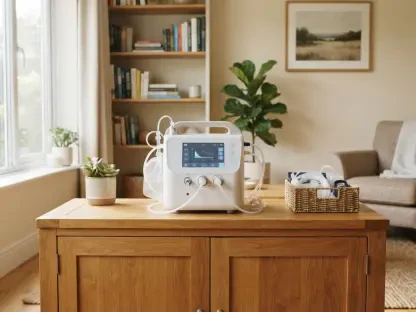
As the healthcare landscape moves toward decentralized testing, the FDA has introduced stringent usability standards for diagnostics intended for home use or point-of-care settings. For at-home kits, the instructions must be written at no higher than a 7th-grade reading level and should ideally be condensed into a single page. This focus on accessibility is designed to minimize user error, which is the leading cause of false results in non-professional environments. Manufacturers must also validate the entire “chain of custody,” ensuring that samples remain stable from the moment of collection until they are processed, whether that happens instantly at home or after shipping to a centralized laboratory. By treating the user experience as a core component of the test’s safety profile, the agency ensures that decentralized testing remains a reliable pillar of the public health response during high-stress emergency scenarios.
For point-of-care diagnostics used in CLIA-waived settings, such as pharmacies or community clinics, validation must occur across multiple geographic sites with operators who have no formal laboratory training. The goal is to prove that the test is robust enough to yield accurate results even when performed by individuals who are not experts in molecular biology. This real-world validation process helps identify potential design flaws, such as complex pipetting steps or ambiguous result interpretations, before the test is deployed in a crisis. Additionally, for multi-analyte panels that check for several pathogens simultaneously, the FDA requires that each target be validated individually. Manufacturers must also demonstrate that there is no cross-reactivity or microbial interference between the different analytes. This ensures that a patient testing for influenza and COVID-19 at a local pharmacy receives a result that is just as accurate as one from a top-tier medical research facility.
Digital Integrity and Streamlined Regulatory Evolution
Digital Reliability: Cybersecurity and Software Requirements
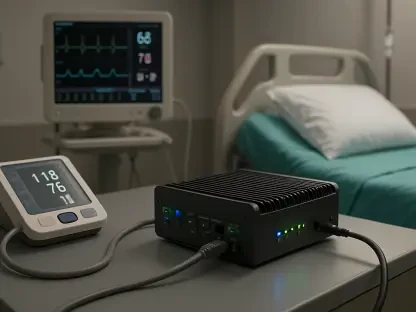
Modern diagnostic hardware is increasingly reliant on complex software and cloud connectivity, which introduces new risks related to data integrity and digital security. The new guidance incorporates essential requirements for cybersecurity and electromagnetic compatibility, reflecting the reality that a diagnostic test is often a high-tech electronic device. Manufacturers must demonstrate that their software is resilient against unauthorized access and that patient data remains encrypted and secure during transmission. This digital focus is not merely an administrative hurdle but a critical public health measure; a cyberattack on diagnostic infrastructure could paralyze a nation’s ability to track an outbreak. By treating software integrity as a fundamental requirement for authorization, the FDA protects the privacy of citizens and ensures that the functional reliability of diagnostic devices remains uncompromised during periods of intense national demand.
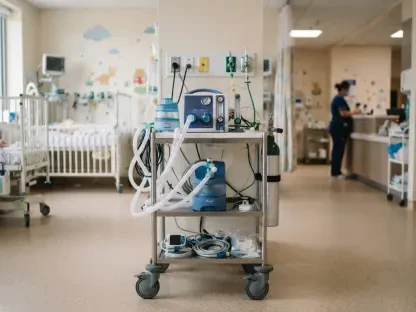
In addition to security, the guidance addresses the integration of hardware and software to ensure consistent performance across different operating environments. Diagnostic tools must be tested for electromagnetic compatibility to ensure they do not interfere with other critical medical equipment, such as ventilators or monitors, in a crowded hospital setting. The software itself must undergo rigorous validation to ensure that the algorithms used to interpret biological signals are accurate and free from logic errors that could lead to false positives. By establishing these technical benchmarks, the FDA has created a comprehensive standard that views the diagnostic process as a holistic system rather than a purely biological reaction. This approach aligns with the current trend of digital transformation in healthcare, ensuring that the latest technological innovations are safe, secure, and ready for deployment when the next public health emergency strikes.
Streamlined Evolution: Efficient Protocols for Post-Authorization Changes
To minimize the administrative delays that often plague the regulatory process during a crisis, the FDA introduced a refined “change protocol” system. This system allows manufacturers to outline and pre-approve future modifications to their diagnostics within the initial emergency use submission. For example, a developer can specify the protocols they will use to add new instruments, collection devices, or software updates at a later date. Once the FDA approves the initial authorization and the included change protocol, the manufacturer can implement these specific modifications without filing an entirely new request. This “stringent flexibility” drastically reduces the workload for both the government and the industry, allowing life-saving technology to evolve as quickly as the needs of the healthcare system change. It represents a shift toward a more interactive and collaborative regulatory relationship.
The implementation of these protocols proved particularly effective for manufacturers who needed to scale their production by adding new manufacturing sites or alternative raw material suppliers. Instead of waiting weeks for a supplemental authorization, companies that had pre-approved change protocols in place were able to pivot their operations in a matter of days. This agility is crucial during an emergency when supply chains are often disrupted and demand for testing kits can spike overnight. By planning for these changes in advance, manufacturers can ensure their products remain available to the public without interruption. The move away from the older “predetermined change control plans” toward these more focused protocols simplified the regulatory language and reduced confusion, making it easier for smaller biotech firms to navigate the path to market. This structural efficiency ensured that the diagnostic response was both rapid and sustainable.
Strategic Implications: The Future of Rapid Pathogen Response
The finalization of this guidance marked a decisive shift in how the nation approached the challenge of emergency medical diagnostics. It provided a structured environment that eliminated much of the trial and error seen in previous decades, replacing ad hoc decisions with a predictable and scientifically sound framework. The FDA ensured that speed did not come at the expense of accuracy by holding manufacturers to strict analytical and clinical standards while simultaneously offering pragmatic solutions for sample scarcity. The emphasis on decentralized testing and digital security reflected a forward-thinking understanding of the modern healthcare landscape, ensuring that tools were ready for use in homes and local clinics. As a result, the regulatory process became a catalyst for innovation rather than a bottleneck, allowing the industry to respond to threats with unprecedented precision. Moving forward, developers found that adhering to these standards early in the design phase significantly shortened their path to authorization. This proactive alignment with federal expectations fostered a more resilient diagnostic infrastructure, ultimately protecting the public from the risks of unreliable testing during the most critical moments of an outbreak.