
The rapid integration of artificial intelligence into medical imaging marks one of the most profound technological shifts in the history of modern healthcare, requiring a complete rethink of safety protocols. As these tools become more sophisticated, the focus for manufacturers and healthcare providers has shifted from basic innovation to the urgent need for robust governance frameworks. Establishing a clear structure for oversight is no longer an optional safety measure; it is now a primary requirement for ensuring that AI-driven diagnostics remain reliable, ethical, and clinically effective in a fast-paced market. Market projections highlight the scale of this transformation, with AI in healthcare expected to reach a staggering $57.4 billion valuation by 2029. In the United States alone, the Food and Drug Administration has observed that the vast majority of recently approved AI medical devices are specifically tailored for imaging applications. However, this growth introduces unique challenges because AI models are fundamentally dynamic. Unlike traditional hardware, their performance depends on continuous data inputs, requiring a management style that accounts for their entire operational life. Effective governance must address the full lifecycle of a product, moving far beyond the initial hurdles of market entry. For medical imaging tools to remain safe, they must be monitored from the earliest stages of development through to long-term post-market use. This proactive approach ensures that as algorithms encounter new data and diverse patient populations, they do not lose accuracy or introduce unforeseen risks. By viewing governance as a continuous process, the healthcare industry can protect patient outcomes while fostering sustainable technological growth.
Global Alignment: Navigating Regulatory Frameworks and Proactive Design
The regulatory landscape for AI in medical imaging is currently a complex mix of regional frameworks and emerging international standards that require constant attention. While the European Union has implemented the proactive EU AI Act to categorize risks, the United States faces a more fragmented environment with a patchwork of state-level laws and shifting federal priorities. Despite these differences, there is a clear move toward global alignment, exemplified by collaborations between the Food and Drug Administration and international agencies to standardize how AI products are evaluated and monitored. This international cooperation aims to create a unified set of expectations for developers, ensuring that a tool developed in one region can meet the rigorous safety standards of another without complete redesign. Such alignment is crucial for manufacturers who operate in a global market, as it provides a predictable pathway for innovation while maintaining a high bar for clinical safety. Navigating these rules requires a deep understanding of both local mandates and broader trends in digital health policy. By staying ahead of regulatory changes, organizations can avoid the costly delays associated with non-compliance and ensure their technologies reach the clinicians who need them most. The focus is increasingly on transparency and the ability to demonstrate that an algorithm performs as intended across various clinical settings.
Rather than treating compliance as a reactive hurdle, industry leaders advocate for embedding governance principles directly into the product design phase. This built-in approach involves integrating quality and risk management systems from the very first day of development, rather than as an afterthought. By establishing universal security protocols and safety standards, manufacturers can ensure their devices remain compliant and secure regardless of which specific state or national laws are in effect. This strategy reduces the stress of navigating a changing legal landscape while prioritizing the fundamental safety of the patient. Designing for governance means that every line of code and every training dataset is scrutinized for potential bias and security vulnerabilities before the product ever reaches a hospital. It involves creating a transparent development history that can be audited at any time, providing proof of the rigorous testing the tool has undergone. When governance is part of the architectural foundation, it becomes a competitive advantage rather than a bureaucratic burden. This proactive stance not only satisfies regulators but also builds trust with healthcare providers who are often hesitant to adopt black-box technologies. A commitment to proactive design ensures that the transition from a laboratory setting to a high-pressure clinical environment is seamless and secure, protecting both the developer’s reputation and the patient’s health.
The Assembly Line: Managing the Dynamic Lifecycle of Imaging AI
The transition from static software to a continuous lifecycle model is a significant shift for the medical imaging sector that demands a new operational mindset. In the past, software was often locked after approval, but AI requires constant validation to ensure that updates or shifts in data do not negatively affect clinical performance. Governance now includes rigorous testing using datasets that are truly representative of the intended patient population, accounting for variations in age, ethnicity, and underlying health conditions. This ensures that factors like data privacy, cybersecurity, and human oversight are maintained even as the model evolves six months or a year after its initial launch. The reality of modern medical AI is that an algorithm is never truly finished; it is a living entity that must be nurtured and monitored. Maintaining this level of scrutiny requires a shift away from traditional project management toward a more agile, iterative approach. Developers must be prepared to roll back updates if performance dips or to refine models if they encounter unexpected clinical scenarios. This dynamic management ensures that the AI remains a precise diagnostic partner rather than a liability that degrades over time. By prioritizing the entire lifecycle, organizations can guarantee that their tools provide consistent value throughout their operational life, regardless of how the clinical environment changes around them.
Supporting this lifecycle requires a robust technical infrastructure, often described as an AI assembly line, which automates many of the most critical safety checks. Companies must build systems that allow for efficient data curation, quality assurance, and iterative software validation to keep pace with rapid technological advancements. Because AI can evolve on a timeline of weeks rather than years, traditional management structures must be redesigned for speed and agility. Maintaining strict traceability and data integrity is essential to prevent models from becoming biased or corrupted as they are exposed to new clinical environments. This assembly line approach involves using automated tools to monitor model performance in real-time, flagging any deviations from the baseline immediately. It also requires a highly secure data pipeline that ensures patient information is protected at every stage of the validation process. By industrializing the way AI is managed, healthcare organizations can scale their use of these tools without compromising on safety or quality. This infrastructure acts as a safety net, catching potential errors before they can impact a patient’s diagnosis or treatment plan. Furthermore, a well-defined technical pipeline makes it easier to onboard new AI applications, as the foundation for testing and deployment is already established. This level of technical maturity is what separates successful AI implementations from those that struggle to gain clinical acceptance or meet regulatory demands.
Clinical Accountability: Strengthening Institutional Oversight and Risk Mitigation
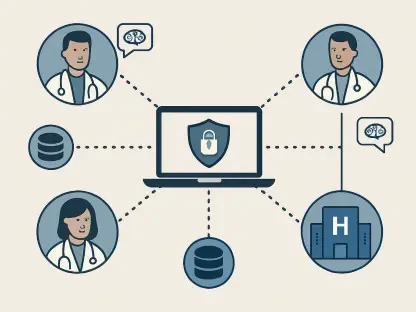
Successful AI governance requires a multidisciplinary approach that goes beyond the IT department to include clinical and administrative leaders in every major decision. Healthcare institutions should establish dedicated committees featuring Chief Medical Officers, nursing leadership, and experts in cybersecurity and data privacy. This diverse representation ensures that the technical, clinical, and financial implications of AI are all considered, providing a holistic view of how the technology impacts the daily workflow of radiologists and other medical professionals. Such committees serve as the ultimate gatekeepers, deciding which tools are safe for deployment and under what conditions they should be used. They bridge the gap between the engineers who build the tools and the clinicians who rely on them, ensuring that the technology solves real-world problems rather than adding unnecessary complexity. By involving stakeholders from across the organization, hospitals can ensure that AI implementation aligns with their broader mission of providing high-quality, patient-centered care. This collaborative oversight also helps to demystify AI for the broader staff, fostering a culture of informed adoption rather than skepticism. When clinicians see that their leadership is taking a rigorous and transparent approach to AI governance, they are more likely to trust the results provided by these advanced diagnostic tools. This institutional accountability is the bedrock upon which the future of AI-enhanced medicine is built.
One of the most critical responsibilities of these oversight committees is monitoring for AI drift, where an algorithm’s performance deviates over time due to shifts in data or clinical environment. If left unchecked, drift can lead to skewed results, increased bias, and potentially dangerous misdiagnoses that could harm vulnerable patient populations. By conducting regular audits and continuous device monitoring, governance teams identified these issues before they caused harm or resulted in legal complications. This level of accountability protected the institution from legal liability and ensured that AI remained a dependable asset in the diagnostic process. Mitigating clinical risk also involves training staff to recognize when an AI’s output might be incorrect, reinforcing the importance of human-in-the-loop oversight. Even the most advanced algorithms are not infallible, and maintaining a healthy level of professional skepticism is essential for patient safety. Governance frameworks provided the necessary guidelines for how clinicians should interact with AI, clarifying the division of responsibility between the software and the medical professional. By standardizing these interactions, healthcare systems reduced the likelihood of errors and improved the overall quality of care. This commitment to risk mitigation was not just about preventing failure; it was about maximizing the positive impact of AI on patient outcomes through diligent and continuous supervision.
The healthcare industry realized that the successful integration of artificial intelligence into medical imaging depended entirely on a foundation of trust and accountability. Organizations that prioritized comprehensive governance frameworks were able to navigate the transition with greater confidence and fewer clinical setbacks. These leaders recognized that static regulation was insufficient for a technology that changed with every new byte of patient data processed. As a result, they invested in automated monitoring tools and multi-disciplinary oversight committees that acted as the final word on safety and efficacy. These steps ensured that algorithmic diagnostics served as a powerful support system for clinicians rather than a source of uncertainty. Moving forward, the focus remained on refining these governance structures to keep pace with even more complex neural networks and generative models. The industry adopted a culture of transparency where data integrity and model performance were treated as vital signs for the health of the diagnostic ecosystem. By fostering this environment, stakeholders protected the patient journey and secured the long-term viability of AI in the medical field. Ultimately, the lessons learned from the initial deployment phase served as a blueprint for future technological expansions, proving that rigorous oversight was the key to unlocking the full potential of digital health. The evolution of medical imaging was no longer just about the clarity of the picture, but the integrity of the intelligence behind it.