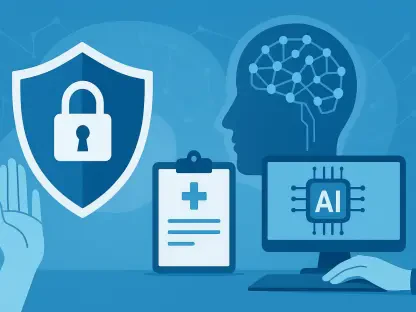

The intersection of life-saving medical technology and sophisticated digital warfare has created a precarious environment where trust in cybersecurity is rapidly eroding across the entire healthcare landscape. Healthcare institutions are currently navigating a tumultuous era where the digital infrastructure supporting patient care feels increasingly vulnerable despite record-high investments in specialized security platforms. A recent industry assessment indicates that a staggering majority of security officers within the medical sector do not possess the necessary conviction that their current protocols could withstand a determined ransomware assault. This confidence deficit originates from a fundamental disconnect between the perceived strength of defensive software and the practical ability of human teams to orchestrate a response under extreme pressure. While hospitals continue to digitize every facet of the patient journey, the defensive perimeter has become dangerously porous.
Identifying the Roots of the Security Confidence Gap
Internal Misalignment: Tools versus Human Talent
The prevailing strategy of adding layer upon layer of security software has inadvertently created a fragmented landscape that obscures rather than reveals legitimate threats within the network. Many healthcare organizations now maintain dozens of distinct security products, ranging from legacy firewalls to advanced endpoint detection systems, yet these tools rarely communicate effectively with one another. This technical sprawl forces security analysts to toggle between disparate consoles, manually stitching together information while critical indicators of compromise slip through the cracks. The resulting complexity does not just hinder performance; it actively creates a false sense of security where administrators believe they are protected by the sheer volume of their technology. In reality, this noise makes it nearly impossible to distinguish between a routine system glitch and a sophisticated adversary moving laterally through the environment to find sensitive databases.
Compounding the technical burden is a persistent imbalance between the acquisition of hardware and the investment in the skilled professionals required to operate these sophisticated systems properly. It remains far easier for a hospital board to approve a million-dollar capital expenditure for an automated threat-hunting platform than it is to secure recurring funding for additional full-time cybersecurity experts. This creates a scenario where advanced software sits partially unconfigured because the existing staff is buried under a mountain of low-level alerts and administrative duties. When security teams are stretched too thin, they are forced to prioritize speed over thoroughness, often overlooking the subtle anomalies that precede a major incident. This labor shortage is a primary driver of the confidence crisis, as leaders realize that even the most expensive tool is useless if there is no one capable of interpreting its signals during a high-stakes crisis.
The Persistence of Agile and Evolving Adversaries
Modern threat actors have abandoned the loud and predictable tactics of the past in favor of subtle, “living off the land” techniques that exploit legitimate administrative tools already present in the system. These adversaries no longer need to rely on complex malware that might trigger an antivirus signature; instead, they use stolen credentials and standard command-line utilities to blend in with normal network traffic. This shift in methodology means that traditional perimeter defenses are often bypassed without a single alarm being triggered, leaving security teams searching for a phantom that does not exist in their logs. The speed at which these groups adapt their code outpaces the typical enterprise procurement cycle, ensuring that defenders are always reacting to yesterday’s threats. This persistent gap between attacker innovation and defender response times creates a pervasive sense of helplessness among those tasked with protecting medical records.
The psychological impact of this constant “cat and mouse” game cannot be overstated, as security professionals operate under the assumption that a single mistake could lead to a total shutdown of clinical services. Because attackers only need to find one unpatched vulnerability or one distracted employee to gain a foothold, the burden of perfection lies entirely on the shoulders of the internal security department. This asymmetrical warfare ensures that even when a team successfully repels nine out of ten attacks, the one that succeeds is the only one that defines their reputation and the organization’s future. The knowledge that adversaries are continuously testing defenses with automated scripts and artificial intelligence adds a layer of anxiety that erodes institutional confidence over time. Consequently, many leaders have developed a cynical outlook, viewing their defensive posture as a temporary barricade rather than a reliable shield for their patients.
Strategic Frameworks for Rebuilding Organizational Trust
Enhancing Readiness: Practice and Open Communication
Moving beyond the acquisition of tools, high-performing healthcare organizations are now prioritizing operational validation through rigorous and frequent tabletop simulations that mirror actual threat scenarios. These exercises provide a low-stakes environment to pressure-test the decision-making process of not just the IT team, but also the legal, clinical, and executive departments. When a simulated ransomware attack “locks” the electronic health record system, the gaps in the recovery plan become immediately apparent, often revealing that key stakeholders are unsure of their specific responsibilities. By involving clinicians in these drills, the organization ensures that the technical response remains aligned with the ultimate goal of patient safety and continuity of care. This collaborative approach transforms security from a niche technical concern into a shared institutional priority, fostering a culture where every employee understands their role.
Effective communication serves as the bedrock of incident response, yet it remains one of the most overlooked components in many healthcare security programs today. A transparent culture that encourages front-line analysts to report systemic weaknesses or tool failures without fear of retribution is essential for maintaining an accurate picture of the risk landscape. When technicians feel empowered to voice concerns about unmanageable alert volumes or outdated response protocols, leadership can make informed decisions about resource allocation and strategy adjustments. This bottom-up flow of information prevents the dangerous “optimism bias” that often plagues executive boards who only see high-level dashboards showing green lights. By bridging the gap between the server room and the boardroom, organizations can build a more resilient security posture that acknowledges limitations while actively working to address them through honest dialogue.
Utilizing Granular Documentation: A Diagnostic Asset
The development of highly detailed and accessible incident response playbooks acts as both a tactical guide during an emergency and a diagnostic tool for identifying current architectural flaws. These documents must transition away from vague summaries and toward granular, step-by-step instructions that can be executed by staff operating under extreme cognitive load. In the heat of an actual breach, the ability to follow a pre-validated checklist for isolating network segments or restoring backups can mean the difference between a minor interruption and a weeks-long outage. Furthermore, the process of writing these playbooks often uncovers specific areas where the organization lacks the necessary visibility or control to execute a response effectively. This documentation then serves as a roadmap for future investments, ensuring that every new purchase or policy change is designed to fill a documented gap in the existing incident response capabilities.
Beyond simple instructions, granular documentation should include detailed mapping of data flows and interdependencies between various clinical applications and their underlying storage infrastructures. Understanding exactly how a laboratory information system interacts with the main patient portal allows for more precise containment strategies that minimize the impact on unrelated medical services. This level of environmental awareness ensures that when a threat is detected, the response team can surgically remove the infected nodes without inadvertently crippling the entire hospital network. Regular audits of these playbooks ensure they remain relevant as the network evolves, preventing the “documentation rot” that often renders old plans useless during a modern cyberattack. This commitment to precision not only improves the technical outcome of an incident but also restores confidence among the staff, who now have a tangible, proven set of procedures to rely on.
Pathways to Digital Resilience
The shift toward a more resilient healthcare security posture required a fundamental reassessment of how organizations balanced technological solutions with human-centric operational strategies. Instead of relying solely on automated defenses, successful leaders focused on integrating cross-departmental communication and continuous validation into their daily workflows. They prioritized the development of clear, actionable playbooks that demystified the response process and empowered every level of the organization to act decisively during a crisis. These institutions moved away from a culture of reactive firefighting and toward a proactive model where security was treated as a core component of clinical excellence. By investing in people and processes alongside their technical assets, they effectively narrowed the confidence gap and established a robust framework for long-term digital stability. This evolution provided a clear path forward for the entire medical industry.