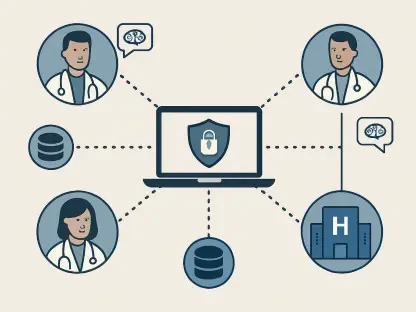

The sophisticated nature of modern cyberattacks often transcends technical vulnerabilities by targeting the psychological tendencies of employees through intricate social engineering schemes that bypass advanced security protocols. Clover Health recently announced that it fell victim to such a scheme, where an unauthorized actor successfully compromised internal credentials to gain access to sensitive organizational data. This incident underscores a persistent reality in the healthcare sector: regardless of how robust a company’s perimeter defenses might be, the human element remains the most versatile and exploited entry point for digital adversaries. As health technology firms transition to more integrated and cloud-centric infrastructures, the surface area for identity-based attacks has expanded, requiring a shift in how these organizations perceive and mitigate risks associated with daily operations. This breach serves as a stark reminder that digital security is as much about psychological resilience as it is about software patches or firewall configurations in 2026.
Compromised Credentials: Mechanics of the Social Engineering Incursion
Investigations into the breach revealed that the attacker utilized a deceptive communication strategy to manipulate an employee into providing access credentials, effectively bypassing multifactor authentication through a technique known as MFA fatigue or direct social manipulation. By posing as a trusted member of the internal information technology support team, the threat actor convinced the recipient to authorize a login request that appeared legitimate on the surface. This specific methodology demonstrates an evolution in adversary tactics, moving away from brute-force attempts and toward high-touch interactions that exploit a culture of helpfulness within corporate environments. Such maneuvers are particularly effective because they do not trigger traditional signature-based detection systems, as the resulting login appears to be a valid session initiated by an authorized user. The success of this intrusion highlights the critical need for continuous behavioral monitoring and the implementation of more rigorous, context-aware identity verification processes that go beyond simple push notifications.
Once the unauthorized access was established, the intruder navigated through internal systems to locate repositories containing sensitive health information and personal identifiers associated with a subset of the company’s membership. Clover Health indicated that while the extent of the data accessed varied among individuals, the potential exposure included names, dates of birth, and certain clinical details that are highly valued on the dark web for identity theft and fraudulent billing. The targeted nature of the access suggests that the threat actor was familiar with the organizational structure and knew exactly where the most valuable data was stored within the cloud environment. This level of precision is characteristic of modern data exfiltration operations where hackers spend time in the reconnaissance phase to maximize their impact once they gain entry. For healthcare organizations, the consequences of such exposure are profound, involving not only the immediate risk to patient privacy but also the long-term regulatory scrutiny and loss of consumer trust that inevitably follow a public disclosure of this magnitude.
Future Resilience: Strategic Remediation and Industry Implications
Upon discovering the unauthorized activity, Clover Health initiated a comprehensive response plan that included the immediate termination of the compromised credentials and the engagement of third-party forensic experts to determine the full scope of the incident. The remediation process involved a thorough audit of all access logs and the implementation of enhanced monitoring tools designed to detect anomalous patterns of behavior that might indicate further compromise. Communication with law enforcement and relevant regulatory bodies was established early to ensure compliance with federal data protection mandates and to assist in the broader effort to track the threat actor’s infrastructure. Furthermore, the organization began the process of notifying affected individuals, providing them with guidance on how to protect their personal information and offering identity monitoring services to mitigate potential harm. These tactical steps were necessary to stabilize the environment, yet they also highlighted the significant operational overhead required to recover from a breach that began with a single compromised account in a complex digital ecosystem.
The resolution of this incident provided several critical lessons for the broader health technology sector regarding the necessity of moving toward a zero-trust architecture where no user is inherently trusted regardless of their location or credentials. Organizations that successfully adapted to these threats prioritized the implementation of hardware-based security keys, which are significantly more resistant to social engineering and MFA bypass techniques than traditional software-based tokens. Security leadership emphasized the importance of regular, simulated phishing exercises that focused on high-stakes scenarios, ensuring that employees were conditioned to recognize the subtle signs of psychological manipulation. Furthermore, the integration of artificial intelligence for real-time risk scoring of every access request became a standard practice for those seeking to preemptively block suspicious sessions before data could be exfiltrated. Ultimately, the industry moved toward a more proactive stance where technical controls were paired with a deep-seated culture of verification, acknowledging that the defense of sensitive medical data required constant vigilance and the total elimination of implicit trust within the network.