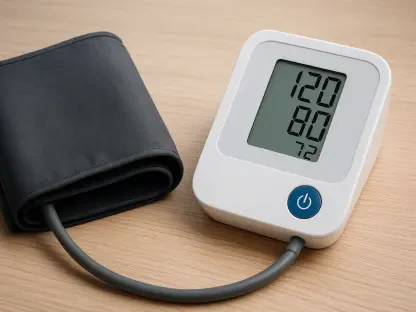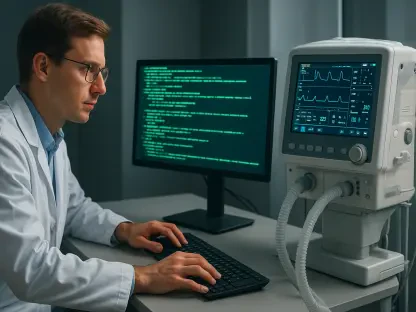

The intersection of digital technology and medical life-support systems has created a revolutionary era of patient care, yet this progress comes with a shadow of profound vulnerability. Novocure implemented containment measures and launched an internal investigation after detecting unauthorized movement within its private information network. This event is not a solitary breakdown of security but rather a significant marker in an escalating series of digital incursions targeting the life sciences sector. Industry giants like Medtronic and Boston Scientific have similarly grappled with unauthorized access, signaling a trend that many experts are calling a season of relentless data breaches. As therapeutic devices migrate toward cloud-hosted management platforms, the potential for catastrophic disruption grows, challenging the trust between patients and the technology designed to save their lives. The healthcare supply chain now faces a sophisticated adversary capable of exploiting even the most minor oversight.
Understanding the Breach Landscape
The Specifics of the Novocure Incident
In the mid-August period, the oncology equipment manufacturer identified an intrusion into its private information network that put the data of approximately 1,400 patients at risk within the United States. Upon detection, the technical teams immediately worked to isolate the affected servers and verify the integrity of the remaining infrastructure to prevent further lateral movement by the attackers. Fortunately, for the vast majority of the individuals involved, the compromised data was confined to administrative categories, such as internal identification numbers and the contact information for healthcare providers. While this exposure is undoubtedly a breach of privacy, it does not typically involve the immediate financial peril associated with stolen credit cards or deep medical histories. However, the presence of an intruder within a network specifically designed for oncology care raises serious questions about the long-term persistence of such threats and the efficacy of current encryption protocols.
A smaller, more vulnerable group of patients located in the western region of the United States experienced a much more concerning level of data exposure during the same incident. For these individuals, the unauthorized access involved deeper personal identifiers that significantly increase the potential for long-term identity theft or targeted social engineering attacks. This disparity in the data lost underscores a critical point for all patients: the severity of a cyberattack is rarely uniform across the entire victim pool, making individual notification essential. These formal letters are the definitive source of information, outlining exactly which pieces of data were exfiltrated so that patients can tailor their protective measures accordingly. Whether a person needs to freeze their credit or simply remain cautious regarding incoming digital communications depends entirely on the specific nature of the data that the attackers were able to extract from the network.
A Systemic Pattern Across the Industry
The incident involving the oncology device manufacturer is part of a much broader and more concerning trend that has seen massive quantities of patient data stolen from various healthcare entities. For instance, a recent breach at CareCloud resulted in the exposure of records belonging to more than 3.7 million individuals, dwarfing the scale of smaller, more localized network intrusions. Unlike financial data, which can be mitigated by canceling cards or changing account numbers, medical data is effectively permanent and holds an exceptionally high value on the underground market. Information regarding a patient’s health history, genetic predispositions, and chronic conditions cannot be altered once it has been leaked into the public domain. This permanence makes healthcare organizations a primary target for sophisticated syndicates looking to acquire static assets that can be used for extortion or fraudulent medical billing over many years.
Cybercriminals have increasingly focused on the healthcare sector because the information found within clinical records provides a comprehensive blueprint of an individual’s life that is nearly impossible to replace. Stolen genetic profiles and date-of-birth records are particularly prized because they allow for the creation of synthetic identities that are difficult for traditional fraud detection systems to identify. Furthermore, the sensitive nature of health information provides hackers with significant leverage, as many individuals are willing to pay a premium to prevent the public disclosure of private medical conditions. This dynamic has fueled a professionalized industry of data brokers who specialize in the acquisition and resale of healthcare datasets. As the industry moves further into 2026 and 2027, the focus for manufacturers must shift from mere compliance to the active defense of these unchangeable assets to ensure that a single breach does not result in a lifetime of vulnerability.
Assessing the Clinical Risks
When Digital Security Impacts Physical Health
The most disturbing element of modern cyber warfare in the medical field is the potential for digital security failures to manifest as physical health crises for patients. A recent disruption at Boston Scientific served as a chilling example of this functional risk when a security incident disabled the digital infrastructure required for the remote monitoring of cardiac devices. While the actual pacemakers and defibrillators remained operational, the loss of the remote communication layer effectively severed the link between the patient and their clinical team. Without this digital oversight, doctors were unable to receive real-time updates on heart rhythms or device performance, creating a significant gap in the standard of care that many patients have come to rely on for their safety. This incident proved that even if the hardware itself is not directly hacked, the failure of the supporting ecosystem can have immediate and detrimental consequences.
When these essential digital monitoring services are taken offline by a cyberattack, the burden of care shifts back to traditional, manual methods that are often less efficient and more time-consuming. Patients who were previously monitored from the comfort of their homes were forced to return to physical clinics for manual device interrogations to ensure their implants were functioning correctly. This transition from proactive, automated digital surveillance to reactive, in-person visits represents a significant regression in the quality of modern healthcare. The stress of knowing that a life-critical device is no longer being watched by a central monitoring station can also have tangible physiological effects on patients already dealing with chronic conditions. Consequently, the definition of a medical device must be expanded to include the entire network architecture that supports its function, as any break in that chain represents a direct threat to the patient’s well-being.
The Vulnerability of Connected Technology
As medical technology continues to integrate more deeply with the internet and cloud-based services, the attack surface available to malicious actors has expanded exponentially. Modern therapeutic devices are no longer standalone units but are instead part of a complex web of sensors, transmitters, and central servers that communicate sensitive data in real-time. This connectivity provides incredible benefits for chronic disease management, yet it also creates multiple points of entry for hackers looking to disrupt clinical operations or steal proprietary information. When the remote monitoring capabilities of a cardiology system are compromised, the medical team loses its ability to detect early warning signs of device failure or sudden changes in a patient’s cardiac health. This loss of visibility is especially dangerous because it occurs in the digital background, often going unnoticed by the patient until a physical symptom or a formal system alert finally appears.
The shift from proactive digital oversight to reactive in-person medical care creates a precarious window of time where complications might escalate without intervention. In the current landscape of 2026, the reliance on high-speed data transmission for real-time diagnostics means that any latency or outage caused by a cyberattack can delay life-saving treatments. Security experts have noted that the complexity of these interconnected systems often makes it difficult to distinguish between a routine technical glitch and a deliberate, malicious intrusion. This ambiguity allows attackers to remain within a network for extended periods, gathering information or slowly degrading the performance of clinical systems. To combat this, manufacturers are being urged to implement more robust fail-safe mechanisms that allow devices to maintain a baseline level of autonomous operation and local data logging even when the primary network connection has been completely severed.
The Evolution: Securing Life-Critical Systems
Healthcare providers adopted more rigorous standards for network segmentation as the reality of these persistent threats became impossible to ignore. Organizations moved beyond simple password protection and implemented zero-trust architectures that required continuous verification for every device connected to a clinical network. Patients took a more active role in their digital safety by regularly reviewing their insurance statements for any signs of unauthorized procedures and demanding clear security disclosures from their device manufacturers. The industry recognized that the protection of medical data was as essential to the Hippocratic Oath as the delivery of physical care. Manufacturers who led the market from 2026 through 2028 were those who integrated advanced encryption and local backup systems into their product designs from the initial concept phase. Ultimately, the successful defense of medical technology relied on a collaborative approach where patients, clinicians, and engineers worked together to build a resilient and secure digital environment.