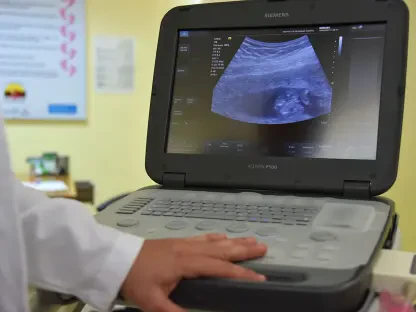

With only 23% of the world’s 1.4 billion hypertensive adults having their condition under control, the demand for advanced circulatory visualization has never been more critical. The landscape of cardiovascular medicine is currently undergoing a profound transformation, fueled by a synergy of technological breakthroughs and shifting global demographics. As chronic health conditions rise, the vascular imaging devices market has emerged as a cornerstone of modern heart care, with projections suggesting a valuation of $11.12 billion by 2030. This growth signifies more than just a financial trend; it represents a global shift toward early diagnostic precision and the modernization of healthcare delivery systems worldwide. By moving away from reactive treatments and focusing on the intricate details of the human circulatory system, clinicians are now able to intercept life-threatening events before they occur. This evolution is supported by a robust medical infrastructure that prioritizes non-invasive techniques, ensuring that patient outcomes remain the primary focus of innovation in 2026.
Market Dynamics and Financial Outlook
Diagnostic Tools: Understanding the Growth of Non-Invasive Methods
The vascular imaging market consists of highly specialized tools, such as ultrasound, MRI, and CT scans, designed to provide detailed visualizations of the circulatory system without the need for invasive surgery. Currently valued at approximately $8.4 billion, the sector is maintaining a steady compound annual growth rate as it integrates new digital capabilities. This financial stability indicates a mature market that is successfully evolving to meet the consistent demand for high-quality diagnostic services in both hospital and outpatient settings. Industry leaders are increasingly focusing on the integration of high-definition sensors and enhanced contrast agents that allow for clearer imaging of microvascular structures. As these technologies become more refined, their application extends beyond traditional cardiology into specialized fields like neurology and vascular surgery. The current trajectory suggests that the reliance on these diagnostic tools will only deepen as healthcare providers seek to replace exploratory procedures with high-fidelity digital mapping.
Strategic Investment: The Role of Long-Term Cost Reduction
The projected rise to over $11 billion by the end of the decade is predicated on the essential role these devices play in managing complex heart conditions. By providing clinicians with a clear view of blood vessels and arterial health, these technologies allow for more informed decision-making. As healthcare systems prioritize long-term cost reduction through early intervention, the demand for reliable and accessible imaging hardware continues to be a primary driver of industry investment. Beyond the initial capital expenditure, the value proposition of modern imaging lies in its ability to reduce the duration of hospital stays and minimize the risks associated with manual arterial checks. The transition toward value-based care has forced many institutions to rethink their equipment lifecycles, leading to a surge in the adoption of modular systems that can be updated with software patches rather than complete hardware overhauls. This shift ensures that the most recent diagnostic advancements are available to a broader patient demographic without the prohibitive costs.
The Role of Chronic Disease in Driving Demand
Metabolic Crisis: Addressing Global Hypertension and Diabetes
A major catalyst for the expansion of vascular imaging is the alarming rise in metabolic and cardiovascular disorders, particularly hypertension and diabetes. Recent data indicates that over a billion adults globally live with hypertension, yet only a small fraction have the condition under effective control. These chronic illnesses place immense strain on the vascular system, leading to arterial thickening and plaque buildup that require frequent, high-resolution monitoring to prevent life-threatening events like strokes or heart attacks. Because these secondary vascular issues often develop silently, advanced imaging tools are necessary to detect changes at a stage where they are still treatable. This clinical necessity has shifted the focus of heart care from reactive treatment to proactive management. Consequently, the development of imaging devices is increasingly tailored to identify subtle physiological shifts, ensuring that patients with chronic conditions receive timely and accurate diagnostic interventions.
Clinical Precision: Proactive Management of Arterial Health
The silent nature of cardiovascular degradation means that by the time symptoms appear, the underlying damage is often extensive and difficult to reverse. Advanced imaging technology addresses this by allowing for the visualization of subclinical markers, such as early-stage calcification or minor changes in blood flow velocity. These tools empower physicians to implement lifestyle changes and pharmaceutical regimens long before a surgical intervention becomes necessary. The move toward this level of diagnostic granularity is supported by recent improvements in non-invasive scanning, which now offer resolutions that were previously only possible through catheter-based procedures. As the global population ages, the prevalence of multi-morbidity—where patients suffer from both diabetes and vascular stiffening—demands a more holistic imaging approach. Modern systems are now capable of multi-modal assessment, providing a comprehensive overview of a patient’s vascular health in a single session, which improves the efficiency of clinics.
Technological Innovation and Digital Integration
Digital Precision: Enhancing Accuracy Through AI and Portability
The future of heart care is being redefined by the integration of Artificial Intelligence (AI) and digital health platforms. AI algorithms are now being used to assist radiologists in interpreting complex scans, significantly reducing human error and accelerating the diagnostic process. This digital evolution allows for seamless data exchange between imaging tools and electronic health records, ensuring that a patient’s cardiovascular history is easily accessible to their entire care team, leading to better-coordinated treatment plans. Beyond simple image reconstruction, AI is now capable of predictive modeling, where it analyzes blood flow patterns to forecast potential areas of plaque rupture. This foresight provides a critical window for intervention that was previously unavailable. Furthermore, the automation of repetitive tasks within the imaging workflow has allowed medical professionals to dedicate more time to patient consultation, effectively bridging the gap between high-tech diagnostics and human-centric medical practice.
Healthcare Evolution: Expanding Access with Portable Solutions
In addition to software improvements, there is a clear trend toward the miniaturization and portability of imaging hardware. Point-of-care diagnostics are moving beyond traditional radiology departments, allowing for vascular assessments to be conducted in outpatient centers or even at the patient’s bedside. This shift toward portable, non-invasive solutions not only improves patient comfort but also expands access to life-saving diagnostics in underserved regions and community clinics. These handheld devices often utilize cloud-based processing to maintain high image quality despite their smaller physical footprint. As a result, rural healthcare providers can now perform complex vascular screenings that once required a trip to a major metropolitan hospital. This decentralization of care was vital for early detection, as it removed the logistical barriers that often prevented at-risk populations from seeking regular check-ups. The democratization of these tools represented a fundamental shift that ensured heart care became a standard of service.