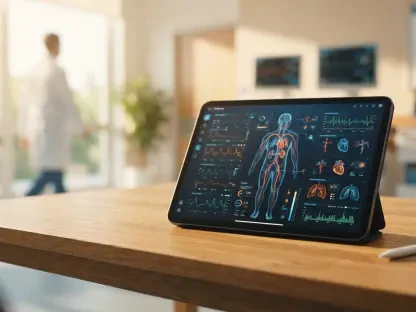

The traditional neurologist’s office is increasingly being supplemented by sophisticated algorithms that analyze how we interact with everyday technology to provide a more comprehensive view of patient health. The development of high-quality, structured resources like RobustPDx is a foundational step toward personalized treatment plans based on continuous remote monitoring. By capturing high-frequency data from home-based digital devices, researchers are now able to observe the subtle, often overlooked nuances of motor and cognitive function. This initiative, recently detailed in the journal Scientific Data, leverages the ubiquity of laptops and desktop computers to transform them into diagnostic tools. The project addresses a long-standing deficit in neurological care: the inability to monitor disease progression outside of controlled, infrequent clinical environments. By providing a structured framework for data collection, this approach empowers healthcare providers to see a more complete picture of a patient’s health. It moves beyond the limitations of human observation, utilizing the precision of machine learning to detect patterns that suggest the onset or progression of Parkinson’s.
Clinical Neurology: Bridging the Gap
Limitations of Traditional Clinical Evaluations
The gold standard for diagnosing Parkinson’s has long centered on the Unified Parkinson’s Disease Rating Scale, which requires clinicians to perform hands-on physical assessments. While these evaluations are considered the benchmark, they are inherently subjective and only capture a limited snapshot of a patient’s condition during a specific office visit. Patients often experience significant fluctuations in their symptoms throughout the day, influenced by factors such as medication cycles, stress, and fatigue, all of which are frequently missed during a brief clinical consultation. Furthermore, the logistical burden of traveling to a specialized clinic can be prohibitive for individuals living in rural areas or those with advanced mobility issues. This creates a significant disparity in care, where early intervention is often delayed because symptoms were not present during the appointment. The need for more frequent and objective measurement tools has become increasingly apparent in the medical landscape of 2026.
Digital Phenotyping: Implementation via Motor Tasks
To address the limitations of traditional observation, the RobustPDx platform utilizes digital phenotyping to record granular motor data through a standard web-based interface. Participants complete a series of specialized tasks, such as specific typing patterns and precise mouse movements, which are designed to elicit data related to tremors, bradykinesia, and fine motor control. These digital interactions reveal subtle slowness or rhythmic disturbances that are often invisible to the naked eye but can be quantified with high precision by machine learning algorithms. Beyond motor function, the platform integrates cognitive assessments and memory tests to capture non-motor symptoms critical to a full diagnosis. By collecting metadata about the hardware being used, the system can distinguish between biological symptoms and mechanical variations. This ensures that the data remains accurate regardless of whether a patient uses a high-performance peripheral or a basic integrated trackpad on an older laptop.
AI Reliability: Establishing a Benchmark
Data Composition: Strategic Demographic Diversity
The integrity of any AI-driven diagnostic tool depends on the quality and variety of the data used for training, which is why the RobustPDx dataset includes a diverse cohort of 261 participants. These individuals are strategically divided into three categories: confirmed Parkinson’s cases, suspected cases showing early signs, and healthy control subjects. This specific mix is essential for teaching AI models to distinguish between natural physiological changes associated with aging and the specific markers of neurological decline. Because the data is gathered in naturalistic home settings rather than sterile laboratory environments, it reflects the messy, real-world conditions that digital health tools must navigate. The inclusion of suspected cases is particularly vital, as it allows for the development of predictive models that can identify the disease in its prodromal stages. This focus on early detection is the cornerstone of modern proactive neurology and personalized healthcare strategies.
Strengthening Algorithmic Generalizability Across Hardware
A primary hurdle in remote diagnostics is algorithmic robustness, or the ability of software to remain accurate across a wide variety of hardware and user environments. The RobustPDx dataset addresses this by providing a benchmark that includes various device types and participant characteristics, allowing developers to build models that are truly generalizable. In the past, many digital health tools failed because they were only optimized for specific devices, creating a digital divide in healthcare quality. By focusing on robustness, researchers ensure that a patient’s socioeconomic status or choice of technology does not influence the accuracy of their medical assessment. This commitment to equity is central to the mission of providing reliable remote healthcare for all populations, regardless of their technological literacy or computer brand. Developers can now use this benchmark to stress-test their models, ensuring they remain reliable and consistent when deployed across the varied technological landscape of 2026.
Future Perspectives: Advancing the Landscape of Neurological Care
The establishment of RobustPDx represented a pivotal moment in the transition toward decentralized and data-driven neurological monitoring. Researchers successfully demonstrated that high-fidelity clinical insights could be extracted from common consumer electronics, paving the way for Parkinson’s monitoring to become as routine as tracking blood pressure. This approach allowed for the continuous longitudinal tracking of disease progression, which enabled clinicians to refine medication schedules and therapeutic interventions with unprecedented accuracy. By reducing the reliance on periodic and subjective in-person evaluations, the project lowered the overall burden on the healthcare system while simultaneously improving the quality of life for patients. The integration of these AI-driven tools into standard care protocols signaled a shift toward a more proactive medical model. Moving forward, the focus turned toward expanding these datasets to include even more diverse populations and exploring synergy with wearable sensors.