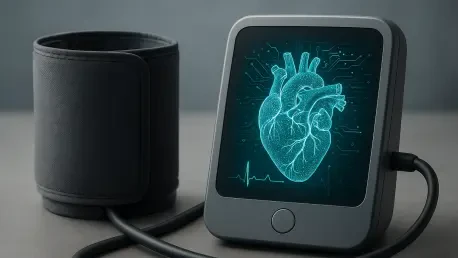

Moving diagnostic capabilities from the doctor’s office into the patient’s home addresses the inherent limitations of intermittent clinical visits and late-stage diagnoses. This transition is particularly critical for managing conditions like atrial fibrillation, or A-Fib, which often operates as a silent predator within the cardiovascular system. With over 10.5 million American adults currently affected by this irregular heart rhythm, the risks of stroke and heart failure have reached a critical threshold that demands more proactive intervention. The challenge has always been that A-Fib is frequently asymptomatic, leaving many individuals unaware of their condition until a major medical event occurs. In response, the University of California, San Francisco has launched the OMRON-AF clinical trial to evaluate whether artificial intelligence can be effectively integrated into standard home medical equipment. By utilizing Bluetooth-enabled blood pressure monitors, researchers hope to bridge the diagnostic gap that currently exists between checkups and the reality of daily heart health monitoring.
Targeting Vulnerable Populations: The Importance of Precision Screening
The OMRON-AF trial intentionally focuses on a specific cohort of approximately 1,900 participants who represent the highest risk for undiagnosed rhythm disorders. By recruiting individuals aged 60 and older with existing hypertension, the study prioritizes a demographic where the incidence of atrial fibrillation is statistically significant. This targeted approach is a strategic move to refine the accuracy of screening results, as broad population studies often struggle with data noise and diagnostic hurdles that obscure meaningful clinical findings. Focusing on these high-risk individuals allows researchers to evaluate the efficacy of AI detection in a setting where the medical stakes are highest. For these patients, high blood pressure is already a daily management concern, making them the ideal population for testing integrated diagnostic tools. By narrowing the scope to those most vulnerable, the trial aims to demonstrate that specialized home monitoring can provide a reliable early warning system for those who need it most.
In contrast to general wellness devices, the OMRON-AF study seeks to establish a high-fidelity screening method that integrates seamlessly with existing medical management. While modern wearable technologies like smartwatches have introduced heart monitoring to the masses, they often target younger, healthier demographics with a much lower baseline risk for serious heart disease. This discrepancy frequently results in a high volume of false positives, which can lead to unnecessary anxiety and an increased burden on the healthcare system. The UCSF researchers recognize that for technology to be truly transformative in cardiology, it must be placed in the hands of the right patients—those who are already navigating chronic conditions like hypertension. By using a device that is already a staple in the homes of older adults, the study reduces the barrier to entry for life-saving technology. This methodology ensures that the data collected is not just voluminous but clinically relevant, providing a clearer path toward medical intervention.
Technological Integration: How AI Algorithmic Analysis Enhances Monitoring
At the core of this innovative study is the Intellisense AFib algorithm, an artificial intelligence software specifically designed to identify irregular heart rhythms during standard blood pressure measurements. This technology is embedded within Bluetooth-enabled cuffs, allowing for the automatic transmission of data to a central monitoring system for further analysis. Unlike traditional monitors that only provide numerical values for systolic and diastolic pressure, this AI-driven tool looks for the specific patterns and fluctuations that characterize atrial fibrillation. This integration represents a major shift in how home medical devices are utilized, moving them from simple reporting tools to active diagnostic participants. The algorithm was trained on vast datasets of cardiac rhythms, enabling it to distinguish between normal variations and the subtle signs of a potentially dangerous heart condition. By automating this detection process, the technology removes the need for patients to interpret their own symptoms.
The strategic integration of AI into a routine habit like blood pressure monitoring addresses one of the most significant challenges in preventive healthcare: patient compliance. For many individuals over the age of 60, checking blood pressure is already a standard daily or weekly requirement, meaning that the addition of A-Fib screening does not require any change in behavior or the adoption of unfamiliar technology. This seamless incorporation into established routines is critical for long-term monitoring success, as it ensures that data is collected consistently over extended periods. Furthermore, the use of a familiar medical device like a blood pressure cuff can provide a greater sense of clinical reliability compared to more lifestyle-oriented gadgets. This approach encourages patients to take a more active role in their cardiovascular health without the friction typically associated with new medical protocols. By making sophisticated heart rhythm analysis a secondary benefit of a health task, the trial demonstrates how technology disappears into the background.
Clinical Implementation: From Randomized Trials to Future Medical Standards
The research protocol is meticulously structured into two distinct phases to ensure that the findings are both scientifically rigorous and clinically applicable. The initial six-month phase utilizes a randomized controlled trial design, where participants are split between those using the AI-enabled monitor and a control group using standard high-quality devices. If a participant in the intervention group receives an A-Fib alert, they are immediately transitioned to a secondary diagnostic protocol that includes a two-week continuous ECG and specialized blood testing to measure NT-proBNP levels. This rigorous verification process ensures that the AI’s findings are cross-referenced with medical-grade diagnostic equipment, providing a clear picture of the technology’s accuracy. This phase is followed by a 12-month registry period where all 1,900 participants are granted access to the AI-enabled technology. This longitudinal data collection allows researchers to track how home-based alerts translate into official diagnoses and long-term cardiovascular outcomes in a real-world setting.
The OMRON-AF trial provided a critical foundation for the next generation of cardiovascular health management by validating the use of home-based artificial intelligence. As the study reached its conclusion, the medical community looked toward these results to refine the clinical guidelines provided by major organizations like the American Heart Association. The data suggested that shifting diagnostic tools into the home could successfully identify high-risk patients long before they reached a point of medical crisis. For the future, clinicians should consider integrating AI-enabled monitoring into standard care plans for all hypertensive patients over the age of 60. This proactive stance would allow for earlier pharmaceutical intervention and lifestyle changes, potentially reducing the incidence of strokes by a significant margin. Moving forward, the focus must remain on ensuring that these technologies are accessible and that healthcare systems are prepared to act on the data they generate. This evolution in care marked a definitive shift from reactive treatment.