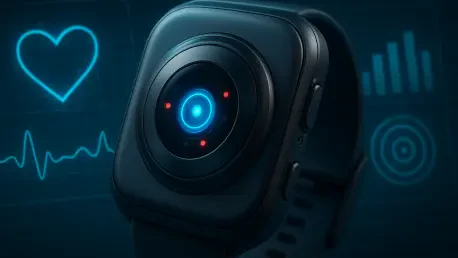

Amazfit’s strategic decoupling from Xiaomi underscores the industry’s shift toward brand autonomy, resulting in a significant gross profit margin increase to thirty-eight percent. This transition reflects a broader global movement where the smart wearable industry has evolved from a stage of speculative prototype demonstrations to a mature, high-utility market ecosystem. As of 2026, the scenario where a user performs a comprehensive sixty-second health check—measuring up to twenty separate indicators including heart rate, blood pressure trends, and vascular elasticity—is no longer a mere technology demonstration but a daily reality for millions. This shift marks the culmination of a decade of hardware evolution and the commencement of a more significant competition centered on the battle for the integrated, closed-loop health data ecosystem. The current landscape is defined by sophisticated sensors and high-fidelity data processing that allows for clinical-grade monitoring in a consumer-ready form factor. Recent market insight reports indicate that the global smart wearable market reached a valuation of nearly eight billion yuan last year, with growth driven by a combination of technological breakthroughs and evolving consumer expectations for preventative healthcare solutions.
The scale of this massive transformation is further underscored by statistical data regarding regional market dynamics and policy shifts. Government action plans have officially categorized smart wearables as essential new technology products, making them eligible for significant purchase subsidies that have further accelerated adoption rates. In major markets, shipment volumes for wrist-worn units have reached unprecedented levels, with specific regions accounting for nearly forty percent of the global market share. This surge is not merely a result of curiosity but a fundamental change in how individuals perceive personal health management. The wearable device has transitioned from being a luxury accessory to an essential piece of health infrastructure. Consequently, the industry is moving away from selling isolated hardware units toward providing comprehensive health services that utilize the continuous stream of data generated by these devices. This shift represents a fundamental realignment of the value proposition within the technology sector, focusing on long-term user health outcomes rather than just short-term hardware sales cycles.
The Established Hierarchy: Competitive Strategic Philosophies
The first half of the wearable competition has concluded with a consolidated duopoly in major markets, where industry giants have successfully controlled over sixty percent of the landscape. However, their methods of achieving this dominance represent two fundamentally different philosophical approaches to technology and consumer behavior. One primary strategy involves an aggressive pursuit of medicalization, positioning devices as clinical-grade instruments rather than simple consumer gadgets. By securing medical device registrations for advanced features like dynamic blood pressure recording and electrocardiograms, certain brands have established a formidable competitive moat that is difficult for newcomers to penetrate. These devices undergo rigorous clinical validation at prestigious medical institutions, ensuring that the “micro-health checkup” provided to the user is both accurate and professionally actionable. This strategy synchronizes hardware directly with a user’s permanent health archive, targeting individuals who prioritize high-fidelity medical data and long-term health monitoring over simple step-counting or notification features.
In sharp contrast to the medical-first approach, other market leaders have focused on a strategy of inclusive popularization and deep ecosystem connectivity. This model revolves around making advanced technology accessible to a broader demographic by maintaining a price range that appeals to the mass market while integrating the wearable into a wider Internet of Things ecosystem. A smartwatch under this philosophy is not just a health tracker; it serves as a car key, a smart home control hub, and a central lifestyle accessory that connects various aspects of the user’s digital life. This approach targets the connected user, ensuring high sales volumes in the mid-range segments while gradually testing higher price ceilings in the premium sector with specialized editions. By lowering the barrier to entry, these companies create a massive user base that feeds into a larger data network, allowing for the refinement of health algorithms through sheer volume. Both strategies eventually converge on the goal of turning one-time hardware sales into recurring revenue through data-driven health services and ecosystem loyalty.
Technical Autonomy: Brand Independence and Technical Supply
Beyond the dominant market leaders, distinct development models have emerged among secondary players who are carving out specialized niches through technological independence or technical supply roles. The successful transition of former manufacturing partners into independent global brands serves as a primary example of this shift. By reclaiming pricing power and direct control over user data, these companies have been able to significantly increase their profit margins and expand their global footprint to dozens of countries. Strategic independence is now viewed as an essential requirement for long-term survival in a market where the value is increasingly tied to the proprietary algorithms and data ecosystems rather than the physical manufacturing process. These autonomous brands are now competing directly with their former partners, offering specialized health features and unique designs that cater to specific segments of the fitness and wellness communities that feel underserved by the major generalist tech giants.
Another significant innovation model involves companies that have adopted a “shovel-seller” approach, focusing on providing the underlying technical capabilities to other manufacturers rather than building a consumer brand. These entities develop specialized RISC-V architectures and open-source operating system solutions that provide the technical foundation for other companies to enter the wearable market quickly. By specializing in high-performance communication modules and advanced sensor technical solutions, these providers capitalize on the overall growth of the industry regardless of which specific consumer brand wins the largest market share. Additionally, some firms have leveraged their existing dominance in niche markets, such as recovery and massage devices, to launch medical-certified watches that cater to their established customer base. This strategy demonstrates that specialized health niches can be highly lucrative when coupled with existing brand loyalty and a focus on specific wellness outcomes like physical recovery or chronic pain management.
Ecosystem Dynamics: Analyzing Global Market Benchmarks
The global market serves as a critical benchmark for the wearable industry, highlighting the significant difference between hardware specifications and the long-term value of ecosystem stickiness. Certain leading global manufacturers maintain a high growth rate despite intense competition because they have created a closed-loop ecosystem where the hardware is just one component of a larger service offering. The cost of migrating health data, historical records, and integrated applications away from a specific platform often becomes a more significant barrier for the user than the purchase price of a new device. This creates unparalleled user stickiness, as the wearable becomes an indispensable part of the user’s digital and health identity. In this environment, the hardware serves as the primary data ingestion point, but the true value is realized through the seamless integration of that data into the user’s daily life, from fitness coaching to proactive health alerts.
Conversely, the struggles of other global competitors highlight the dangers of the “parameter trap,” where companies focus solely on cutting-edge processors or innovative detection features without a corresponding service ecosystem. Even when brands introduce impressive hardware specifications, they often see a drop in shipments if they fail to provide a compelling reason for the user to stay within their digital environment. This serves as a critical lesson for the entire industry: innovation in the absence of ecosystem stickiness leads to high user churn and a constant need to acquire new customers through expensive marketing. Features that exist only as impressive specifications on a marketing sheet cannot sustain market share if they do not provide a seamless, long-term user experience that evolves with the user’s needs. The industry has reached a point where the software experience and data utility are just as important, if not more so, than the physical design or battery life of the device itself.
The Medicalization Frontier: Regulatory and Trust Barriers
The divide between a wearable device perceived as a toy and one seen as a professional medical tool is increasingly defined by official regulatory certifications. Currently, only a small handful of top-tier manufacturers hold the necessary registrations for wrist-based electrocardiograms and physical blood pressure recording. This regulatory barrier is essential for establishing trust with both consumers and healthcare providers, as it ensures the device meets stringent accuracy standards. Non-certified devices typically rely on estimation algorithms based on optical sensors, which are often prone to errors caused by skin tone, movement, or environmental factors. In contrast, certified devices often utilize physical methods, such as miniature airbags for blood pressure measurement, which provide a much higher degree of precision. As the market becomes more health-conscious, the demand for these certified tools is rapidly outpacing the interest in generic fitness trackers that offer only basic activity metrics.
In the modern health-conscious environment, data generated by non-certified devices is becoming increasingly obsolete for serious health management. Manufacturers are often legally required to label data from such devices for entertainment reference only, which significantly limits their utility in a clinical or preventative healthcare context. Medical certification is the only viable path for companies to charge a premium price and gain the legitimate trust of the healthcare community. By obtaining these rigorous qualifications, companies effectively separate themselves from the general consumer-electronics crowd and position themselves as key players in the future of decentralized healthcare and remote patient monitoring. This shift is also encouraging closer collaboration between technology firms and traditional medical institutions, as the data from certified wearables is now being used to supplement professional medical histories and help in the early detection of chronic conditions like hypertension and cardiac arrhythmias.
Artificial Intelligence: Transitioning from Data to Action
The integration of Large Language Models and sophisticated on-device artificial intelligence marks a fundamental transition from descriptive analytics to prescriptive health insights. In previous years, traditional wearables primarily told the user what had already happened, such as the number of hours they slept or the steps they took during the day. However, AI-integrated wearables are now capable of telling the user what to do next, providing actionable suggestions based on real-time data like heart rate variability and sleep quality. Because wearables are always-on and in direct contact with the body, they serve as the ideal hardware for localized, on-device AI that can process sensitive health data without constantly relying on cloud connectivity. This localized processing not only improves response times but also addresses growing consumer concerns regarding data privacy and the security of their personal health information.
The company that can successfully close the loop between data input, AI-driven analysis, and actionable lifestyle suggestions will dominate the high-value segment of the market moving forward. This shift turns the wearable into a personal health node that offers continuous value through customized coaching and early warning systems. The ability to provide a full closed-loop health system through artificial intelligence is now a primary requirement for any brand looking to survive the next phase of global competition. Instead of a static report, users now receive dynamic interventions, such as suggestions to adjust their sleep schedule based on detected fatigue levels or reminders to hydrate after intense physical activity. This proactive approach fundamentally changes the relationship between the user and their device, moving from a passive recording tool to an active partner in personal health optimization.
Future Business Models: Smart Rings and Recurring Value
The emergence of the smart ring as a viable consumer category offers a glimpse into the future of wearable business models, emphasizing non-inductive wear for consistent, long-term data collection. Many users find traditional watches or bands uncomfortable for twenty-four-hour use, particularly during sleep, which is a critical period for health data recovery. Smart rings solve this problem by providing a discreet, comfortable form factor that users are more likely to wear continuously. This has led to the successful implementation of subscription-based models, where consumers pay a monthly fee for deep data analysis and personalized insights rather than just for the hardware itself. This model turns a one-time hardware purchase into a permanent, recurring revenue stream, providing companies with the capital needed to continuously improve their software and health algorithms over time.
Ultimately, the competition in the wearable market has evolved far beyond simple shipment volumes and hardware specifications. While the initial stage of the industry was won by those who could scale manufacturing and capture market share through retail presence, the current era belongs to those who master the data-service loop. The wrist, and now the finger, are no longer just destinations for a piece of technology; they are entry points for a lifelong health relationship between the user and the platform. The transition from wearables for entertainment to wearables for life-critical data is now complete, and the focus has shifted to how this data can be used to extend human lifespan and improve daily wellness. Companies that fail to adapt to this service-oriented reality will likely find themselves relegated to the low-margin commodity hardware market, while those that succeed will become central pillars of the modern healthcare ecosystem.
Strategic Industry Trajectories: Building the Closed-Loop Ecosystem
The competitive landscape in the wearable market reached a decisive turning point where the integration of medical standards and advanced computation redefined the product’s purpose. Successful organizations recognized that hardware was merely the vessel for a much more valuable asset: the longitudinal health profile of the individual. By focusing on the high-fidelity collection of vascular and cardiac data, these firms moved away from the volatile consumer electronics cycle and toward the more stable and high-margin healthcare sector. This transition was supported by the rapid maturation of edge computing, which allowed for complex health algorithms to run locally on the device, ensuring that real-time alerts for conditions like atrial fibrillation or sudden blood pressure spikes became standard features. The industry effectively bridged the gap between personal wellness and professional medical monitoring, creating a new category of “prosumer” health devices that provided value to both the individual and their physician.
Looking ahead, the most critical next step for developers involves the refinement of the “actionable insight” loop to ensure that data leads to verifiable behavioral change. Future developments will likely focus on even deeper integration with pharmaceutical and nutritional platforms, where wearable data could be used to fine-tune medication dosages or dietary plans in real time. Organizations must prioritize the expansion of their clinical partnerships to ensure that the data collected by their sensors can be seamlessly ingested by electronic health record systems used by hospitals worldwide. Furthermore, the industry should look toward the standardization of data formats to allow for better cross-platform health analysis, which would benefit the broader public health mission. The era of the isolated gadget was officially superseded by the era of the integrated health node, and the strategic winners were those who prioritized medical accuracy and data utility over simple aesthetic appeal.